The National Agency for Food and Drug Administration and Control (NAFDAC) uncovers an illegal factory producing counterfeit Goya oil and dismantles a major syndicate involved in the counterfeiting of alcoholic drinks in Lagos, warning that the operations pose serious threats to public health and safety.
Addressing journalists at a press conference in Lagos on Friday, the Director of Investigation and Enforcement at NAFDAC and Chairman of the Federal Task Force on Fake and Substandard Products, Mr. Martins Iluyomade, says the discoveries are made during intensive surveillance and enforcement operations conducted over the past few weeks.
Iluyomade explains that NAFDAC operatives uncover an illegal production site within the Oke-Arin Market, where fake Goya oil is manufactured locally and deceptively packaged for unsuspecting consumers. He notes that although genuine Goya oil is legally imported into Nigeria by an authorised company and remains in circulation, criminals are exploiting its popularity by producing counterfeit versions inside the market.
According to him, the counterfeit oil is produced using crude and hazardous methods, including burning palm oil and adding chlorine, with the mixture prepared on basic stoves. He adds that operatives recover stoves, refilling equipment, and large quantities of empty plastic bottles used to repackage the fake oil for sale.
Iluyomade issues a strong warning to Nigerians, particularly churches and prayer houses where anointing oil is commonly used, stressing that authentic Goya oil is never packaged in plastic (PET) bottles. He urges the public to report any Goya oil sold in plastic containers, describing such products as fake and potentially dangerous.
He further warns that the growing practice of drinking anointing oil in some religious settings has become extremely risky, noting that consumers may unknowingly ingest toxic substances rather than harmless products.
Explaining NAFDAC’s enforcement strategy, Iluyomade says the agency prioritises shutting down production at the source to prevent further circulation of fake products, rather than targeting unsuspecting traders. He appeals to religious organisations and market leaders to cooperate with the agency to avoid arrests within their premises and to help protect public health.
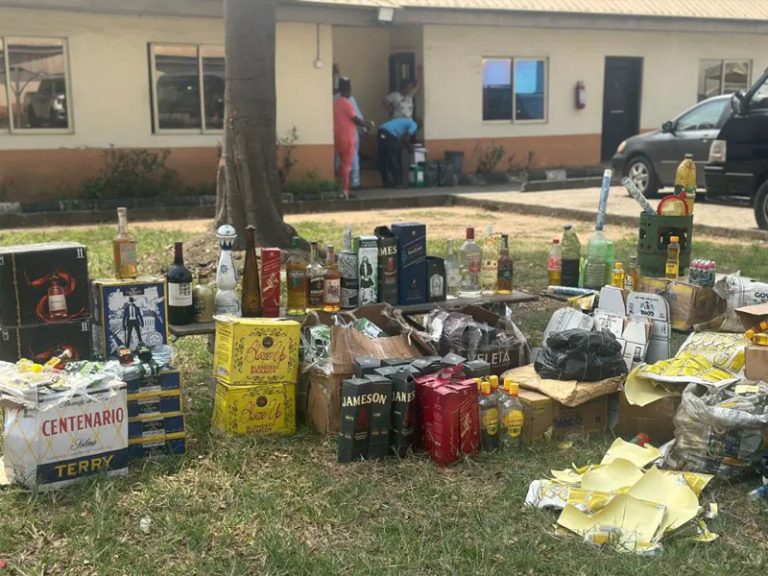
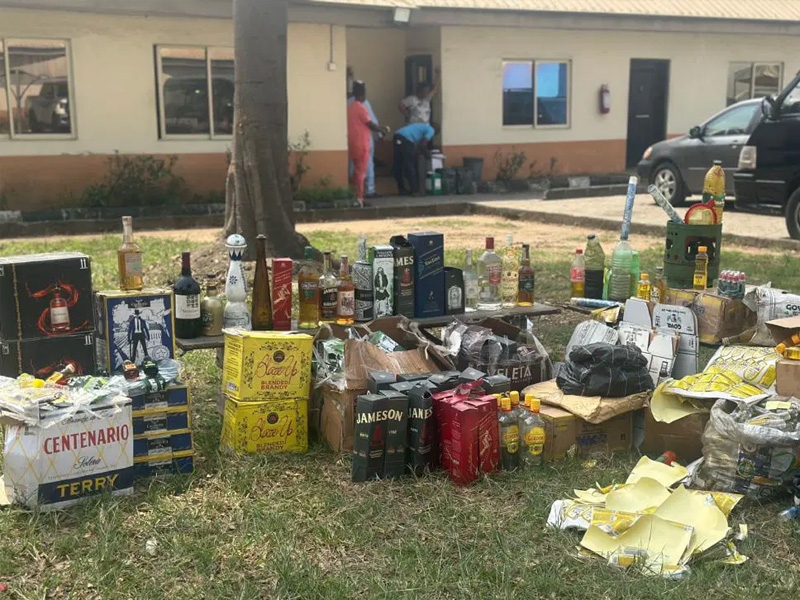
In a related development, Iluyomade reveals that NAFDAC also busts a large-scale operation involved in the production and distribution of counterfeit alcoholic drinks across Lagos. He describes alcohol counterfeiting as one of the most widespread forms of product falsification in Nigeria due to its ease and profitability.
A suspect, identified as Mr. Moses Nelson, is arrested in the Badagry area of Lagos and charged to court. According to Iluyomade, a search of the suspect’s residence uncovers fake versions of nearly all major alcoholic drink brands, with the syndicate operating a distribution chain that supplies several markets across the state.
NAFDAC warns distributors and consumers against patronising unauthorised suppliers and unusually cheap products, noting that the quest for profit or savings often comes at the cost of human lives. Iluyomade stresses that no individual has the right to endanger the health of others in the pursuit of income.
He assures Nigerians that NAFDAC will sustain enforcement actions nationwide and urges the public to remain vigilant, avoid counterfeit products, and report suspicious activities to the agency to help safeguard lives.
Erizia Rubyjeana
About the Author