Ugandan President Yoweri Museveni has assumed the chairpersonship of the East African Community (EAC) as member states continue to grapple with trade barriers, disunity, and regional insecurity.
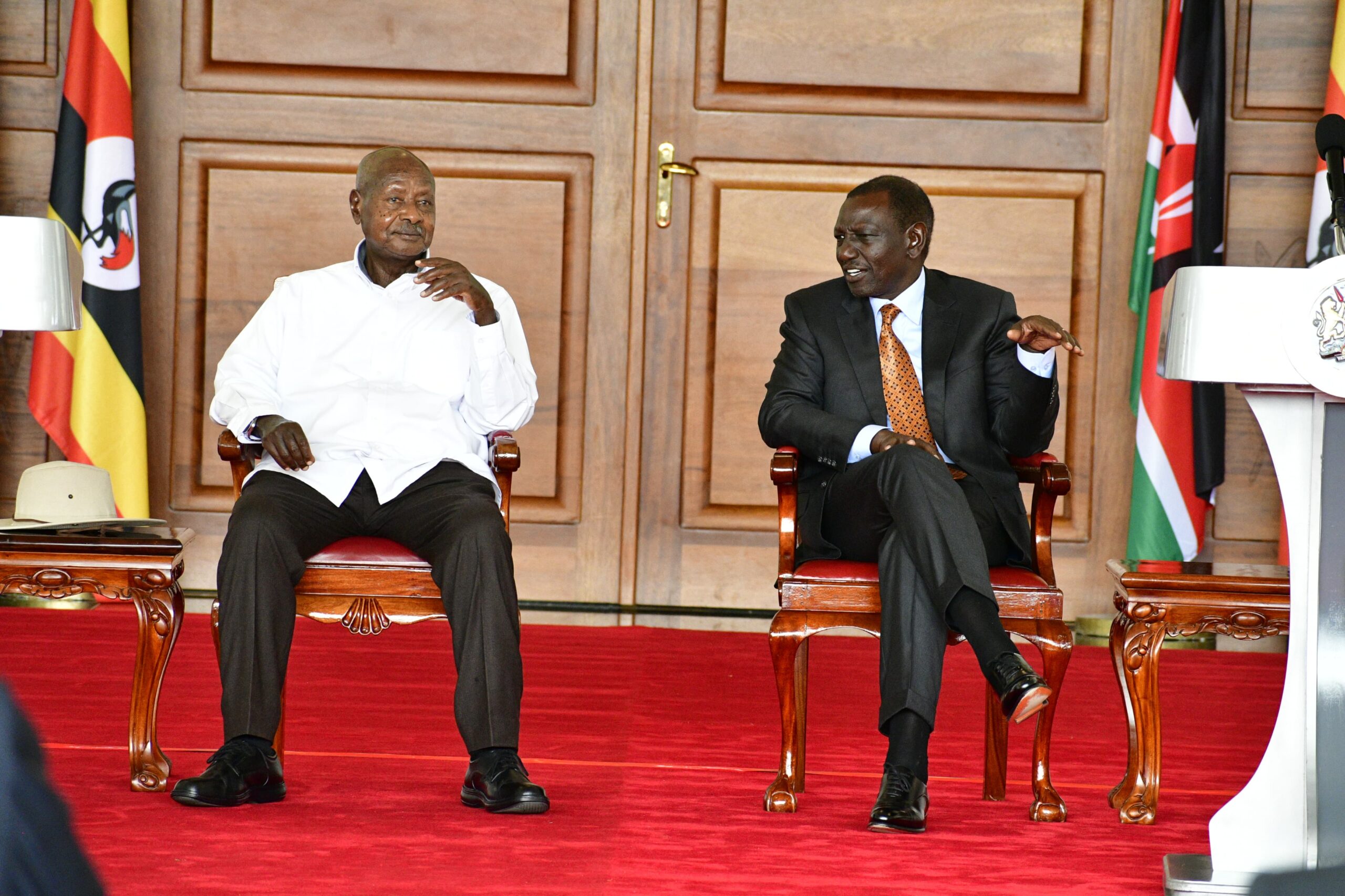
Museveni took over the EAC chair from Kenyan President William Ruto in Arusha, Tanzania, on Friday. He called for unity and strategic security in the region as top priorities. “Africa must avoid what I call ‘Okukonesa’ (the mis-cooking of the African Revolution).
Historically, our weaknesses of disunity, poor leadership and failure to adopt science allowed the continent to be colonised. We achieved Uhuru (freedom). The next mission must be Umoja (unity),” Museveni said.
The longest-serving head of state in the region will hold the EAC chair for one year. He urged African countries to avoid fragmenting markets, which he said keeps the continent poor. “Prosperity comes from production and markets.
Fragmented markets keep Africa poor. In Luganda we say: ‘Omuggo oguli ku mulirano tegugoba ngo’ (The stick in the neighbour’s house cannot chase away the leopard). Africa must build its own internal market through integration. The East African Community and continental integration are therefore not optional. The mission remains: Uhuru na Umoja, Freedom and Unity,” he said.
In a joint communiqué by EAC heads of state, the instability in eastern Democratic Republic of Congo (DRC) was highlighted as a key challenge, despite the EAC-led Nairobi peace process aimed at ending the conflict. “[The heads of state] called on all parties to the conflict to cease hostilities and observe an immediate ceasefire while recommitting to peaceful resolution of their differences,” the communiqué read.
They also urged the African Union to provide financial and logistical support to ensure “expeditious and sustainable engagement of the mediation process” in eastern DRC.
Security challenges extend beyond the DRC. The DRC accuses Rwanda of supporting M23 rebels, while Rwanda alleges DRC is backing Hutu militias against President Paul Kagame. Burundi has closed its borders with Rwanda over alleged rebel support, and both Somalia and South Sudan continue to face internal security crises that undermine economic stability.
Financial constraints have also affected the EAC, with many member states struggling to pay contributions.
To ease the burden, the heads of state waived 50 percent of all arrears for partner states, to be paid within two years from March 7, 2026, with richer states contributing more.
The EAC also relieved itself of paying salaries for East African Legislative Assembly (EALA) members, who will now be paid by their respective national legislatures.
President Ruto said the move would save 30 percent of the EAC budget, allowing funds to be redirected toward community projects. Finally, the heads of state resolved that anyone holding one of the top five senior EAC positions must come from a country that has ratified the EAC treaty and fulfilled all its requirements.
About the Author