When Sarah Mullally is enthroned as the Church of England’s first female Archbishop of Canterbury on Wednesday, she will inherit a task that has eluded her predecessors: uniting a divided 85-million-strong global Anglican Communion.
Mullally, 63, will be installed at Canterbury Cathedral before an audience of 2,000 guests, including heir-to-the-throne Prince William, his wife Kate, and Prime Minister Keir Starmer.
Her appointment in October drew sharp criticism from a conservative grouping of Anglican churches in mostly African and Asian countries called Gafcon, which this month established a new council in a direct challenge to her leadership.
The bloc, which had rejected Mullally’s predecessor Justin Welby’s leadership over same-sex blessings, opposes the ordination of women – approved in the Church of England for more than three decades – and greater inclusion of LGBTQ+ members.
SERVICE TO BLEND TRADITION WITH GLOBAL SYMBOLISM
The service for Mullally’s enthronement as the 106th Archbishop of Canterbury will blend centuries-old tradition with global symbolism.
She will formally seek admission by knocking on the cathedral’s west door, greeted by children. Prayers and readings in multiple languages, including Urdu, and African choruses will reflect the global reach of the Anglican Communion, her office said.
More than 100 guests will travel to Britain from provinces across 165 countries for the ceremony, which will seat Mullally in the Chair of St Augustine, made from Purbeck marble in the early 13th century.
St Augustine, who brought Christianity to early Anglo-Saxon England, became the first Archbishop of Canterbury in 597.
“To be welcomed into the city and diocese of Canterbury is an immense privilege,” Mullally said.
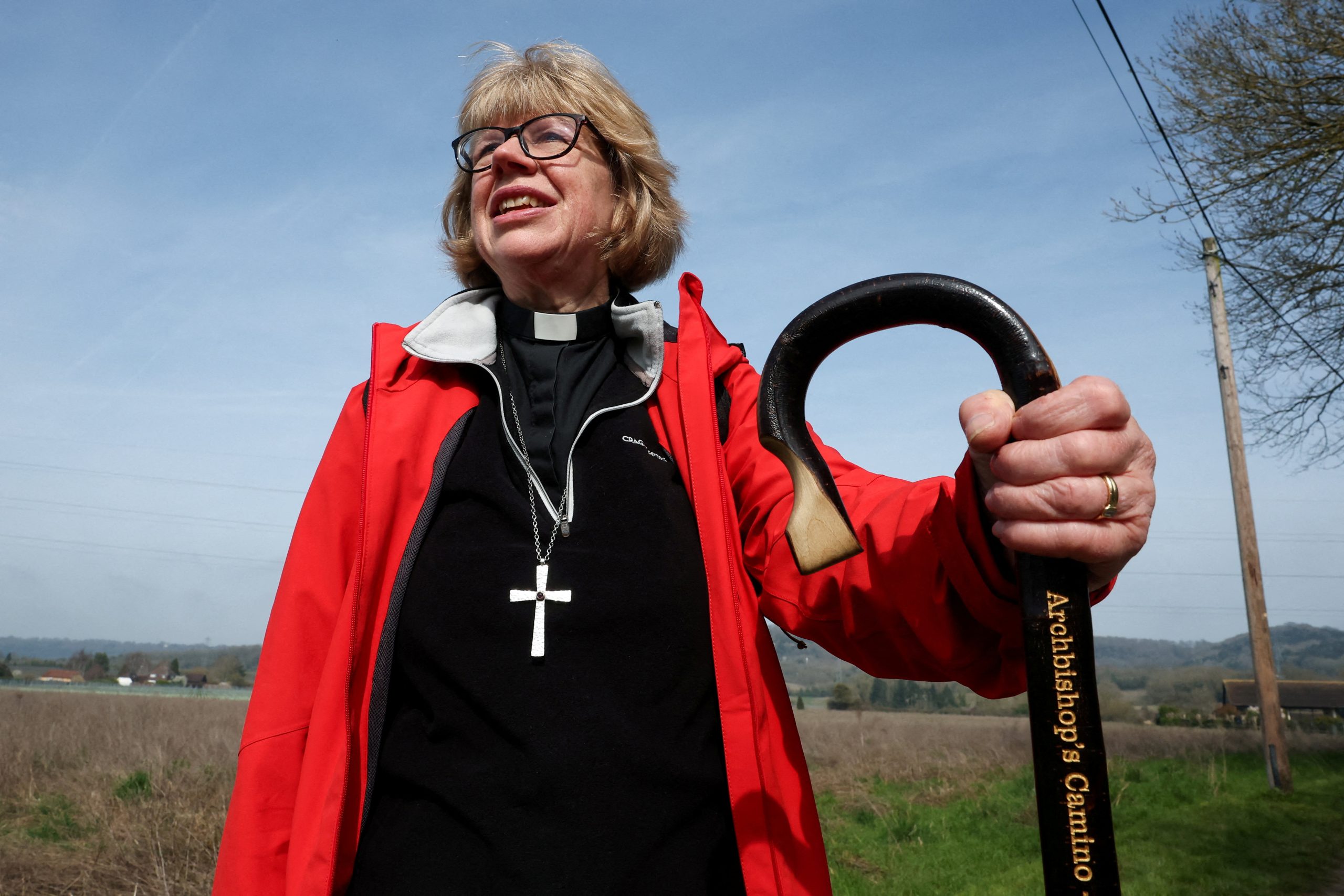
In preparation for her installation, Mullally walked 140 km (87 miles) along the “Becket Camino” route from St Paul’s Cathedral in London to Canterbury, stopping at churches, schools and abbeys en route.
Mullally, who previously served as England’s Chief Nursing Officer, was ordained as a priest in 2002 and became one of the first women consecrated as a bishop in the Church of England in 2015. She has invited nurses and carers to the service, her office said.
“Installing Sarah as our first female Archbishop would have been almost unimaginable even 50 years ago,” said the Dean of Canterbury, David Monteith, who will preside over her installation.
While tension between progressive and conservative Christians is not unique to Anglicanism, the Archbishop’s role is largely symbolic and dependent on persuasion, unlike the Pope, who wields clear authority over Catholics worldwide.
Mullally also inherits a Church of England facing decades of declining attendance and working to rebuild trust in its 16,000 parishes after historic safeguarding failures, one of which caused Welby’s resignation.
Still, the Church remains woven into British life, running thousands of schools and overseeing charities and community projects. Britain’s monarch remains the Supreme Governor of the Church, a role dating back to the 16th-century Reformation.
About the Author