As a humble law firm owner in Kampala, former NRM youth leader in this vibrant city, and former guild president of Makerere University, I have always worn my loyalty to the NRM and President Museveni as a badge of honour.
My journey from Lumumba Hall at Makerere University to the corridors of legal practice has been shaped by the NRM party’s vision of stability, development, and national unity. It is from this place of deep-rooted support that I must confess my utter shock and disbelief upon learning of the Uganda Law Society’s (ULS) Executive Order RNB No. 6 of 2025, issued by President Isaac Kimaze Ssemakadde on December 21, 2025.
This order, which brazenly endorses Robert Kyagulanyi Ssentamu (Bobi Wine) for president, Lord Mayor Erias Lukwago, candidates from the National Unity Platform (NUP) and People’s Front for Freedom (PFF), and all lawyers and law students running in the 2026 elections, struck me like a thunderbolt.
As a diehard NRM supporter, I could not fathom our national bar association abandoning its sacred tradition of neutrality to plunge headfirst into partisan politics, aligning with opposition figures who have long challenged the very foundations of our movement.
In my initial outrage, I fired off rapid denunciation messages across lawyers’ WhatsApp groups, social media platforms, and professional networks. On December 29, 2025, I addressed a press conference on this topic.
My aim was clear: to discredit Ssemakadde and dismantle the legitimacy of this endorsement, portraying it as a reckless betrayal of the ULS’s non-partisan stance. Yet, the feedback I received has left me profoundly surprised.
Far from rallying to my side, the majority of lawyers who responded have expressed extraordinary support for the executive order. They have repeated its merits to me with conviction, emphasizing how it addresses the existential threats facing our profession and the nation.
Many highlighted the order’s call for a total political reset: demilitarizing civilian affairs, liberating captured institutions like the judiciary from executive overreach, ending abductions and sham trials, and restoring a government accountable under the 1995 Constitution.
Others praised its endorsement of candidates who promise economic justice, youth empowerment, and institutional integrity, seeing them as a bulwark against authoritarian drift. The majority have resoundingly agreed with Ssemakadde’s defense of the order, as articulated in its preamble.
They argue that neutrality has become untenable when the rule of law itself is under siege—through the excessive militarization of politics, a culture of impunity that allows for arbitrary arrests and torture, and the total capture of state institutions, including the Electoral Commission, police, and a judiciary reduced to rubber-stamping executive whims.
Notably, the senior counsel bar has not helped their cause by shunning open debate to defend their rigid view of absolute neutrality and the depoliticization of the national bar association.
By retreating into silence or platitudes, they have ceded the ground, allowing Ssemakadde to win the debate decisively. He has captured hearts and minds across the bar, from young advocates to seasoned practitioners.
WAY FORWARD
The NRM must listen. It is time for our party to humble itself and heed these opposition voices that now carry significant currency within the legal fraternity.
We need accurate intelligence on the reasons for the declining popularity of the NRM and President Museveni, and why support for Bobi Wine is surging among legal professionals of all ages— including some of my former lecturers at Makerere, who once mentored me in the spirit of national service. Some of these reasons are contained in previous ULS communiqués that have been repeatedly ignored by the government and judiciary.
IMPORTANT FEEDBACK
From the feedback I received, the following issues stand out as recurrent concerns that warrant urgent attention from government and the leadership of the ruling party.
Foremost among them is the appalling welfare of lawyers in Uganda, a matter that is often trivialized yet lies at the heart of the growing radicalisation of the bar. Many advocates today operate in conditions of precarity, underemployment, and professional frustration, despite the central role lawyers play in the administration of justice and the functioning of the economy.
For that matter, there is an urgent need for regulatory and policy reforms that deliberately create structured work for advocates.
Government could, for instance, commit to passing the Legal Aid Bill and expediting amendments to the Magistrates Courts Act and Small Claims Court Act to ease congestion in the High Court and secure fee-earning rights for private practitioners.
Reforming the 1956 Uganda Law Society Act and 1970 Advocates Act would give the legal profession greater autonomy to regulate and modernize its affairs. A whole-of-government approach is needed to curb the menace of unlicensed brokers and speculators preying on advocates’ fee-earning rights in conveyancing, business registration, and other transactions where the public is entitled to a lawyer’s protection and assistance.
In the same vein, government should consider extending state-supported legal aid to civil matters of significant value, particularly for indigent litigants, just as it already does for capital criminal cases.
This would simultaneously improve access to justice and create meaningful work for advocates, while reinforcing the constitutional promise of equality before the law. To further strengthen the welfare of lawyers, the state should support and finance lawyers’ savings and credit schemes (Saccos), enabling advocates to access affordable financing to sustain their law practices, invest in agriculture, and pursue productive economic activity.
A professional class that is economically strangled cannot be expected to remain politically quiescent or institutionally loyal.
FREE SSEMAKADDE
Closely connected to these welfare concerns is the forced exile of the current ULS President, Isaac Kimaze Ssemakadde, arising from threats of imprisonment following a dispute with a judicial officer.
This episode has become a powerful symbol of the shrinking space for dissent within professional bodies. With humility and respect, I appeal to Your Excellency to exercise your constitutional authority to grant a pardon or suspend any punitive measures, and allow the President of the Uganda Law Society to return home.
Such an act would send a strong signal of reconciliation, restraint, and respect for institutional autonomy. From my rapid survey of lawyers’ perceptions as we approach the close of the year 2025, I find that judicial and prosecutorial dysfunction remains the most unifying grievance across the profession.
The quality and quantity of judicial officers and prosecutors are widely perceived as inadequate thereby resulting into intolerable delays, massive case backlogs, inconsistent jurisprudence and an institutionalised police to prison pipeline—conditions that ultimately punish both litigants and lawyers.
There is growing consensus that judicial and prosecutorial recruitment must be subjected to more rigorous scrutiny, including transparent vetting, competency examinations, and public engagement processes such as hearings or debates.
Improving the quality of judicial officers and prosecutors will inevitably improve the quality of our justice system. Equally troubling is the role played by Resident District Commissioners (RDCs) and sections of the police in the execution of court orders. Lawyers frequently encounter arbitrary obstruction, delay, and outright defiance of lawful court orders by these non-judicial actors, often justified under the guise of verification.
Lawyers complain also of systemic discrimination andunreasonable frustration at the Attorney General’s Chambers, particularly in the recruitment of state attorneys, procurement of external legal serviceproviders to government (MDAs) and in the enforcement of judgments against the state.
The foregoing discriminations, delays, bureaucratic obstruction, and selective compliance with court orders have deepened perceptions that the government is unwilling to submit itself to the rule of law, further alienating the legal professionals.
Finally, Your Excellency, I must respectfully remind you of the pledge made toward the completion of the Uganda Law Society House. In 2018, you pledged Shs 5 billion toward this project, yet the pledge remains unfulfilled.
Honouring this commitment would not merely be a financial contribution; it would be a symbolic act of goodwill toward a profession that increasingly feels besieged, ignored, and disrespected.
With great respect, Your Excellency, I warn the ruling party to abandon its parochialism and return to the broad-tent politics that defined our early days—the kind that listens to far more voices from below, rather than relying on the few highly connected and favoured lawyers close to State House and the military.
In closing, I caution my NRM colleagues—within the legal profession and beyond—against closing their ears and falling into the trap of self-perpetuating consolation that dismisses these shifts as mere opposition propaganda.
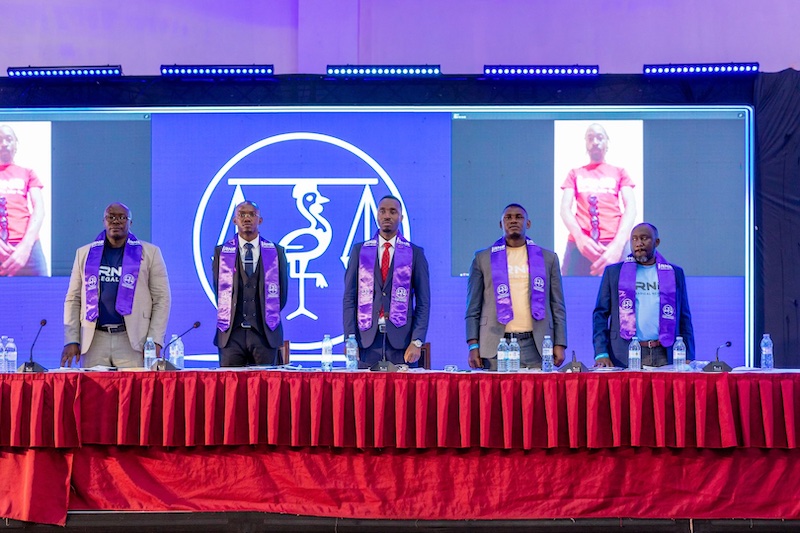
To President Museveni, I respectfully ask that you conduct your own thorough investigation into the lawyers’ grievances. Engage directly with credible sources, make amends, and demonstrate responsiveness. It is not too late to win back the Radical New Bar (RNB).
The RNB is not an opposition outfit; I know for sure that it harbours far more NRM-sympathetic voices than we realize—voices that no longer recognize the NRM in its current form. By listening now, we can rebuild bridges and secure a truly inclusive future for Uganda.
The author is a lawyer.
About the Author