Defence and Military Veterans Minister Angie Motshekga and the department’s portfolio committee are at odds over the autonomy of the sector’s ombudsman.
The Military Ombudsman wants greater freedom to implement its recommendations, while the department believes tighter administration would make the ombudsman more efficient.
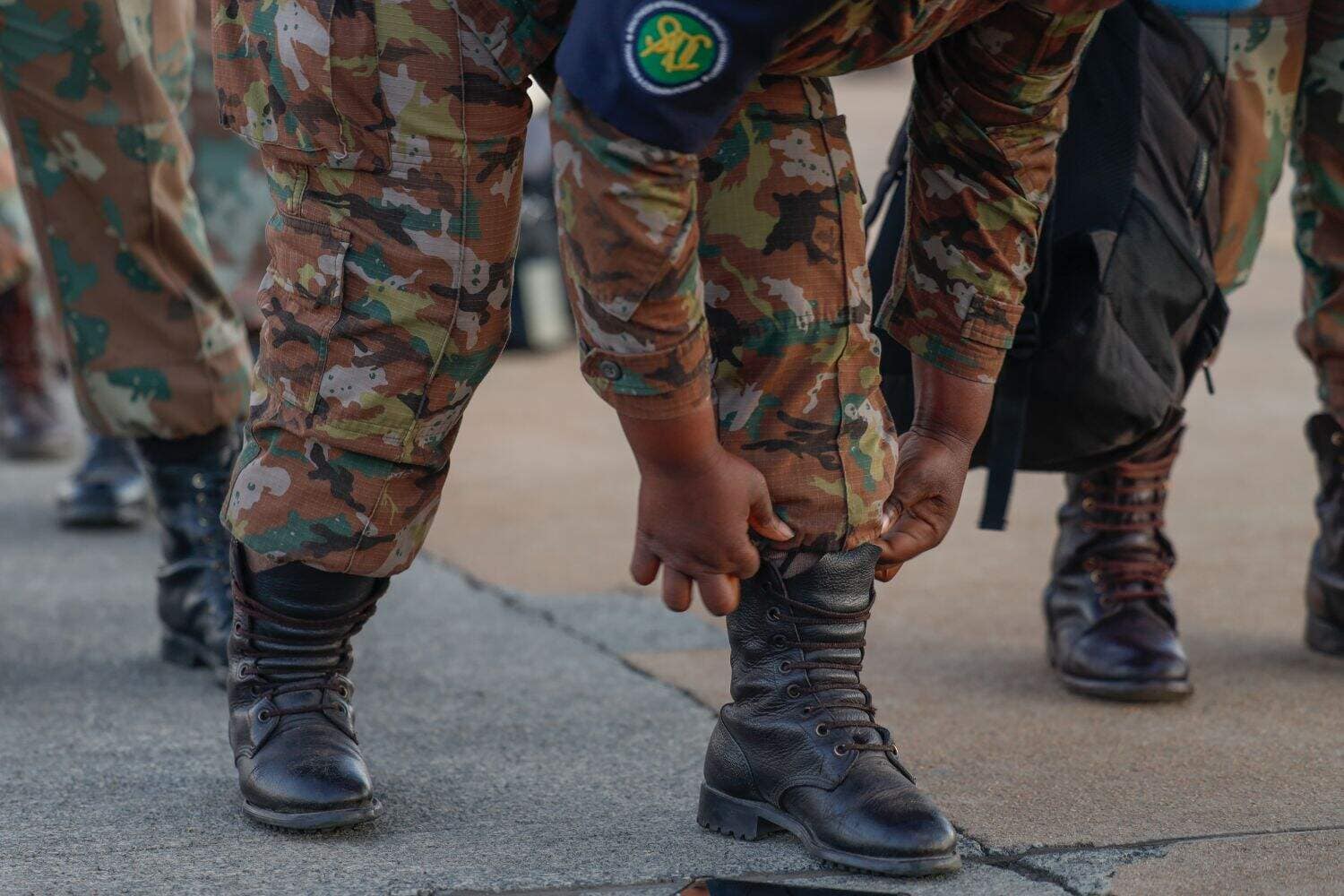
The ombudsman is an oversight function within the South African National Defence Force (SANDF) dealing with complaints from former and current military personnel.
Complaints double in five years
The Military Ombudsman gave a presentation to the portfolio committee on defence on Friday to outline its performance and challenges over the last financial year.
The 2024-25 financial year saw the most complaints submitted in the last five years, having doubled since 2020-21 from 297 to 590.
Including cases carried over last year, the oversight entity finalised 593 cases last year, exceeding the previous high of 357 in 2020-21.
The number of cases carried over from the previous years has also dropped year-on-year, from a 148-case high in the 2019-20 financial year, to 69 from last year.
Retired Lieutenant General Vusumuzi Masondo, the head of the ombudsman, pinpointed what was creating the most work for his office.
“I need to point out to parliament that we receive a lot of complaints from military veterans complaining about benefits,” said Masondo.
Of the complaints received last year, 72 were related to service benefits, and 51 were due to service terminations.
A further 50 were due to remuneration, with appointments, promotions and demotions accounting for 52 complaints.
Ombud exceeds budget
Masondo said more staff were needed to deal with the volume of complaints, but said the National Treasury was streamlining the budgets of oversight bodies.
The Military Ombudsman spent R49 million on staff salaries in the last financial year, overrunning its remuneration budget by R4 million while spending R16 million on goods and services.
Despite that figure, Masondo sighted high vacancies as a constraint, as well as delays in cooperation with the SANDF and the department.
Minister Motshekga believed that human resources functions could be improved to lessen the complaints.
“Most of the cases that come from the ombuds are HR matters. Let’s identify issues that keep on coming from HR, because if we can resolve these policy issues, it is going to have administrative advantages for us.
“I wouldn’t find myself reading piles of ombud reports, and we won’t find the ombud needing more people to process [complaints],” said Motshekga.
Motshekga denied interfering with the ombud, saying she appreciated the entity’s ability to relieve “very serious tensions” within the SANDF.
‘We have to make choices’
The EFF’s Carl Niehaus asked for an update on amendments to the legislation governing the ombud, noting such amendments had been in the pipeline for several years.
“These presentations, to my mind, continue to expose very deep structural and operational flaws in the Military Ombud’s framework.”
Neihaus said the relationship between the ombud and the minister was too informal and required stricter legal definitions.
“These are my concerns, and they are not addressed by the fact that the minister seems to tell us she’s got no appetite for legislative review,” said the EFF member.
Neihaus stressed that if the minister did not commit to reform, then the committee would be forced to pursue the matter, with Motskegka agreeing that she could not stand in their way.
However, the minister reminded the committee that although it received an improved budget allocation, the department would be forced to trim certain bodies and restrict expenditure.
“It has to be discussed within a basket. We are faced with a crisis around HR, and therefore, it is difficult for us as a department, so go ahead and appoint.”
“We have to sit down and say what is it that we do differently to contain budget overruns. Therefore, we have to make choices,” the minister concluded.
NOW READ: Ramaphosa moves inquiry into Iran’s participation in naval drill to Presidency
About the Author