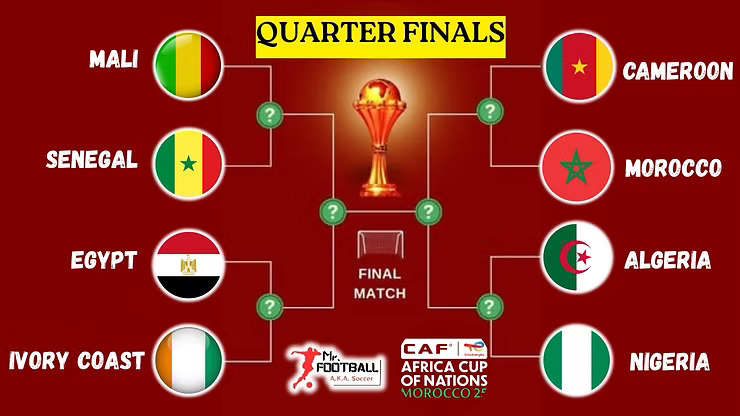
The 2025 Africa Cup of Nations has produced a quarter-final lineup of immense pedigree, largely devoid of the major upsets that characterized previous tournaments. According to recent FIFA rankings, the final eight featured eight of Africa’s top ten nations, ensuring that the continent’s most established powerhouses remain in contention for the title.
Telema Davies, Managing Partner and Sports Industry Lead at DMPartners, suggests that Morocco’s world-class sporting infrastructure has played a pivotal role in maintaining this high level of competition. He notes that the superior playing surfaces provided by the host nation are comparable to elite European standards, allowing athletes to perform at their peak while minimizing injury risks.
Morocco’s success in this edition extends far beyond their role as hosts, as the national team continues to build on a remarkable period of “recency capital.” The Atlas Lions secured their place in the semi-finals on Friday night with a convincing 2-0 victory over Cameroon, further cementing their status as the tournament favorites. Davies highlights that the Moroccan football design aims for total continental dominance, evidenced by their historic 2022 World Cup semi-final run and a string of titles across African Nations Championships and youth levels between 2020 and 2025. This sustained excellence, combined with passionate home support, makes the host nation a formidable obstacle for any remaining challenger.
“It seems the quality of infrastructure (playing surface) Morocco has delivered the competition is a major differential comparable to the quality of infrastructure obtainable in Europe,” Telema Davies told newsmen. “The players are taking advantage of the quality of the pitches to express their football and there’s been little cause for concern on injuries.”
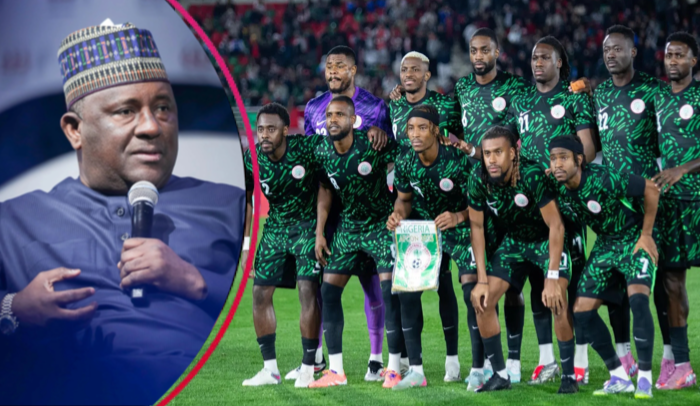
As the tournament shifts toward its conclusion, the semi-final stage promises high-intensity encounters. Morocco now awaits the winner of today’s highly anticipated quarter-final clash between Nigeria and Algeria. Davies anticipates a captivating battle between the Super Eagles and the Desert Foxes, noting that the match serves as a significant rematch of the 2019 semi-final. While Algeria seeks to prove their consistency on the big stage, Nigeria enters the fixture with a desire to settle old scores and reclaim their place at the summit of African football.
“Morocco has recency capital in its favour in terms of the nation’s teams performances. From becoming the first African semi-finalists in the 2022 FIFA World Cup in Qatar to winners of the African Nations Championships in 2020, 2021 and 2025. Let’s not forget the success of its youth teams in 2023 (U-23 AFCON), 2025 (U-17 AFCON and U-20 World Cup finalists). Morocco has the design to dominate football and thus making their participation in the ongoing tournament the most fearsome team to face,” Davies explained.
The expert warns that any team facing Morocco in the next round must prepare for an environment that transcends traditional home-field advantage. The host nation appears driven by a global mission to validate its investment in football infrastructure and talent development. Consequently, the semi-final at the Prince Moulay Abdellah Stadium will require the opposition to overcome an entire nation’s collective ambition rather than just the eleven players on the pitch.
“Therefore, whoever is going to face Morocco in the semifinal of this competition must be ready to take on the entire nation and not just spectators in the stands as the host nation has a point of global magnitude to prove,” he said. “It’s not always straightforward to be honest, but I expect a competition that will have viewers and spectators on the edge of their seats depending on which side of the aisle people support. It’s pretty much a rematch and while Algeria will be keen to demonstrate its tournament record isn’t a fluke, the Super Eagles will be eager to exact revenge on the Desert Foxes.”
About the Author