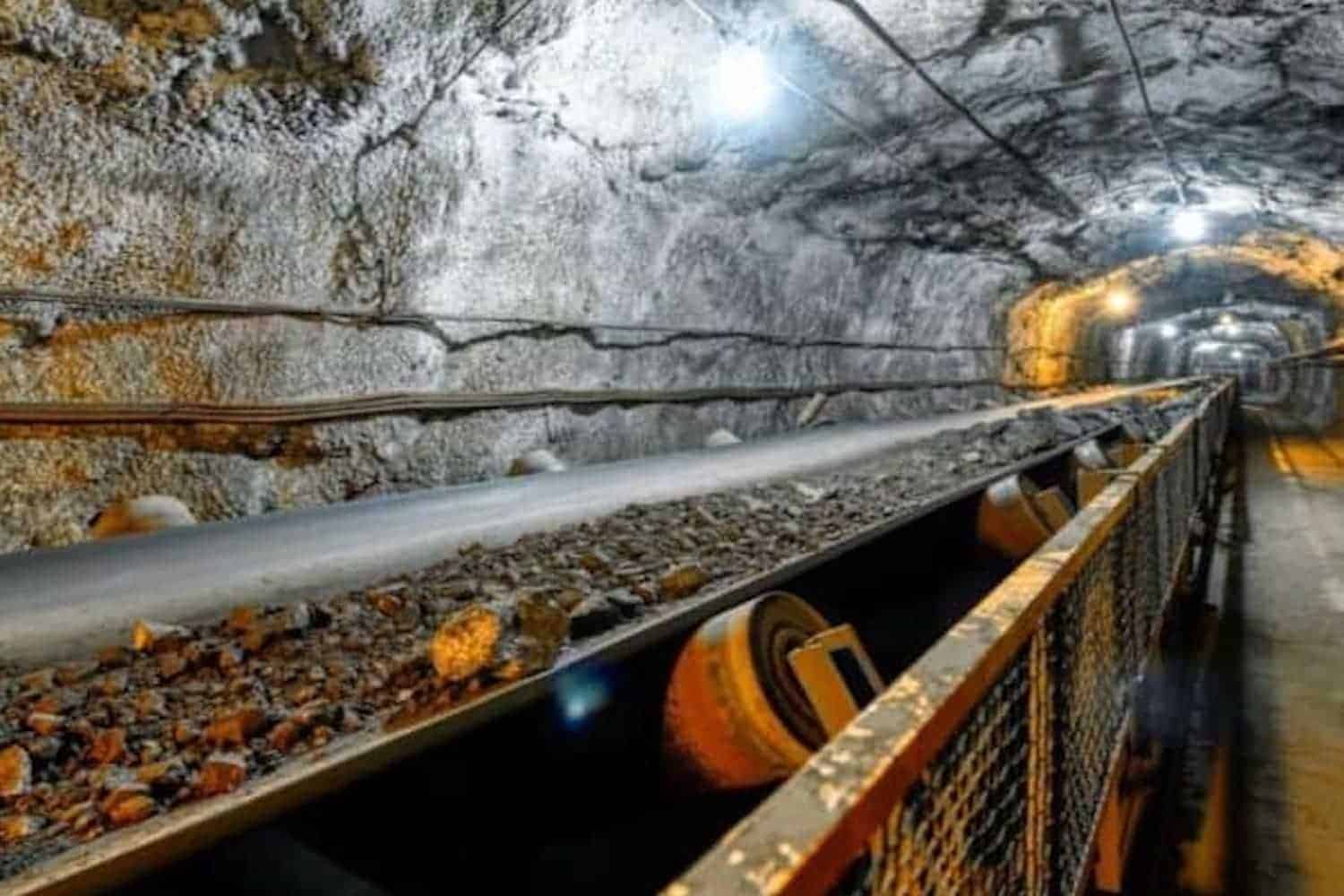
South Africa’s mining sector says electricity prices – which have risen by more than 900% since 2007 – remain the single biggest threat to competitiveness, investment and jobs, despite the absence of load shedding over the past year.
According to Minerals Council South Africa, electricity tariffs for large industrial users such as mines, smelters and refineries increased by about 970% between 2007 and 2024 – with further annual hikes of around 8% expected this year, and again in 2027.
Paul Dunne, president of Minerals Council SA and CEO of Northam Platinum, warns that the impact has already been severe.
“This has resulted in smelters closing or suspending operations because they are simply no longer globally competitive,” he says.
ALSO READ: Minerals Council South Africa flags policy issues with mining amendment bill
These concerns were aired at a media conference on the sidelines of the annual Investing in African Mining Indaba in Cape Town on Monday.
The four-day event is expected to draw about 12 000 delegates from around the world, including mining companies, governments, financiers and investors.
Facts and figures
Beyond electricity costs, Minerals Council SA says a combination of infrastructure constraints, regulatory uncertainty and subdued exploration activity continues to weigh on sector performance.
While mining production has stabilised, efficiency has deteriorated.
According to Mineral Council SA’s Facts and Figures 2025 pocketbook, total factor productivity – a measure of how effectively labour, capital and materials are combined – has fallen below the benchmark of 100 since 2022.
This indicates that the industry is producing less output per unit of input than it did a decade ago.
Production figures show a mixed picture. Gold accounted for 10.5% of mining production in 2025 but contributed about 20% of total mining sales.
According to Bongani Motsa, acting chief economist at Minerals Council SA, overall production fell by 2.7% in November, partly due to heavy rainfall in late October and November, which disrupted coal and platinum group metals output. For 2026, the council expects production growth of around 1%.
Profitability has improved, but the industry cautions against complacency. In the first nine months of 2025, mining profits rose by R21.8 billion compared with the same period in 2024, driven mainly by coal, gold and iron ore.
However, Motsa notes that between 2015 and 2020 the sector recorded cumulative net losses. “We shouldn’t get carried away by the latest profits because between 2015 to 2020, the industry collectively combined posted a net loss.”
Minerals Council SA also criticised delays and uncertainty around Eskom’s unbundling.
“The decision to retain the transmission company as a subsidiary of Eskom sends investors and the business community entirely the wrong message about the government’s intentions regarding [the] deep and meaningful structural reforms South Africa desperately needs,” says Mzila Mthenjane, chief executive of Minerals Council SA.
He adds that separating transmission is essential to expand the grid, unlock private generation and support South Africa’s energy transition.
Exploration still falling short
Regulatory uncertainty remains another major deterrent to long-term investment.
The first iteration of the Mineral Resources Development Bill, gazetted in May 2025, was widely criticised by industry.
Mthenjane says it “did not encourage or sustain the investment and growth that the mining industry needs to realise its full potential”.
Although engagements with the Department of Mineral and Petroleum Resources have since taken place, companies remain cautious while waiting for a revised version.
ALSO READ: Lukewarm response to Mantashe’s call for specialised illegal mining unit
Investment is therefore expected to be concentrated mainly in brownfields projects rather than large new developments, says Dunne, adding that boards of mining companies are still “battered and bruised”, prioritising balance-sheet repair.
Some greenfields projects are proceeding, largely in the junior mining space, including Ivanplats’s large platinum project on the northern limb of the Bushveld, but major new mine announcements are unlikely this year, he notes.
Exploration remains a critical weakness. South Africa spent just R781 million on exploration in 2024, down from a peak of R6.2 billion in 2006.
Mthenjane describes this as “deeply troubling”, warning that “the lifeblood of mining is exploration”.
“Without it, the mining sector has no future.”
While a R400 million public sector exploration fund and a further R600 million commitment from Anglo American are welcome, the country remains far short of the estimated R12 billion needed annually to revive exploration meaningfully.
Africa should speak as one – Mantashe
Delivering the welcome speech on the main stage early on Monday morning, Minister of Mineral and Petroleum Resources Gwede Mantashe called for greater continental coordination.
“When you’re a worker alone – you are weaker against your employer. Similarly, Africa must speak to the outside world as one,” he said.
ALSO READ: Illegal mining bleeds billions from economy, says Mantashe
Mantashe acknowledged, however, that regional integration is a long way off.
“Let me tell you why: African countries tend to compete with one another,” he said, warning that this enables external powers to extract value from the continent’s mineral endowment.
“I call it divide and rule. It makes it easy for the neocolonisers to overpower us and take our resources.
“It’s a race to the bottom,” Mantashe said.
Licensing issues
Responding to concerns around licensing delays and regulatory bottlenecks during a media briefing, Jacob Mbele, Director-General of the Department of Mineral and Petroleum Resources, said progress is being made on the long-awaited cadastral system.
A mining cadastre is a government-run database that tracks mining and prospecting rights, including their location, ownership and approval status.
“Over 300 prospecting rights [have been] issued – licensing is proceeding,” he said, adding that applications are being accepted while the system is still being tested.
“We are making progress with the cadastral system, but it’s not happening fast.”
This article was republished from Moneyweb. Read the original here.
About the Author