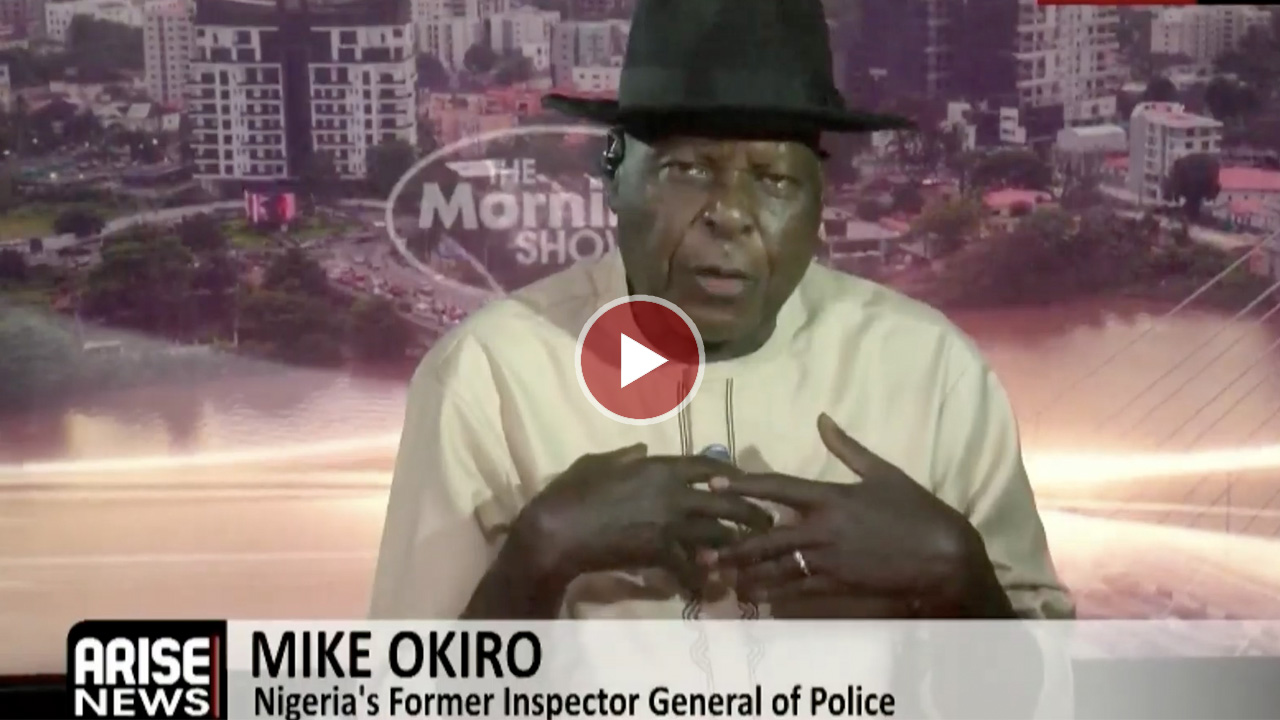
Nigeria’s Former Inspector General of Police, Mike Okiro has weighed in on the priorities and challenges facing Nigeria’s new Acting Inspector General of Police, emphasising that reforming the police force will require strong leadership and government support.
In an interview with ARISE NEWS on Thursday, Okiro said the President’s choice of the new IG was well-considered, noting the officer’s track record across Lagos, Rivers State, and the Federal Capital Territory, Abuja.
“I followed his track records and his activities in the police. He became Commissioner of Police in River State and Commissioner of Police in FCT. These are two states, two areas that are in public glare. His activities in those two areas, I think, one of the things that propelled and encouraged and convinced the President to make him Inspector General of Police. I have no doubt his capability. I have no doubt what he’s going to do as Inspector General of Police. As Nigerians at the end of the day, we hail the President for making a very good choice.”
Okiro highlighted the structural and operational challenges the new IG would inherit. “One, manpower. Two, equipment. Three, arms. Four, morale of the police. Five, effort. It’s innumerable. So I praise him. I wish him well. As I know him, he’s going to face these problems headlong. And at the end of the day, Nigerians should be happy. Nigerians should praise the President for picking him as IG.”
He further emphasised that police welfare must be a top priority. “One of the things he has to tackle is the welfare of the police, the police that are so disenchanted. Also, with a technological-driven world, we have to ensure, the government will help to bring technology into Nigeria. He passed those days that policemen had to walk on his feet, barefoot. But now, you have cybercrime, you have all sorts of criminology that goes in with digital age, AI, and so forth. He has to encourage, prepare the government to encourage the police, to encourage the police to face the modern technology in criminology.”

Okiro outlined other priorities, including fighting corruption, improving commitment and discipline. “Finally, you have to know that the citizen is the boss. Nigerian police officers are recruited to protect life and property. And the police, they are being paid from the tax, paid by civilians, paid by the public. So the public is the boss. Police should make sure that they do the best for Nigerians, Nigerian citizens.”
He also addressed the importance of political neutrality for the police, particularly during elections. “The IG is not brought in for election. Their sense of election is for police to protect and provide security for the election going on. They do not vote. So you cannot say police did this election. No! They do not vote, they protect. It’s in the area of protection. It’s actually in the discharge of their duty and protection.”
Reflecting on past challenges, Okiro stressed that government support was crucial for the police to succeed. “The IG has a starting problem. The problems are there. He cannot tackle all at the same time. Each IG makes a success, leaving the successor to continue from where he stopped. But the problem is on the government. If the government does not help the police, the IG will be beaten up by the bush. Because I was an IG, you know. Sometimes the budget they’re given, they don’t have the money. So if we want the police to succeed, the government has to come in.”
Okiro also advised a cooperative approach between the new IG and the Police Service Commission to prevent institutional conflicts. “I would advise him, if he can take my advice, having been IG, having been commissioner of police, I would bring both of them together, the chairman, Police Service Commission, and IG, and advise them on areas that police have to move forward. Security has to be tackled. So if they are fighting, Nigerians will be the losers. So the two of them have to work together.”
He concluded by urging Nigerians to support the new leadership. “The IG cannot tackle all these problems alone. The government must support him, and Nigerians should also understand the challenges he faces. If he succeeds, the police will improve, and the public will benefit.”
Erizia Rubyjeana