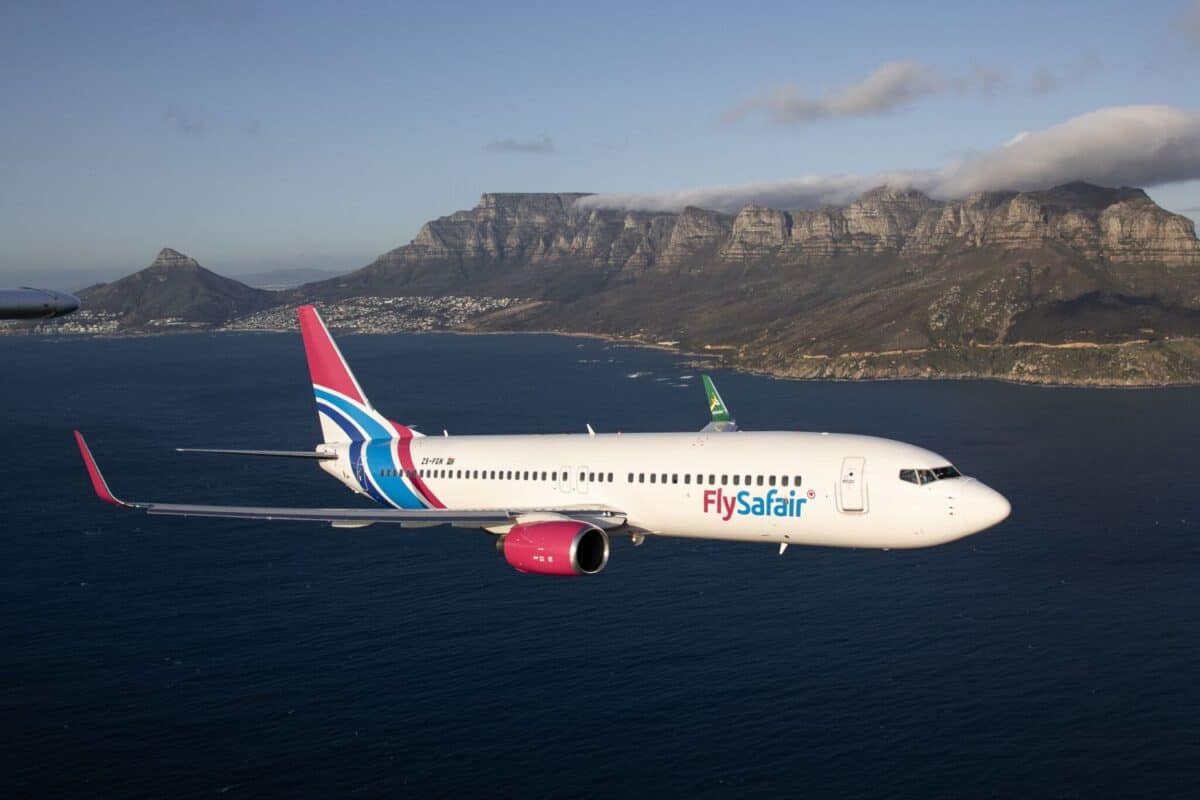
The economic impact of the Middle East conflict is starting to reach South Africans, with low-cost airline FlySafair announcing it will introduce a temporary extra fuel fee on flights from Thursday.
The airline said on Wednesday it has had to absorb higher fuel costs since the Middle East crisis erupted on 28 February to protect passengers from paying higher airfares.
However, FlySafair says it can no longer manage them and will have to pass on some of these increases.
“With Jet A1 Fuel prices at South African coastal airports now up approximately 70% in just one week, and no clear end in sight, the airline has reached the point where it must pass on a portion of these costs to ensure the long-term sustainability of the airline and its low fare offering,” said the airline.
ALSO READ: Flying could become unaffordable as jet fuel prices jump by 70%
Temporary extra fuel fee
In a statement, the airline said the temporary fuel surcharge, a measure it has resisted throughout its history, will take effect from 12 March 2026. The surcharge will apply only to flights departing on or before 12 May 2026.
“We will be specifically itemising this temporary dynamic fuel surcharge on all tickets to ensure fairness and transparency to our customers,” said Kirby Gordon, Chief Marketing Officer at the airline.
The airline said it has never implemented a fuel surcharge before. “The persistence and scale of these fuel costs have left us with no reasonable alternative,” added Gordon.
“Instead of increasing fares across the board or hiding costs, we have chosen to introduce a clearly labelled, temporary surcharge. This gives customers full visibility into what they are paying for and allows us to remove the surcharge once prices stabilise.”
ALSO READ: Motsepe and other mining giants to benefit from the Middle East conflict
Oil prices push FlySafair to add fuel fee
Rising tensions in the Middle East have disrupted shipping through the Strait of Hormuz, one of the world’s most important trade routes. At least 20% of the world’s oil supply flows through the Strait of Hormuz.
A disruption of this route has led to higher oil prices, global shipping companies rerouting vessels, and some cancelling shipments, resulting in a significant drop in traffic through this critical route.
FlySafair said this has led to Jet A1 fuel prices increasing significantly. “Global oil prices have swung wildly, with Brent crude surging past $100 per barrel before settling around $87-91 amid extreme volatility,” said the airline.
“More critically for aviation, Jet A1 fuel prices at South African coastal airports have spiked by approximately 70% in just one week.”
Market conditions will determine duration
The airline said the temporary fuel surcharge will be reduced or removed once market conditions improve. Passengers should note that surcharges will vary by route length to reflect the actual fuel consumption required per journey.
“Our teams are modelling fuel prices airport by airport and reviewing potential tankering strategies to ensure the surcharge reflects the minimum required amount,” said Gordon.
“This is not a profit mechanism, rather it’s a measure to maintain service continuity while being upfront with customers.”
Passengers who have already booked their flights will not be affected by this. “No fuel surcharge will be added retrospectively,” said the airline.
However, for those who book from Wednesday, surcharges will be shown as a separate line item on all flights departing on or before 12 May 2026.
ALSO READ: Fuel price shock: Here’s how much more petrol might cost you in April
Fuel costs on operating costs
The airline said fuel typically makes up 50-55% of FlySafair’s direct operating costs.
“At current price levels, the airline estimates an additional cost of around R35 000 per flight hour for each Boeing 737-800 aircraft in operation.
“FlySafair has absorbed these increases since the crisis began, but this is simply not sustainable without threatening the long-term viability of affordable air travel in South Africa.”
The airline said it is not alone in adjusting pricing in response to global fuel volatility. “Airlines worldwide, including Japan Airlines, ANA and several European carriers, apply fuel surcharges tied to benchmark jet fuel prices or long-haul cost structures.
“South African carriers have also begun adjusting fares or signalled that future pricing will reflect the current fuel environment. FlySafair does not hedge its fuel purchases, meaning it is exposed to immediate market prices.”
Tourism sector
FlySafair noted that the government said the country’s jet fuel supply remains stable, although this depends on developments in global shipping and oil markets.
Higher fuel prices generally lead to airfare increases, which may influence travel demand, especially among leisure travellers. Reduced demand can have knock-on effects across accommodation, hospitality, transport and small businesses throughout the tourism value chain.
“Our thoughts remain with those affected by the conflict driving these market shocks,” said Gordon. “We hope for a swift resolution for humanitarian and economic reasons.”
NOW READ: SA could be a big loser in Middle East conflict: Oil surges, stronger dollar hits rand
About the Author