South Africa has over 100 state-owned enterprises (SOEs) that were established with the purpose of delivering essential services to the public and drive economic development projects that the private sector may not take on.
The SOEs are led by CEOs who are responsible for steering the organisation’s strategy, ensuring the efficient delivery of public services, and leading the institution in line with government policy and national development goals.
However, their salary packages are mind-blowing.
The highest-paid SOE CEO is the woman responsible for securing and managing investment to fund major infrastructure and development projects.
ALSO READ: SABC splashes R5.5 million on CEO, while it bleeds R4.2 billion in unpaid TV licences
How SOEs are divided
According to the South African government, there are 123 SOEs in the country. The organisations are ultimately accountable to Parliament, but they report to different ministries depending on their sector.
For example, some SOEs fall under the Minister of Finance, Enoch Godongwana, because they deal with fiscal matters. Others report to the Minister of Mineral and Petroleum Resources, Gwede Mantashe, because they operate in the energy sector.
It is a bit difficult (but not impossible) to go through the latest financial statements of the 123 SOEs to determine which CEO is the highest-paid. However, parliamentary replies from the two ministers, made available earlier in the year, have helped determine the top five highest-paid SOE CEOs.
Highest-paid SOE boss
The highest-paid SOE CEO comes from Godongwana’s portfolio. The minister was asked to outline, for each SOE that reports to him, how much each received in salaries.
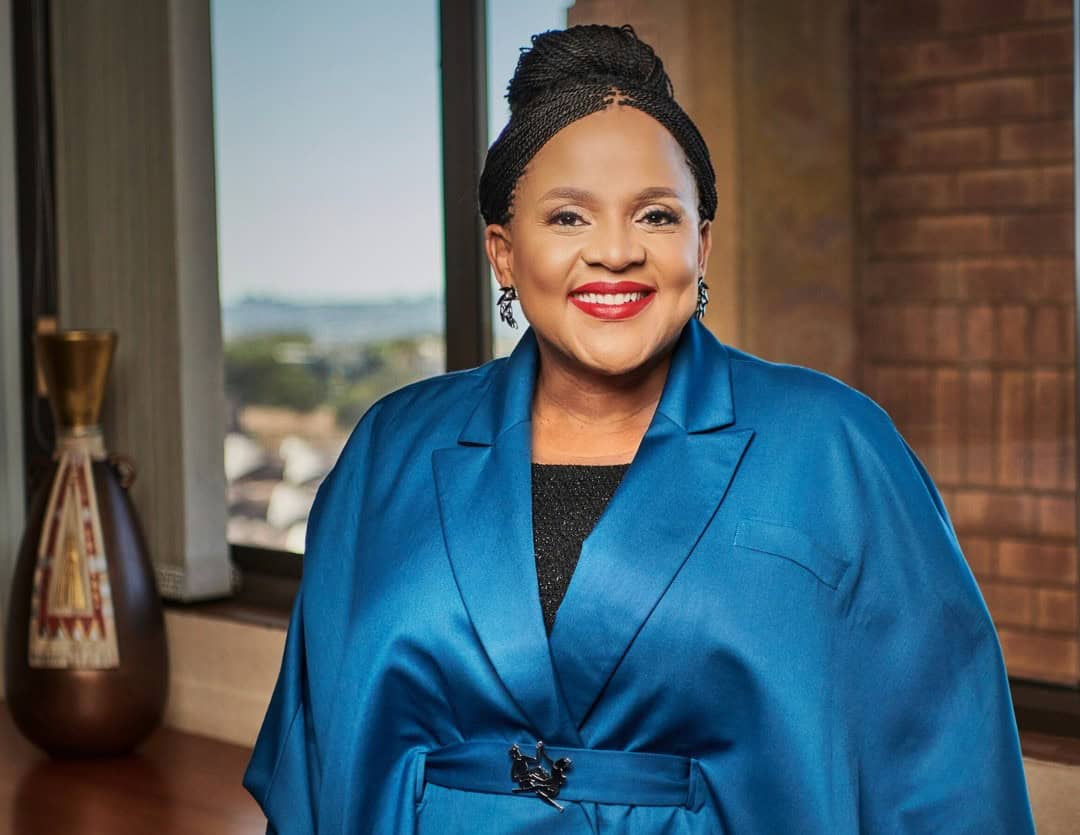
According to the reply, Boitumelo Masoka of the Development Bank of South Africa (DBSA) is the highest-paid CEO.
The DBSA was established with the mandate to promote economic growth and regional integration for sustainable development projects and programmes across the African continent.
Masoka’s salary package for the 2025 financial year was R15.5 million, inclusive of guaranteed pay, allowances, benefits and variable pay.
According to the bank’s financial results for the year ended 31 March 2025, her basic salary amounted to R6.8 million. Medical aid, group life and provident fund contributions cost the organisation R1.3 million.
Subsistence and travel were more than R235 million. What made her salary package increase is her bonuses. She received a performance bonus of R3.3 million and a retention bonus of R3.7 million.
ALSO READ: Meet the province where most of the budget goes to government salaries
Eskom CEO’s salary
The second-highest-paid CEO is not from Godongwana or Mantashe’s portfolio; he is from the Ministry of Electricity and Energy, led by Minister Kgosientso Ramokgopa.
Eskom’s CEO, Dan Marokane, received a salary package of more than R11 million for the 2025 financial year.
Of the R11.7 million, he received a fixed annual salary of R9 million, approximately R750 000 per month.
Marokane was appointed CEO of the state-owned entity in 2024, with, amongst other things, the responsibility to end load shedding.
Marokane received a short-term bonus of R765 000 for the 2025 financial year, having received none in 2024. His salary package also included “other payments” worth R1.9 million.
Third-highest paid
The third-highest-paid SOE CEO comes from finance’s portfolio: the South African Revenue Services (Sars) Commissioner Edward Kieswette.
For the 2025 financial year, he received R10.7 million. Out of that, R8 million went to his guaranteed salary, together with a R2 million bonus. The rest of the money went to his allowances and contributions.
For financial year 2024, Kieswetter received a salary package worth R11.7 million, his guaranteed annual salary amounted to R8 million, while his allowances and contributions are worth more than R161 000. The rest of the money was his bonus.
ALSO READ: They collect your tax and earn R33 million while doing it – Meet Sars’ top earners
Sars not an SOE
Although Sars is not considered an SOE, Godongwana included Kieswetter’s salary in the parliamentary reply.
The tax agency is an autonomous agency, but it still reports to the government because it is part of the public sector and accountable to parliament and the minister of finance, as it uses public funds and implements national tax policy.
“Sars is governed by the Sars Act 34 of 1997, which established it as an organ of state within the public administration, but as an institution outside the public service. Therefore, as such, Sars is not a state-owned enterprise (autonomous) and is not subject to the DPSA’s remuneration guidelines,” said Godongwana.
Government Employee Pension Scheme
The fourth-highest-paid SOE CEO still comes from Godongwana’s portfolio. According to his reply, the salary package for the Principal Executive Officer of the Government Employee Pension Scheme, Musa Mabesa, is R6.7 million.
He earned a basic salary of R4 million during the 2025 financial year and had a cellphone allowance of more than R69 000.
His salary package also included a non-pensionable cash allowance of more than R2 million and a retirement fund contribution of more than R504 million.
The reply details that he didn’t receive any bonus for 2025, but in the previous financial year, he was paid a short-term incentive bonus of T=R2.3 million and a long-term incentive of more than R881 000.
“The GEPF is not a Government Department nor a Public Entity and does not adhere to the remuneration guidelines of the Department of Public Service and Administration,” said Godongwana.
“The GEPF benchmarks the remuneration of all employees against market best practices.”
Central Energy Fund CEO
The fifth-highest-paid SOE CEO comes from Mantashe’s portfolio. Mantashe revealed that the Central Energy Fund (CEF) CEO, Ishmael Poolo, received a salary package of R6.1 million.
It is worth noting that some of the figures provided by Mantashe are from the 2023/2024 financial year. According to the reply, the CEO also received a performance bonus of R2.8 million.
“The remuneration package for the CEF CEO is aligned with the Department of Public Service and Administration’s remuneration guidelines,” Mantashe stated in his parliamentary response.
NOW READ: Government under fire for splashing on employees’ salaries
About the Author