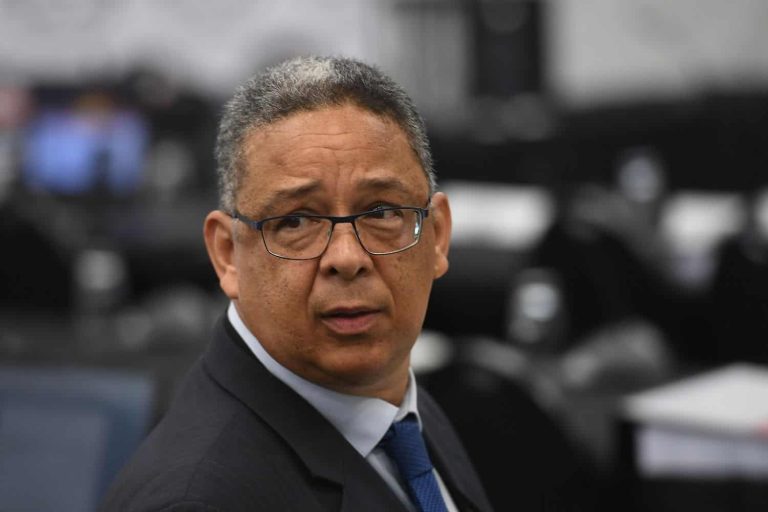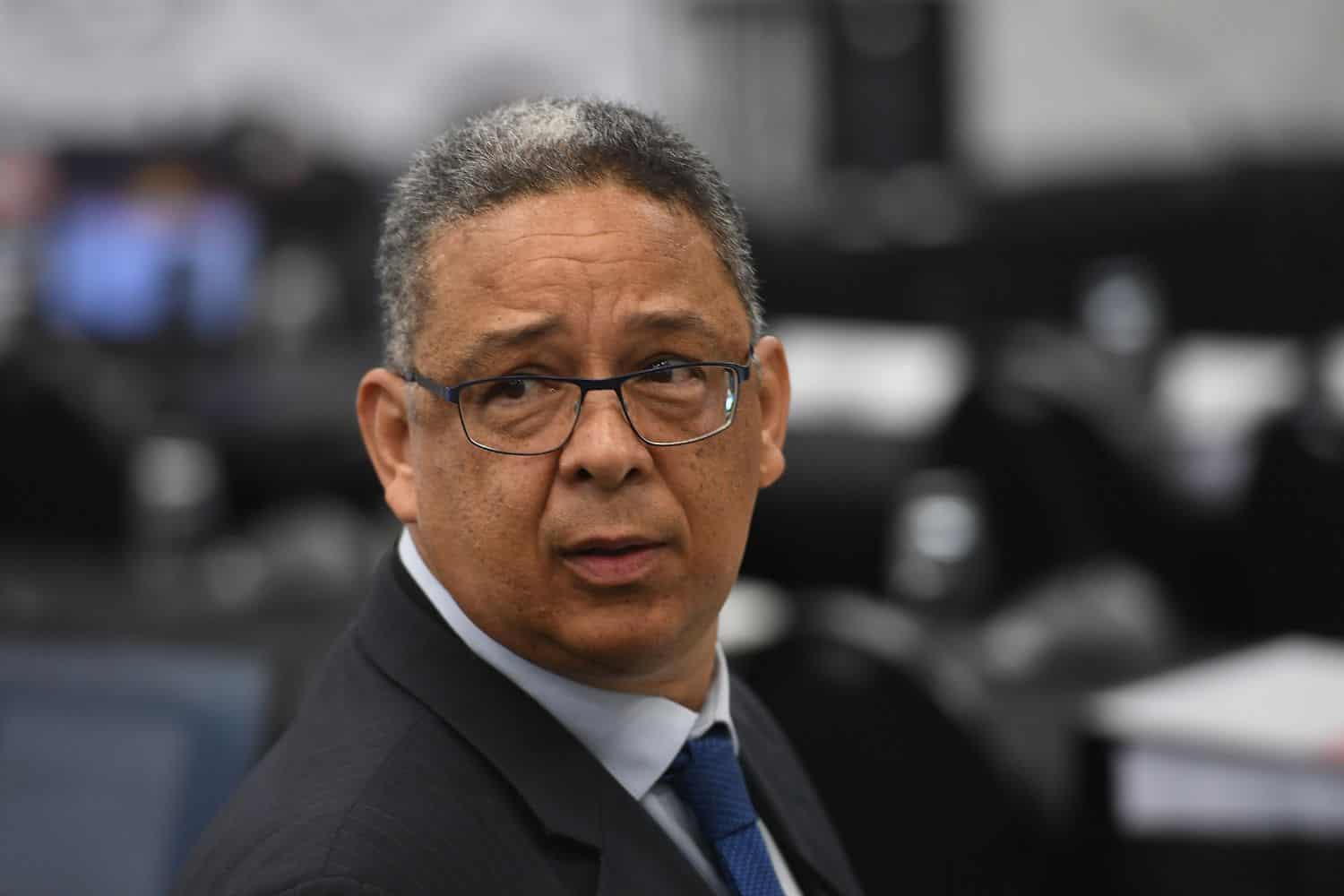
Former Independent Police Investigative Directorate (Ipid) head Robert McBride told parliament’s ad hoc committee that Deputy National Police Commissioner Shadrack Sibiya was wrongly implicated in a report that ultimately led to McBride’s suspension.
He also shed light on the reasons behind the investigation into former acting national police commissioner Khomotso Phahlane.
McBride on Tuesday gave his evidence before the committee probing claims of political interference and criminal infiltration at the Good Hope Chamber in Cape Town.
Appointed in March 2014, McBride’s term as executive director of Ipid ended in February 2019 following the expiration of his contract.
ALSO READ: ‘It’s giving us Mary De Haas vibes’: Ex-Ipid boss McBride slammed for withholding information
Prior to this, he had been suspended in March 2015 by then police minister Nathi Nhleko for allegedly interfering with a report that recommended criminal charges against Sibiya and former Hawks head Anwa Dramat.
The charges stemmed from the alleged unlawful illegal rendition of four Zimbabwean nationals.
Nhleko’s suspension decision was later overturned by the Constitutional Court (ConCourt) in September 2016, allowing McBride to return to office.
Former Ipid head Robert McBride’s testimony
Addressing MPs, McBride told the committee that upon taking office, he requested briefings on high-profile Ipid cases, including those involving Dramat and Sibiya.
He testified that he became concerned the investigation into the two senior South African Police Service (Saps) officers lacked independence.
According to McBride, members of Saps’ Crime Intelligence division had conducted the probe, despite not having an investigative mandate, and implicated Dramat and Sibiya based on false statements.
He indicated that Ipid’s final report exonerated both men and this contradicted Nhleko’s position.
READ MORE: The ‘fall’ of Shadrack Sibiya
McBride informed MPs that cellphone records showed Sibiya was nowhere near the alleged crime scene, describing the case as a “stitch-up”.
“He was getting framed for a case he had nothing to do with,” McBride said during his testimony on Tuesday.
McBride added that the National Prosecuting Authority (NPA) had also raised concerns about the initial report recommending charges of kidnapping and defeating the ends of justice, concluding that it was incomplete.
“They said so in writing. It’s therefore no surprise that when the additional evidence is added, which is a different perspective of the matter, that the recommendations from Ipid would be that the charges against Dramat and Sibiya are not sustainable.”
Watch the ad hoc committee below:
He further testified that Sibiya’s troubles actually started after he arrested former Crime Intelligence head Richard Mdhluli.
Reiterating that Sibiya was not at the crime scene, McBride said: “It can’t be, unless General Sibiya has the ability to bilocate and be in two places at the same time.”
According to McBride, there was a concerted effort to remove Dramat from his position, while Sibiya “fell in the middle”.
Phahlane allegations
McBride was also questioned on claims that Ipid had been infiltrated and controlled by private investigator Paul O’Sullivan.
Phahlane previously accused McBride and O’Sullivan of collaborating to target him and engineer his removal from Saps.
In response, McBride told the committee that Ipid’s investigation into Phahlane was based on multiple complaints, including the procurement of defective investigative equipment worth R54 million that was never delivered.
He said Ipid also looked into allegations that Phahlane was residing in a R8 million home he could not afford and that he had received kickbacks from service providers.
READ MORE: Ex-national police commissioner Phahlane says he was the ‘guinea pig of the step aside policy’
Further investigations focused on vehicles used by Phahlane that were allegedly not disclosed in a gift register.
While Phahlane told the committee last week that he was trading vehicles, McBride said the concern was the unusually high values involved.
“So gratification, in our view, is now linked to the cars that were donated or bought, in inverted commas and how they are disposed of,” McBride said.
Search warrant and whistleblowers
McBride also addressed the January 2017 search warrant executed at Phahlane’s home, saying it was linked to allegations that a service provider had installed a surround sound system at his residence.
Although Phahlane later repaid the money for the installation, McBride told MPs that this did not negate the alleged crime.
“It’s like you have taken money out of the till and when you put the money back it doesn’t take away the first offence.”
READ MORE: Political interference in Saps intensified after ANC’s 2007 Polokwane conference – Phahlane
He revealed that Phahlane later approached the courts to challenge the legality of the search warrant, but ultimately withdrew the application.
McBride said whistleblowers had provided information about Phahlane to O’Sullivan, explaining his apparent knowledge about Ipid affairs involving Phahlane.
“That’s why O’Sullivan knew so much about what was happening.”
Ipid independence
Earlier in his testimony, McBride argued that Ipid should no longer fall under the authority of the minister of police, who also serves as the political head of Saps.
He warned that this structure created an inherent conflict of interest, as ministers could seek to influence the outcome of Ipid investigations into police leadership.
“And that has been our experience within Ipid at various stages in various forms.”
McBride said reform was necessary to prevent repeated inquiries into police misconduct.
He argued that true oversight could only be achieved through institutional independence.
“If it’s not there, it’s just another form of control by the minister.”
About the Author