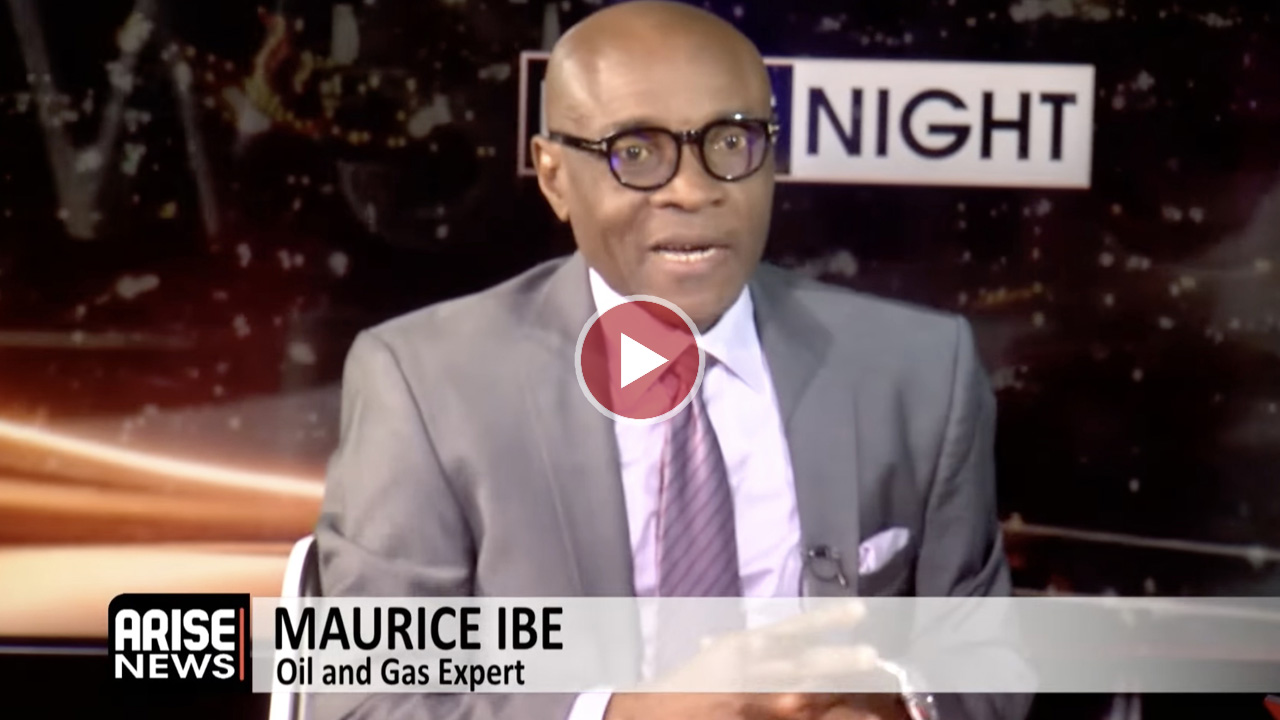

Oil and gas expert Maurice Ibe has warned that Nigeria’s petroleum sector will continue to struggle unless regulators strictly confine themselves to oversight functions and stop operating as participants in the industry.
Ibe said the immediate task before the newly appointed heads of the Nigerian Upstream Petroleum Regulatory Commission (NUPRC) and the Nigerian Midstream and Downstream Petroleum Regulatory Authority (NMDPRA) is to restore regulatory independence, enforce data-driven decisions and resist political interference.
Speaking in an interview on ARISE NEWS on Thursday, Ibe said past leadership failures stemmed from regulators aligning themselves with commercial interests.
“First and foremost, for an agenda, the regulator should regulate and allow the players to play,” Ibe said.
“When a regulator begins to see himself as aligning with industrial players, you corrupt the system.”
He accused former regulators of overstepping their mandate and undermining the integrity of the sector.
“That was part of Farouk’s problem. He began to see himself as part of the players in the industry instead of the regulator,” he said.
“Once you model yourself as a player rather than a regulator, you convolute the system, and that is what made them casualties within the system.”
Ibe said regulatory decisions on fuel importation must be guided strictly by verifiable production and consumption data.
“This should be driven by data. If local refineries are producing enough for local consumption, then there is no need for imports,” he said.
“But if the data does not support that our local refining capacity is enough, then there should be room for importation. We cannot suffer because capacity is low.”
He criticised the NMDPRA for failing to provide credible figures on local refining output and national fuel consumption.
“That is part of the problem the NMDPRA has. They are supposed to be the ones giving us unadulterated data,” Ibe said.
“That data should determine how much we import and whether our local refining capacity is sufficient.”
According to him, conflicting consumption figures released over the years have created confusion and enabled unnecessary imports
“For years, they have floated all manner of figures — 65 million litres a day, 70 million, even up to 90 million,” he said.
“How many cars are on Nigerian roads to justify that level of consumption?”
“They supervise petrol stations, they know how much fuel is coming in, and they know what Dangote and other refineries are producing. There is no reason Nigeria should not know its real consumption.”
On the capability of the newly appointed regulators, Ibe said they are technically qualified but could be undermined by political pressure.
“In terms of capacity and qualifications, they are more than qualified. These are thoroughbred professionals who grew up within the system,” he said.
“The problem they will face is political pressure — pressure from above, from below, from everywhere.”
He warned that bending rules to appease vested interests would derail reform efforts.
“If they are allowed to regulate, monitor, evaluate and enforce the PIA the way it is supposed to be done, they will succeed,” he said.
“But if political pressure starts forcing them to bend the rules, then all bets are off.”
Ibe also said Nigeria has no justification for continued fuel imports if regulators enforce transparency and local supply arrangements.
“We have no business still importing fuel at this point in our national life,” he said.
“Dangote refinery pledged it could supply independent marketers with everything they needed to satisfy local consumption.”
He disclosed that he personally facilitated negotiations between Dangote Refinery and independent marketers.
“I negotiated a transaction between IPMAN and Dangote refinery, and they were willing and ready to supply every single litre needed,” Ibe said.
“But once personal interests come in, regulators lose interest.”
He alleged that inflated consumption figures were deliberately used to justify imports.
“Instead of sticking to 50 or 55 million litres, they tell us we need 65 or 70,” he said.
“If Dangote is producing 50, someone wants to import the balance so they can make foreign exchange for themselves.”
Ibe stressed that Dangote was not Nigeria’s only local producer.
“Dangote is not the only one. There is Walter Smith and others,” he said.
“Regulators should visit the refineries and tell Nigerians exactly what we are producing locally.”
On the ₦190 billion bridging claims owed to independent marketers, Ibe said the issue dates back several years and remains unresolved due to bad faith and internal divisions.
“These are transportation differentials — a form of subvention for hauling fuel across long distances,” he said.
“At one point, the claims were about ₦283 billion. I was in the middle of negotiating them.”
He said agreements reached with regulators were later abandoned.
“I met with Farouk in the Villa, we agreed on what to do, but he reneged,” Ibe said.
He added that some marketers also contributed to the problem.
“Independent marketers are not completely innocent,” he said.
“Some leaders negotiate for a few individuals, collect their own, and leave the rest behind. Divide and rule.”
Ibe concluded that without transparent data, firm regulation and political restraint, reforms in the petroleum sector would remain elusive.
Boluwatife Enome
About the Author