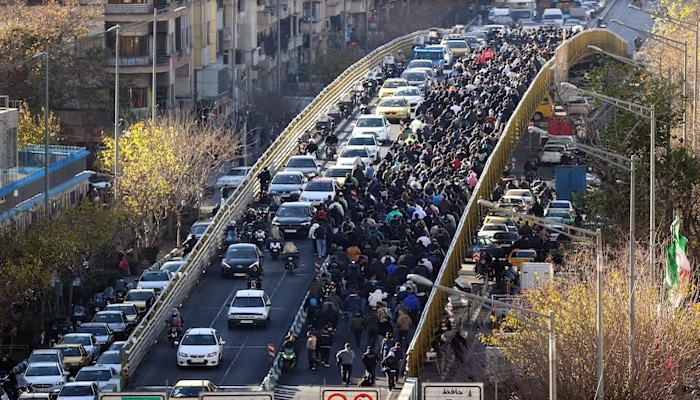
Mass anti-government protests have erupted across Tehran and several other Iranian cities, with verified videos showing what activists describe as the largest public challenge to Iran’s clerical leadership in years.
Footage reviewed shows thousands of demonstrators marching peacefully through major roads in Tehran and the northern city of Mashhad on Thursday evening, chanting slogans calling for the overthrow of Supreme Leader Ayatollah Ali Khamenei and the return of exiled royal figure Reza Pahlavi.
The demonstrations mark the 12th consecutive day of nationwide unrest sparked by the collapse of Iran’s currency, the rial, and surging inflation. Human rights groups say protests have spread to more than 100 cities and towns across all 31 provinces.
Monitoring groups later reported a nationwide internet blackout, with NetBlocks warning that Iran was experiencing severe connectivity disruptions amid efforts to restrict information flow during the protests.
Human rights organisations have reported sharply rising casualties. The US-based Human Rights Activists News Agency (HRANA) said at least 34 protesters, including five children, and eight security personnel have been killed, with more than 2,200 arrests recorded. Norway-based Iran Human Rights reported at least 45 protester deaths, including eight children.
Videos from cities including Isfahan, Tabriz, Babol, Dezful and Mashhad show crowds chanting anti-government slogans, removing surveillance equipment, and confronting security forces. In western Iran, footage appeared to show security personnel firing weapons as protesters gathered in public squares.
The protests intensified after Reza Pahlavi, son of Iran’s last shah, urged Iranians to take to the streets in a united front. Writing on X, he described the demonstrators as “millions of courageous compatriots” demanding freedom and called for continued protests.
Iranian state media played down the scale of the unrest, in some cases denying protests occurred. Meanwhile, Kurdish regions in western Iran saw shop closures following calls for a general strike amid reports of a deadly crackdown.
US President Donald Trump reiterated warnings of possible military action if Iranian authorities continue killing protesters, while Iran’s president Masoud Pezeshkian urged security forces to exercise restraint.
The protests began on 28 December after a sharp fall in the value of the rial and have grown into the most widespread unrest since the 2022 demonstrations following the death of Mahsa Amini in police custody.
Erizia Rubyjeana
About the Author