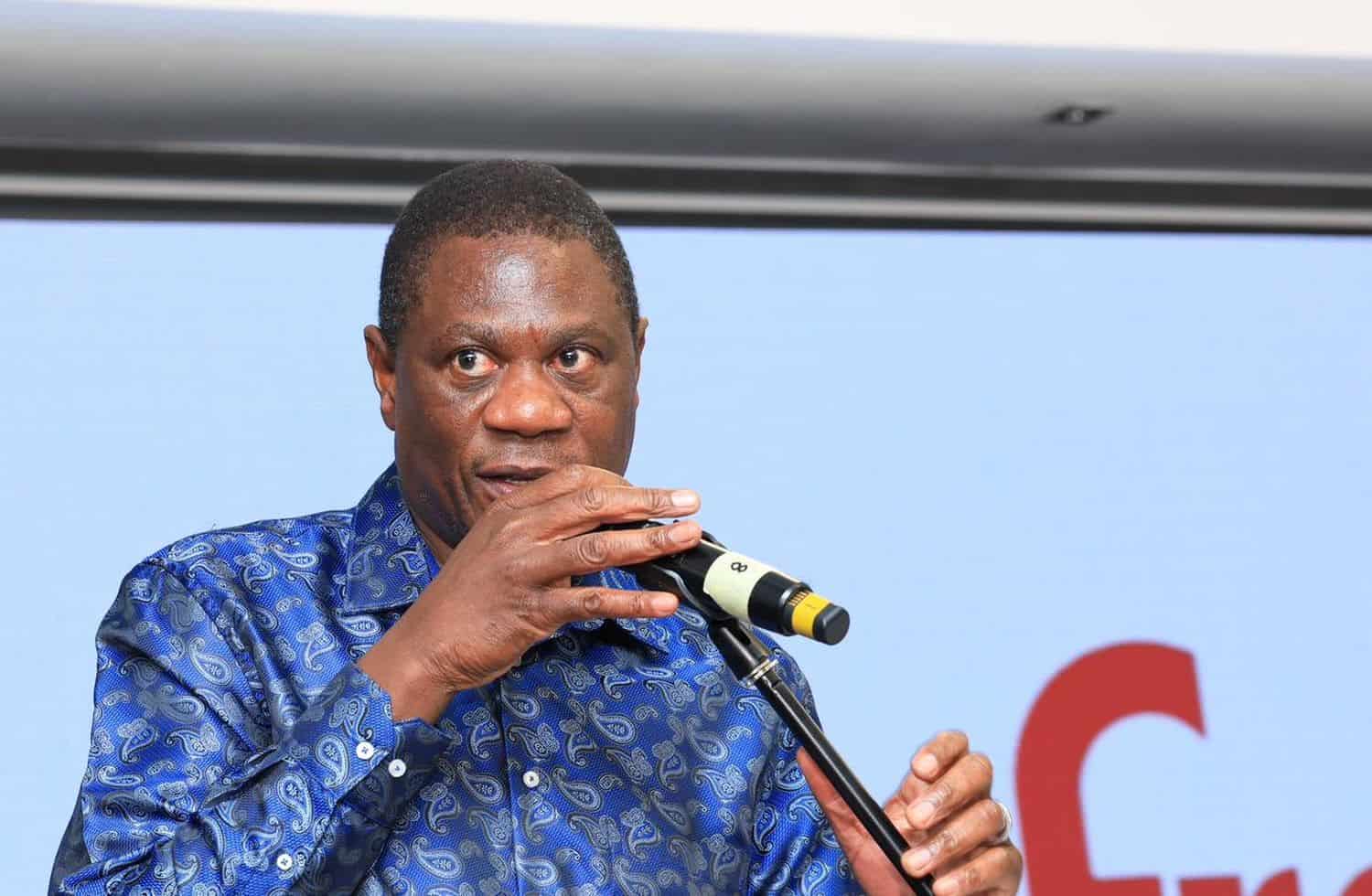
Deputy President Paul Mashatile on Saturday said that “abandoning B-BBEE is not an option” for the government.
He made these comments while speaking at the Frank Dialogue on the Future of Broad-Based Black Economic Empowerment (B-BBEE) in South Africa event in Durban.
B-BBEE is the government’s policy to increase black participation in the economy.
Mashatile addresses ‘hurdles’ of B-BBEE
Mashatile, however, acknowledged that the implementation of B-BBEE has been inconsistent and faced “various hurdles”.
He said that instead of discarding B-BBEE, the government needs to enforce the policies better and remove any barriers that exist.
“Instead, the focus must be on reform, strengthening, and disciplined implementation.”
ALSO READ: Mbalula defends BEE and says South Africa needs more black billionaires
The deputy president also said that fronting and “paper-based compliance” are issues that weaken trust in B-BBEE.
“Economic opportunities remain largely concentrated, accompanied by significant skill deficits that impede the policy’s effectiveness,” he said.
Review of the B-BBEE framework
Mashatile said the Department of Trade, Industry and Competition will review the framework of B-BBEE to ensure it refines and reinforces the policy.
The aim is to drive transformation, reduce corruption, and promote inclusive growth, he said.
Despite the shortcomings of B-BBEE, Mashatile said the policy still has achievements such as the growth of the black middle class and advancements in the mining and finance industries.
“The BEE Commission’s 2022 National Status Report highlights annual certification data that tracks improvements in ownership, management control, skills pipelines, and supplier development, suggesting that transformation is advancing, albeit unevenly, rather than stagnating,” he said.
Wealth gap between blacks and whites
The deputy president added that B-BBEE remains necessary because of the high levels of inequality in South Africa.
“These policies are essential in addressing the significant wealth gap between Black and White South Africans, highlighting the need for race-based laws to ensure a more equitable playing field,” he said.
ALSO READ: DA Bill to replace B-BBEE: Colour-blind or justice-blind?
Mashatile also claimed that the proper implementation of B-BBEE will improve the country’s unemployment problem.
More black farmers
He saidtransformation remains a challenge in agriculture, saying that black farmers are only responsible for around 10% of South Africa’s commercial agricultural output.
“This stark figure tells us that our growth agenda must have a deliberate bias towards the empowerment of black farmers.”
ALSO READ: White collar crimes, not B-BBEE, sank Tongaat Hulett
According to Mashatile, land reform is needed to bridge the gap for black farmers. He also touted skills development and preferential procurement.
“Through skills development, we can invest in training, mentorship, and bursaries that equip emerging farmers with the technical expertise to thrive in modern agribusiness.
“Through preferential procurement, we can open markets by requiring that government institutions and retailers source produce from black-owned farms, creating stable income streams and reducing exclusion,” he said.
Fronting
Mashatile also addressed the bypassing of B-BBEE laws through fronting, where companies misrepresent their levels of black ownership and management to gain tenders.
“Finally, we must protect the integrity of empowerment. Fronting is economic sabotage; it will be confronted through stronger verification, faster case finalisation, and real consequences.”
READ NEXT: Are South Africans lazy? – Mantashe says citizens too dependent on government
About the Author