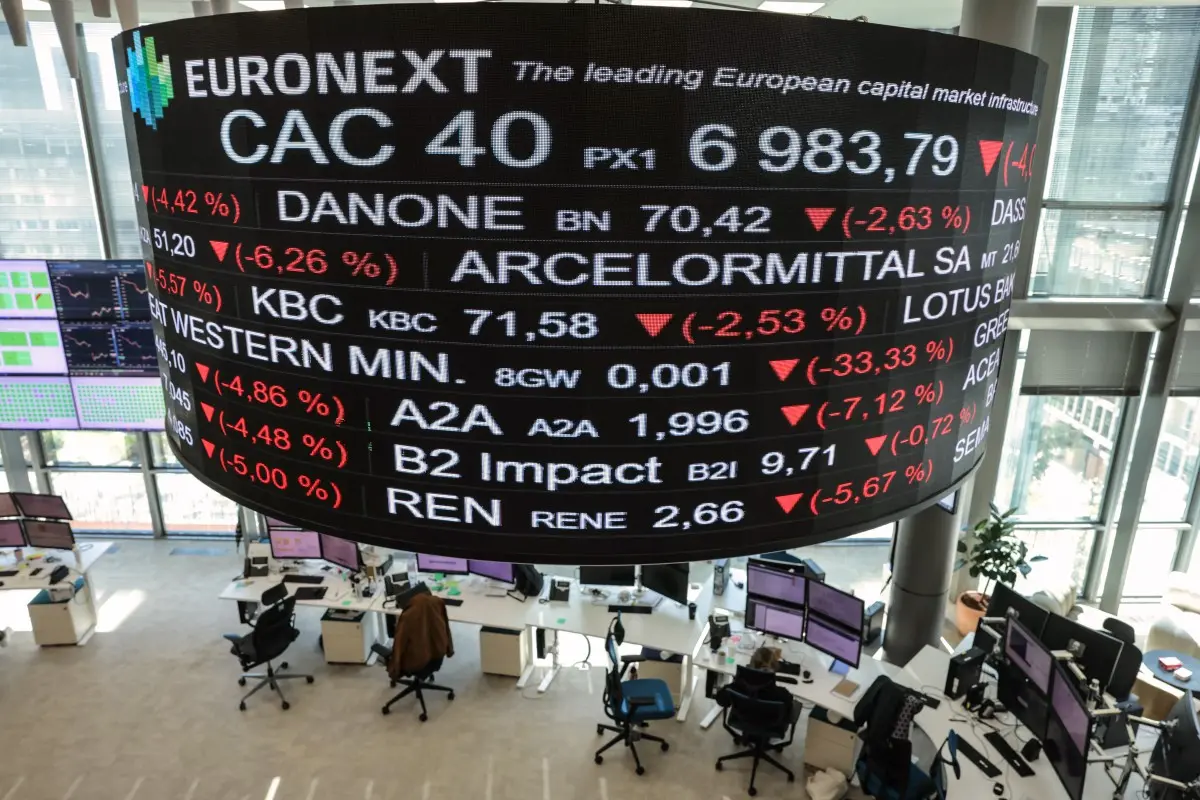
Euro extends losses, energy prices surge and investors rush to cash amid inflation fears…
Global financial markets remained under pressure on Wednesday as escalating conflict in the Middle East rattled investors, pushing the U.S. dollar to a near three-month high and driving a fresh wave of selling across stocks and bonds.
The euro fell 0.2 percent to $1.1590, marking its third consecutive day of losses after earlier touching its weakest level since late November. The decline followed data released Tuesday showing eurozone inflation came in higher than expected in February, even before the latest flare-up involving Iran.
Risk sentiment deteriorated further after Israeli and U.S. forces struck targets across Iran, intensifying concerns about a prolonged disruption to global energy supplies. Investors moved swiftly into cash positions as fears mounted that rising oil and gas prices could reignite inflationary pressures worldwide.
Energy markets reacted sharply. The global benchmark Brent crude contract rose 1.9 percent to $82.94 per barrel, its highest level since July 2024. Since Friday, Brent has climbed 14 percent. European gas prices have surged roughly 70 percent since the end of last week.
The escalation has disrupted energy exports from the Middle East, with Iran’s retaliatory actions targeting ships and energy infrastructure in the Gulf, effectively restricting navigation and forcing production halts from Qatar to Iraq.
Currency markets reflected the cautious mood. The British pound slipped 0.3 percent to $1.3323, while the U.S. dollar index — which tracks the greenback against six major currencies — edged up 0.1 percent to 99.208 after earlier touching its strongest level since November 28.
Against the Japanese yen, however, the dollar eased 0.2 percent to 157.52 yen.
In offshore trading, the dollar gained 0.1 percent against the Chinese yuan to 6.9287, following mixed February purchasing managers’ index (PMI) data from China. Official surveys showed a contraction in activity, while a private-sector reading exceeded expectations.
The Australian dollar declined 0.6 percent to $0.6996, despite data indicating that fourth-quarter economic growth accelerated. The New Zealand dollar inched up 0.1 percent to $0.5898.
Cryptocurrency markets also softened, with bitcoin falling 0.4 percent to $67,776.69 and ether dropping 0.5 percent to $1,958.81.
The combined pressure from geopolitical tensions, rising energy prices and renewed inflation concerns has left investors bracing for further volatility across global markets.
About the Author