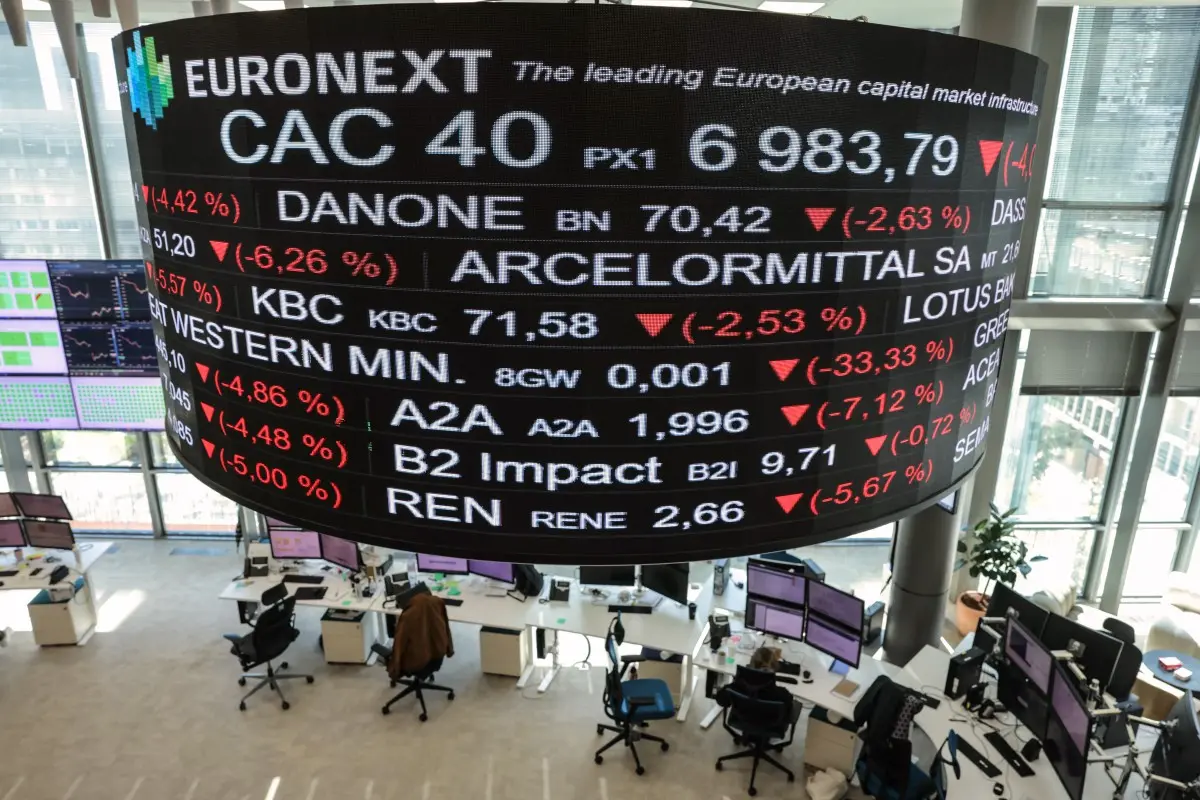
Investors shrug off escalating Middle East conflict for now while energy risks and central bank pressure quietly build beneath the surface….
Asian equities climbed on Wednesday, extending a global rebound led by technology stocks, even as geopolitical tensions in the Middle East intensified and energy markets remained on edge.
Oil prices edged lower in early trading offering a brief sense of relief to investors but continued to hover at elevated levels near $100 a barrel, underscoring persistent concerns about supply disruptions and inflation risks.
The uneasy calm in markets comes despite a sharp escalation in hostilities. U.S. forces launched strikes on Iranian missile installations near the Strait of Hormuz, a critical artery for global energy shipments, while Tehran responded with attacks targeting oil-producing Gulf states. The exchange has raised fears of a prolonged conflict that could choke off one of the world’s most important النفط corridors.
Roughly a fifth of global oil and gas flows through the narrow waterway. Any sustained disruption could send shockwaves through the global economy. Analysts warn that Iran’s apparent strategy of leveraging the strait as economic pressure could have far-reaching consequences if the standoff drags on.
Still, equity markets appear to be taking a more optimistic view—for now.
Wall Street set the tone overnight, with gains in major indexes driven by strong performances from large-cap tech companies. That momentum carried into Asia, where markets in Tokyo and Seoul posted solid advances. South Korean stocks surged, buoyed by gains in semiconductor giants, while Japan’s benchmark index rose more than two percent. Other regional markets, including Sydney, Taipei, Singapore, and Wellington, also moved higher, though Hong Kong and Shanghai lagged slightly.
The resilience in equities reflects a shift in investor sentiment following steep losses at the onset of the conflict. Traders are cautiously returning to risk assets, betting that the worst-case scenarios may be avoided—or at least delayed.
But that confidence may prove fragile.
Energy analysts note that Middle Eastern oil output has already taken a hit, with production dropping significantly from pre-conflict levels. More importantly, the reduced output may not be the biggest concern—the real risk lies in the growing difficulty of transporting crude out of the region as tensions around the Strait of Hormuz persist.
If exports begin to stall more dramatically in the coming weeks, oil prices could spike again, feeding into global inflation and complicating economic recovery efforts.
That puts central banks in an increasingly difficult position.
Policymakers are already grappling with the challenge of supporting slowing economies while keeping inflation in check. Higher oil prices would add upward pressure on costs, potentially forcing authorities to keep interest rates elevated—or even raise them further—despite weakening growth.
All eyes are now on the U.S. Federal Reserve, which is set to conclude its latest policy meeting later الأربعاء. While no immediate change in rates is expected, investors will be closely watching for signals about the path ahead, particularly in light of rising geopolitical risks.
For now, markets are choosing to focus on momentum rather than uncertainty. But as the conflict shows no clear signs of easing, the gap between investor optimism and underlying risk may become harder to ignore.
About the Author