Group calls for urgent urban renewal, commends Lagos Assembly’s intervention, insists public safety must not be politicised…
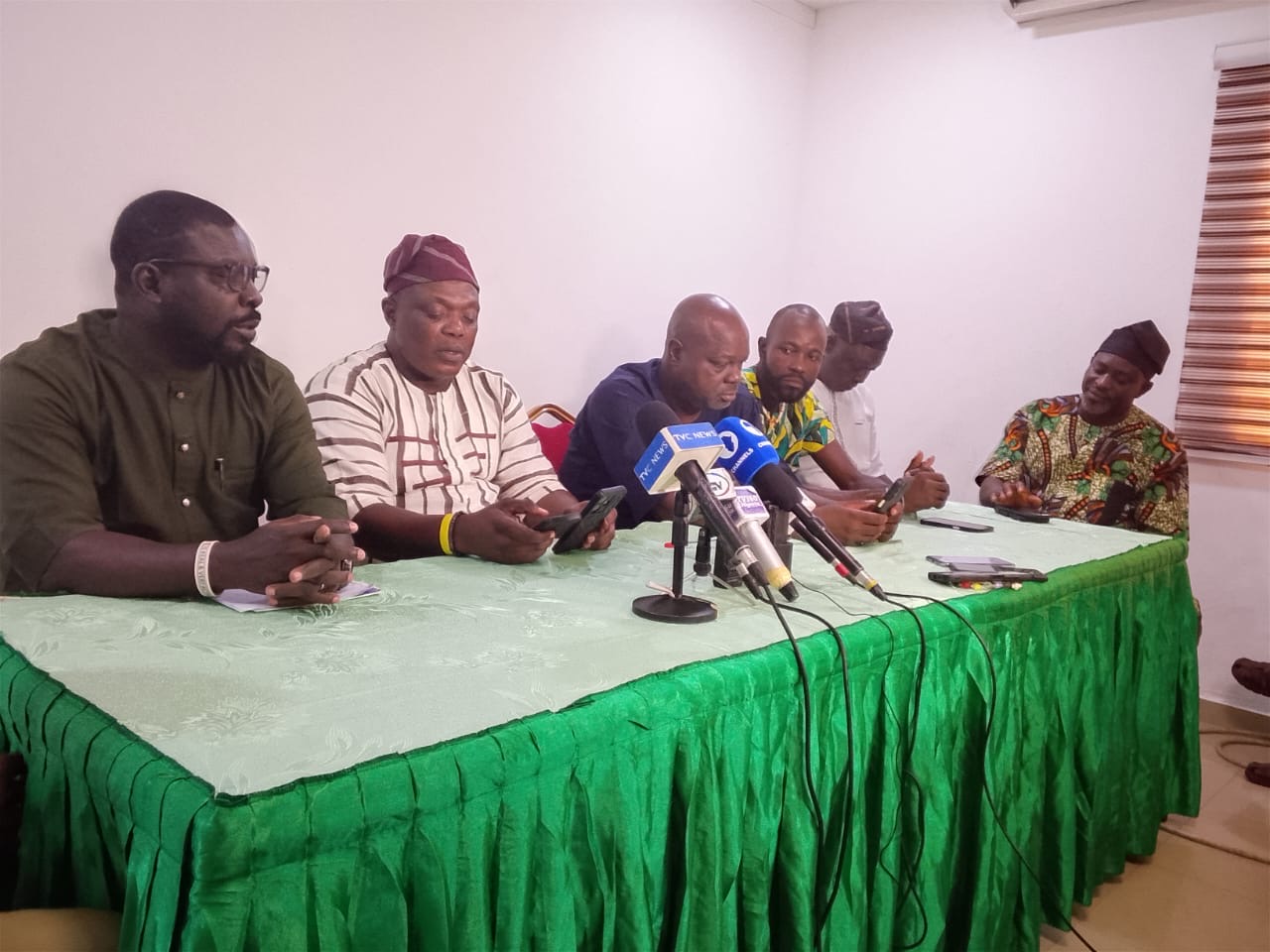
The Coalition for Good Governance (CGG) has weighed in on the renewed controversy surrounding demolitions in Makoko, calling for sincerity, transparency and urgent urban intervention from all stakeholders.
Addressing journalists in Lagos on February 25, 2026, the group described the situation as another chapter in the long-running tensions between the Lagos State Government and residents of Makoko, a waterfront settlement that has repeatedly come under scrutiny over safety and environmental concerns.
Speaking at the press conference, representatives of the coalition said the current blame game between the government and affected residents was unhelpful, especially given Makoko’s history of similar actions in 2005 and 2012 when parts of the community were demolished over public safety concerns.
According to the group, Makoko has for decades remained one of Lagos’ most contentious urban spaces. While urban planners often describe it as a reflection of the city’s planning failures, the coalition noted that the settlement’s living conditions — including structures erected under high-tension power lines and homes built in uninhabitable conditions — present real risks that cannot be ignored.
Makoko is estimated to house between 80,000 and 250,000 residents, many of whom live in wooden stilt structures over the Lagos Lagoon. Access to sanitation, potable water, electricity and proper waste management remains limited, while most residents depend on artisanal fishing and informal trade for survival.
The coalition acknowledged that successive administrations in Lagos State have classified the community as an environmental and security hazard, citing flooding, fire outbreaks, unregulated construction and proximity to high-tension power lines as justification for intervention. From a regulatory standpoint, the group said, these concerns are legitimate and demand corrective action.
CGG disclosed that prior to the latest demolition exercise, discussions were reportedly held between the Lagos State Government and community representatives, with agreements reached on the need to remove structures that violated approved safety distances from high-tension power lines. The understanding, according to the coalition, was that residents would voluntarily comply, while the government would monitor adherence to the agreed terms.
However, the group said findings available to it suggest that some residents failed to fulfil their commitments to dismantle the identified structures, prompting government intervention in what it described as an effort to safeguard lives and enforce safety regulations.
Despite this, the recent demolitions have triggered anger among residents, with allegations that the state acted beyond the scope of the agreed distance from the power lines. The coalition posed a central question: who bears responsibility for the breakdown of trust — residents who allegedly reneged on agreed terms, or the government enforcing compliance in line with its constitutional duty to protect lives?
While expressing sympathy for families who lost homes and livelihoods, CGG maintained that government has a primary obligation to prevent citizens from exposing themselves to life-threatening risks. Allowing unsafe structures to remain, it argued, would amount to neglect of duty.
The coalition, however, commended the Lagos State House of Assembly for stepping in to de-escalate tensions. Lawmakers recently ordered an immediate suspension of the demolitions and constituted a committee comprising relevant stakeholders to review the situation.
It also welcomed the state government’s promise to enumerate affected properties and its assurance that the matter would be handled with sensitivity.
Looking ahead, the coalition called for the urgent implementation of a comprehensive urban development programme for Makoko to prevent what it described as a looming and avoidable disaster.
It further urged Governor Babajide Sanwo-Olu to remain resolute in addressing the safety issues in the community, stressing that proactive evacuation and compliance measures are preferable to potential loss of lives in the event of a high-tension cable failure.
Above all, the group demanded renewed sincerity, trust and transparency from both government officials and community representatives, noting that past engagements appeared to have been undermined by communication gaps and competing interests.
The statement was jointly signed by Nelson Ekujumi, Razaq Oladosu, Peter Oparah, Rotimi Falola, Uche Nnadozie, Elijah Ajanu, Shola Omolola, Biola Ogunsanya and Shafiu Mohammed.
As tensions linger, the coalition concluded that the future of Makoko must be shaped not by confrontation, but by responsible governance, honest dialogue and a shared commitment to public safety.
About the Author