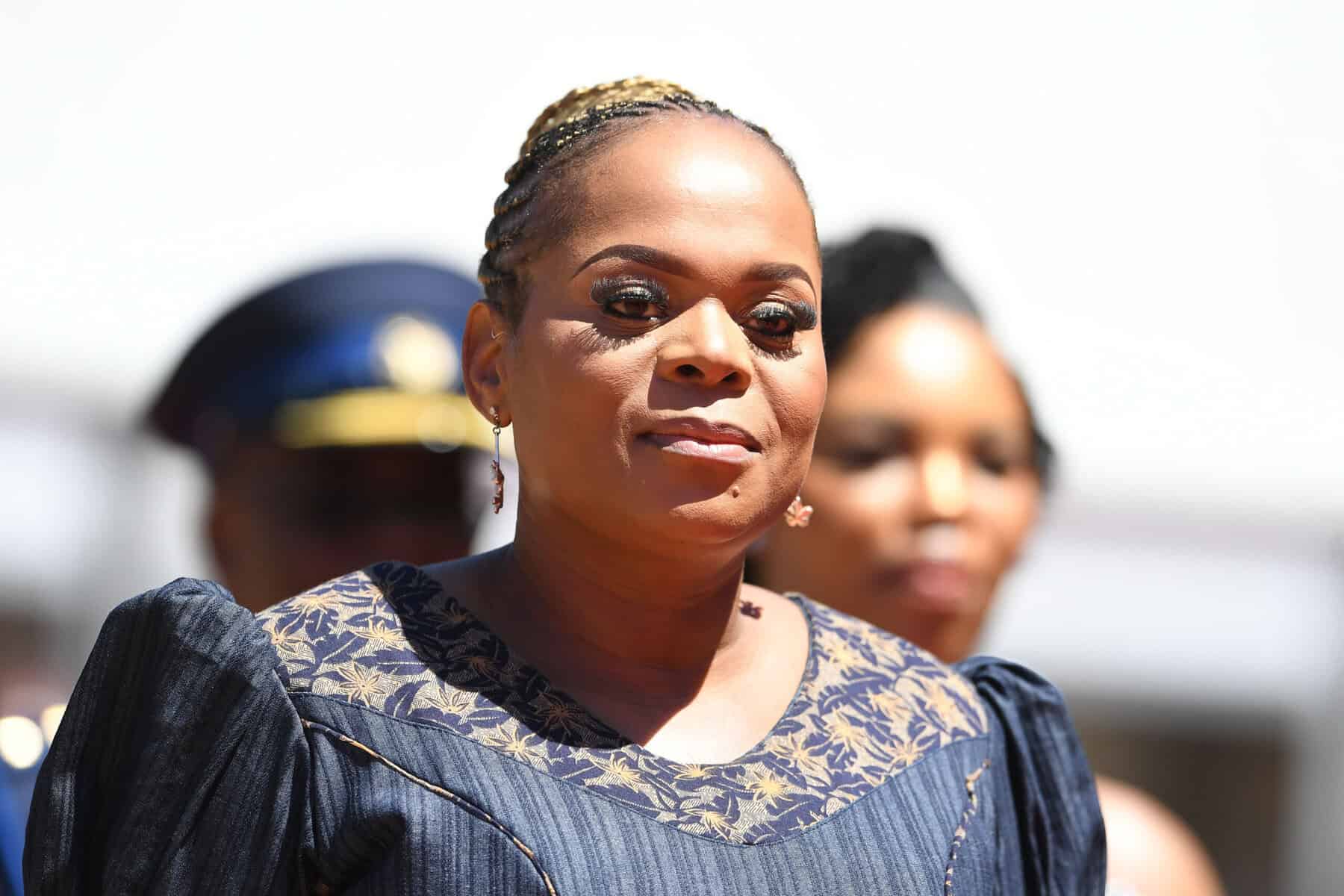
LEBOWAKGOMO, SOUTH AFRICA - FEBRUARY 27: Dr Phophi Ramathuba (Premier of Limpopo) at the Limpopo State of the Province Address (SOPA) at Limpopo Provincial Legislature on February 27, 2025 in Lebowakgomo, South Africa. The address highlights key achievements, challenges, and future plans to drive economic growth, job creation, infrastructure development, service delivery, and public safety in the province. (Photo by Gallo Images/Philip Maeta)
Limpopo used to be the second-poorest province in the country and it now ranks fourth in terms of both GDP and employment – and is pushing ahead to make the Limpopo-Gauteng highspeed rail project a reality, says premier Phophi Ramathuba.
In her state of the province (Sopa) address in Polokwane yesterday, Ramathuba said Statistics South Africa recorded that employment in Limpopo increased from 1 488 000 in the first quarter of 2025 to 1 552 000 by the end of the year.
“The reality is that a great deal of work remains to create meaningful opportunities that lead to sustainable jobs, including for those who have become discouraged and lost hope in their quest to earn a living.”
Provincial government moves to revive SEZ development
Ramathuba then shifted her focus to the Musina/Makhado and Fetakgomo/Tubatse special economic zones.
The Musina/Makhado special economic zone (SEZ) has allegedly been used by political parties as a campaigning tool to garner support for elections.
The project was announced by President Cyril Ramaphosa in September 2018 following the Forum for Africa and China Cooperation. But since the announcement, little has been achieved.
When Ramathuba inherited the zone in 2024, she labelled it a provincial government entity aiming to become a premier investment destination, fostering an inclusive and competitive economy through growth and development opportunities.
Ramathuba said the bottlenecks holding back the project were being addressed.
“The land has now been formally transferred to the SEZ while bulk work has begun. We have appointed a new CEO, who is expected to drive the vision of the province in that area.”
She said there was “steady progress on the bulk infrastructure investors need”, including water supply.
ALSO READ: Mpumalanga Sopa: Promises made but concrete plans missing
Flood damage highlights infrastructure challenges
On roads, the premier shared her frustration at the floods in the province in December and January.
“Of the total 20 000km of our roads, only 6 500km are tarred or paved, leaving 13 500km of gravel. These are provincial roads that connect residents to economic activities and social services.
“We cannot overemphasise the need to maintain these roads, hence we will continue to support our #DikgerekgereWednesday programme,” said the premier.
Bullet train project pitched as economic catalyst
On the bullet train project, Ramathuba said: “Although some may dismiss it as merely an elite venture, let us remind everyone no economy can grow and develop unless there is investment in infrastructure, particularly mobility and commuting.
“Its ripple effect is felt by the poor and working class, starting with the construction phase, when many jobs will be created.”
She added: “Upon completion, as part of decongesting the N1, goods will be moved from road to rail.
“This action also has the potential to revitalise our small towns like Bela-Bela, Modimolle, Mookgophong, Mokopane, Makhado and Musina and restore economic activity.”
ALSO READ: Lesufi’s 2026 Sopa debate: ‘Promises are repeated, the figures grow bigger’
Feasibility and funding of bullet train project questioned
Independent political analyst Solly Rashilo said, on paper, the bullet train is visionary.
“It is jobs galore, economic growth and relief for the deadly N1 corridor. In reality, many residents hear something else – an announcement without a timetable.
“Let us be honest. The government is battling to maintain its existing rail infrastructure. Commuter and freight systems have faced years of instability. In that context, a high-speed train sounds less like an imminent project and more like a campaign slogan.
“High-speed rail costs billions. It requires solid financing, policy certainty and long-term political consistency. Without transparent funding models, feasibility updates and visible groundwork, repetition begins to look like election choreography.”
DA member of the provincial legislature Jacques Smalle labelled the bullet train project a “dream” that does not speak to the real needs of the people of Limpopo.
He said that during the previous Sopa, Ramathuba had revealed that her government had set aside a budget of R80 million.
She said the money would have gone towards an impact assessment of the bullet train project.
This money was not spent. It was withdrawn during the adjustment budget in November, said Smalle.
NOW READ: Gautrain ticket prices may change … but they need to finalise a new operator first
About the Author