A Nairobi lawyer has moved to court seeking to block President William Ruto and his United Democratic Alliance (UDA) party from holding political meetings at State House or State lodges.
Mr Lempaa Suiyanka says in the petition filed at the High Court that the use of State House by UDA for political party meetings, caucuses, aspirants’ forum and party organizational activities constitutes an unlawful non-monetary benefit and an undeclared donation not contemplated under section 14 of the Political Parties Act.
He wants the court to urgently intervene and issue a conservatory order restraining the expenditure of public funds, resources, personnel, security, logistics, or facilities for political party purposes within State House or any other State Lodge.
The lawyer submitted that State House, being a constitutionally protected state institution funded exclusively through public resources, staffed by public officers and maintained by public resources, constitutes a public resource.
He wants the court to determine whether such use constitutes unlawful expenditure of public resources and whether permitting UDA to use State House confers unfair political advantage inconsistent with constitutional democracy.
The lawyer wants the court to permanently bar any political party from holding meetings, caucuses, forums or political activities at State House or State Lodges.
He cited several meeting including on August 15, 2025 when President Ruto hosted Gusii political leaders at State House, Nairobi, another meeting on August 27, when he met Kiambu grassroots leaders and a delegation of Ukambani leaders on October 10, 2025.
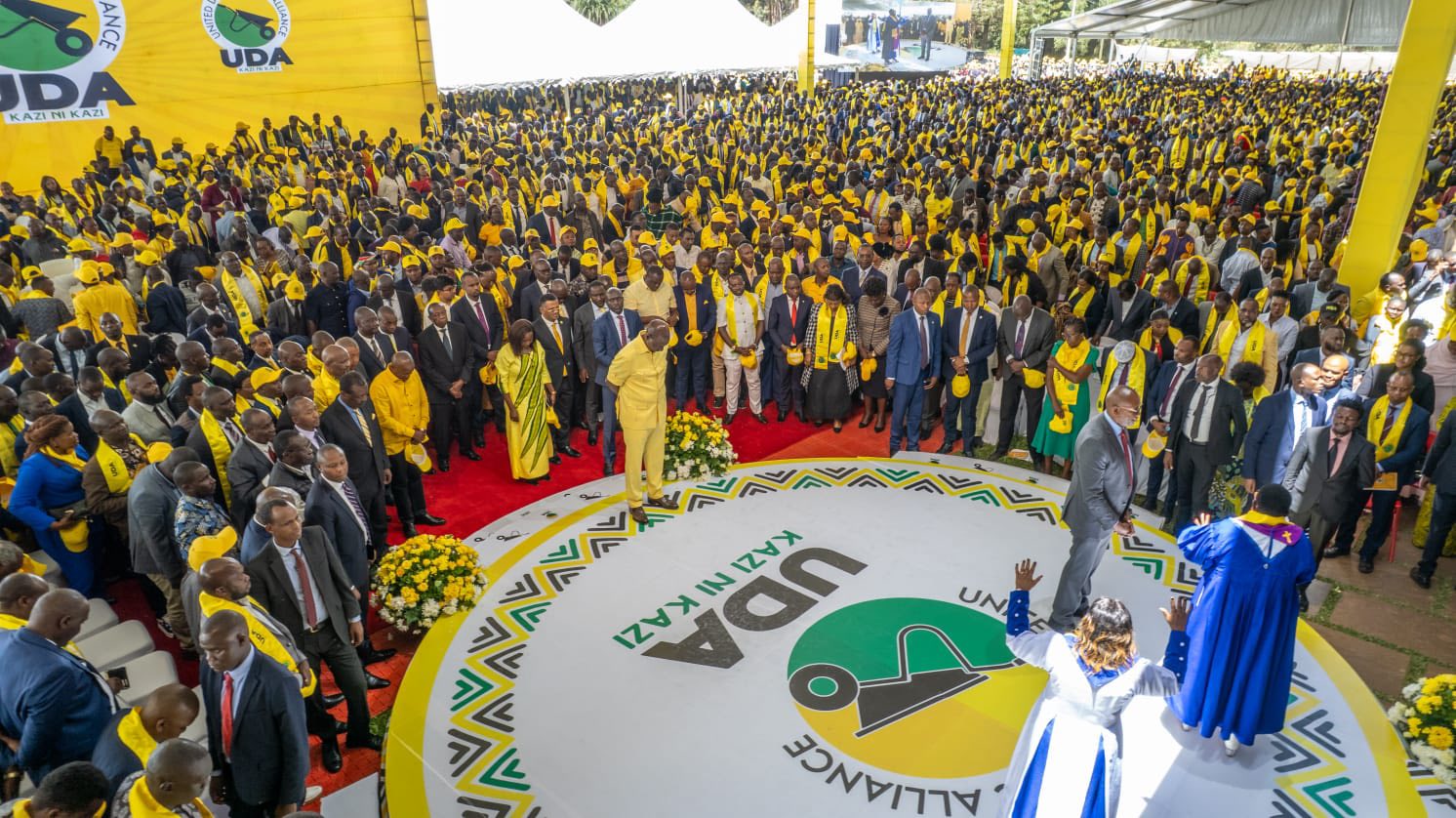
On June 5, President Ruto hosted political delegations from Vihiga, Kakamega, Busia, Bungoma, Trans Nzoia and Siaya at State house and a recent one on January 26, 2026 when he chaired a meeting of UDA national governing council before hosting the inaugural UDA party aspirants forum on February 4.
“These events were not state functions, ceremonial engagements or administrative government meetings, but political activities involving party officials, aspirants and elected leaders acting in their political capacities,” he said.
Mr Suiyanka said the use of State house for partisan political activities violates Article 10 of the constitution including national values of the rule of law, good governance, integrity, transparency and accountability.
Among the orders he is seeking is a preservation order directing the Comptroller of State House to preserve and secure all records relating to visitor registers, security deployment logs, catering, transport, and logistics records.
He also wants the preservation of all media and communications usage and any invoices, vouchers, or internal authorizations relating to political gatherings at State House.
Mr Suiyanka argues that State House and State Lodges are constitutionally protected national institutions established for official State functions.
He submitted that they are maintained exclusively through public funds appropriated by Parliament and are administered by public officers accountable under the constitution, the Public Finance Act and other laws.
The lawyer said there has been no public disclosure that UDA paid for, reimbursed or otherwise lawfully defrayed the costs associated with the use of State House for the partisan activities.
“No invoices, reimbursements schedules, appropriation approvals or accounting statements have been made public to demonstrate compliance with Articles 201 and 226 of the constitution or the Public Finance Management Act,” he said.
Consequently, the costs incurred in hosting these political party activities remain invisible within the national budget and accounting framework, rendering the expenditure unconstitutional per se for want of transparency, authorization and accountability, he said.
He said by permitting and facilitating the use of State House for partisan political activities, public resources were deployed for non-public, partisan purposes, the institutional distinction between the State and political party was collapsed and UDA received an unfair political advantage unavailable for other political actors and the presidency, as a symbol of national unity was diminished and instrumentalised for party ends.
“Unless restrained, State house and State lodges will continue to be used as de facto political parry venues, entrenching unconstitutional practices, normalizing misuse of public resources and irreversibly eroding constitutional boundaries between the State and partisan political interests,” he said.
About the Author