Governor says Lagos is emerging as the focal point of Africa’s urban and technology transformation…..
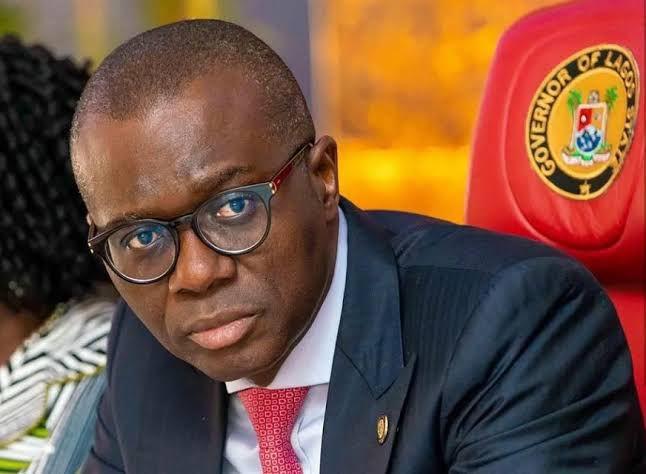
Governor Babajide Sanwo-Olu has revealed that Lagos recorded $2.73 billion in capital inflows in the third quarter of 2025, underscoring the state’s growing position as a major investment destination in Africa.
The governor made the disclosure while speaking at the John F. Kennedy Jr. Forum on Africa’s Urban Future, hosted by the Harvard Kennedy School Institute of Politics in Boston.
According to Sanwo-Olu, the inflows accounted for about 45% of Nigeria’s total capital importation during the period, highlighting Lagos’ central role in the country’s economic activity.
Lagos driving Africa’s urban growth
The governor described Lagos as a leading force in Africa’s urban transformation, noting that the city’s rapid expansion reflects broader economic changes taking place across the continent.
“Africa’s urban future is already unfolding, and Lagos is right at the centre of it,” he said.
Sanwo-Olu added that the state’s growing economy is supported by strong internal revenue performance and a youthful population.
He disclosed that Lagos generated $821.9 million (N1.26 trillion) in Internally Generated Revenue (IGR) in 2024, representing about 35% of Nigeria’s total IGR.
Although the state accounts for roughly 10% of Nigeria’s population, the governor noted that about 40% of Lagos residents are young people aged between 15 and 34, a demographic factor he said is driving innovation and economic activity.
Growing tech ecosystem
Sanwo-Olu also highlighted Lagos’ rapidly expanding technology sector.
According to him, the state now hosts more than 2,000 startups, including five fintech unicorns valued at over $1 billion each.
He noted that the city’s innovation ecosystem has grown significantly in recent years, helping to attract global investors and technology companies.
Lagos also boasts 26 tertiary institutions, placing it among the Nigerian states with the highest number of universities and higher education centres.
Infrastructure projects powering growth
The governor attributed the state’s economic progress partly to sustained investment in infrastructure.
He pointed to key projects under the administration’s THEMES+ development agenda, which focuses on transportation, health, education, technology, environmental sustainability, and security.
Among the flagship initiatives mentioned were the Lagos Blue Line Rail and Lagos Red Line Rail, two major rail projects aimed at easing urban mobility and supporting economic productivity.
Global recognition for Lagos tech sector
Sanwo-Olu also noted that Lagos was recently recognised as the world’s fastest-growing technology ecosystem in 2025, according to the Global Tech Ecosystem Index.
The report identified Lagos as one of the leading emerging technology hubs globally, highlighting its ability to produce billion-dollar startup companies and attract international investors.
Budget to support continued growth
The governor’s remarks come as the Lagos State House of Assembly recently approved the state’s N4.44 trillion 2026 budget, tagged the “Budget of Shared Prosperity.”
The spending plan allocates N2.185 trillion for capital projects and N2.052 trillion for recurrent expenditure, reflecting the government’s focus on infrastructure development.
Sanwo-Olu had earlier projected N3.99 trillion in total revenue, with N3.12 trillion expected from internally generated revenue and N874 billion from federal allocations.
The budget also includes a N243 billion deficit, which the state plans to finance through approved borrowing and other funding options.
Lagos and Africa’s future
Sanwo-Olu concluded that Lagos’ development trajectory mirrors the broader rise of African cities.
“Lagos’ story is closely tied to Africa’s rise. With the right investments and collaboration, we can build a city that works better for everyone,” he said.
About the Author