The Lagos State Chapter of the All Progressives Congress (APC) strongly rejects the misleading and selective claims made by Gbenga Olawepo-Hassim, who suggested that Nigeria’s economy performed better under former Presidents Olusegun Obasanjo and Goodluck Jonathan than under President Bola Ahmed Tinubu.
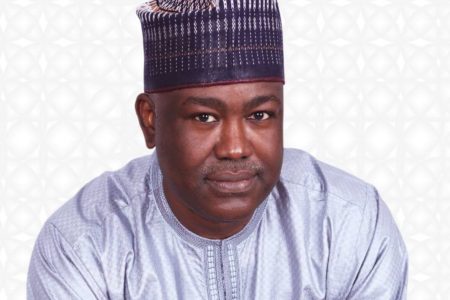
According to the Lagos APC Spokesman, Mogaji (Hon) Seye Oladejo, such conclusions reflect either a fundamental misunderstanding of public-sector economic management or a deliberate distortion of history for political relevance.
“The Obasanjo and Jonathan administrations operated during periods of historic oil booms, unprecedented foreign reserves, and relatively lower population pressures,” Oladejo said. “Yet, despite earning hundreds of billions of dollars from crude oil sales, those governments failed to build economic buffers, diversify the economy, fix the power sector, or end Nigeria’s dangerous dependence on fuel subsidies and multiple exchange rates.
They entrenched a culture of rent-seeking, expanded consumption without productivity, and left the country structurally unprepared for shocks.”
The Lagos APC reminded the public that the Jonathan administration left office with:
-
A collapsed power sector despite billions spent
-
An import-dependent economy vulnerable to oil price fluctuations
-
A fuel subsidy system riddled with corruption
-
A currency crisis already unfolding before 2015
“These are not opinions—they are documented facts,” Oladejo emphasized.
In contrast, President Bola Ahmed Tinubu inherited an economy burdened by unsustainable subsidies, foreign exchange arbitrage rewarding cronies, and a fiscal structure ill-suited for a nation of over 200 million people. Unlike critics who offer hindsight commentary without responsibility, President Tinubu has confronted these systemic distortions decisively.
The removal of fuel subsidies and unification of the foreign exchange market were not experimental policies—they were long-overdue corrections postponed for decades.
Oladejo noted, “Nigeria’s economy is too large, complex, and consequential to be subjected to the shallow nostalgia and casual judgments of individuals with no proven record of managing public resources at scale. This is not a classroom debate or a political slogan contest—it concerns the economic survival of over 200 million Nigerians.”
The Lagos APC cautioned the public to treat Olawepo-Hassim’s comments for what they are: political noise disguised as analysis.
History will show that when tough economic decisions were required, President Bola Ahmed Tinubu acted with courage, clarity, and conviction, while critics hid behind selective memory and convenient amnesia.
“Nigeria is correcting decades of economic mismanagement,” Oladejo concluded. “This process will not be derailed by revisionist narratives or opportunistic commentary.”
About the Author