The economic and environmental toll from January’s floods in the Kruger National Park (KNP) is steadily accumulating.
Infrastructure was damaged and park officials are slowly reopening routes and camps after roads and bridges were deemed inaccessible.
Concerns continue to be expressed for the wildlife at the KNP, with an expert on the ground relaying that the work of conservationists has been affected.
Tags tracking movements
Multiple organisations monitor the array of wildlife in Kruger , one being Contemplate Wild, a non-profit specialising in the conservation of endangered species and habitats.
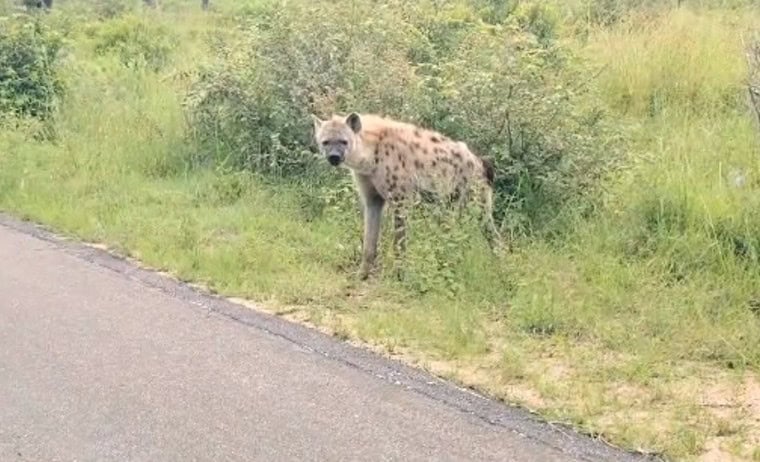
Shortened from Conservation Technology & Monitoring Platforms, Contemplate Wild has GPS-tagged multiple species, including lions, cheetahs, hyenas and wild dogs.
Manager of species monitoring Grant Beverley said that the full scope of the flood’s effect on animals has yet to be determined.
Access for vehicles is still difficult, leaving Beverley to use tagging data to track animal movements.
He says that prior to the floods, the movements of the carnivores he tracks were not out of the ordinary, more a cautious gauging of their proximity to the water.
Beverley noted that the water levels rose gradually and not in manner that would place the animals in sudden danger.
“The fact that it is natural means that the animals are adaptable. They have adapted and survived flooding for years,” he told The Citizen.
‘Threat of predation’
Asked what dangers wildlife could encounter due to the floods, Beverley explained that if the animals found themselves isolated, some may, for example wild dogs, reluctantly attempt to cross rivers.
“Because they are forced to cross rivers there is the threat of predation by crocodiles in particular, which then could be a secondary cause of mortality,” he said.
That said, Beverley confirmed that there were no reports of any losses of the animals currently being tagged.
However, animals that living waterways that saw heavy flows of water, such as crocodiles and hippos, were in danger.
In terms of habitat rehabilitation, Beverley explained that Contemplate Wild would allow nature to shape the landscape, but said SANParks and fenced reserves may differ in their approach.
SANParks was contacted for an update on the wildlife and relevant habitation and that info will be added if forthcoming.
Human dangers
While visitors are returning to most parts of the park, conservation teams are always alert to how human beings can exploit a situation.
Damaged roads allow for poachers on foot to roam parts of the park that would generally be monitored by authorities.
“The increased risk would be associated with increased anthropogenic causes of mortality because of access,” said Beverley.
Snaring is a recuring problem, with SANParks’ Honorary Rangers previously saying they had removed over 1 000 snares in a three-month period.
“There is a potential for there to be increased poaching or snaring because ranger teams can’t get into those areas. That’s more of a concern.
“The human induced causes of mortality in conservation are always going to outweigh any natural causes of mortality,” Beverley said.
NOW READ: Kruger National Park accessibility update — these roads, camps and sites are open
About the Author