Ododo hails approval of 4,000-hectare free trade zone as turning point for industrialisation; NEPZA backs project to unlock minerals, manufacturing and export growth…..
Nigeria’s long-stalled industrial ambitions around the Ajaokuta corridor received a significant boost on Thursday as Kogi State formally secured the licence for the newly approved Ajaokuta Economic City Free Trade Zone.
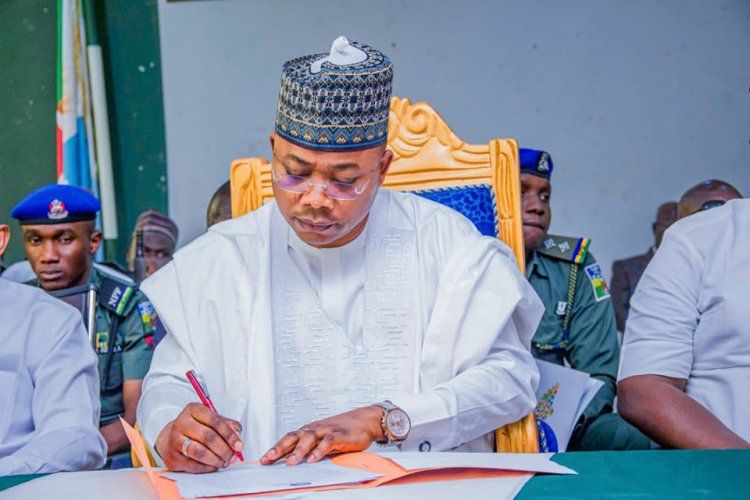
The official certificate was presented in Abuja by the Managing Director of the Nigeria Export Processing Zones Authority, Olufemi Ogunyemi, to Governor Usman Ododo, marking a major milestone in efforts to reposition the area as a hub for steel, mining and industrial manufacturing.
The approval follows the authorisation granted in November 2025 by President Bola Tinubu for the establishment of the 4,000-hectare industrial city in Ajaokuta.
Describing the moment as historic, Ododo said the state was prepared to accelerate development of the zone and attract both domestic and foreign investors.
“Today is historic for our people,” the governor said after receiving the certificate. He recalled earlier engagements with NEPZA officials to justify why Kogi should host the project, noting that due process and compliance procedures were rigorously followed before the licence was granted.
Repositioning Ajaokuta
Ododo characterised the free trade zone as a catalyst for economic transformation, arguing that it would restore Ajaokuta’s relevance in Nigeria’s industrial landscape and potentially elevate it into a major economic hub in West Africa.
He pointed to Kogi’s strategic geography, bordering several commercial centres including the Federal Capital Territory and its vast deposits of over 30 solid minerals in commercial quantities.
“We are richly blessed with solid minerals such as coal, iron ore, lithium, gold and beryllium, but these have never worked for us,” he said, adding that the new zone would help convert those dormant assets into engines of growth.
According to him, the state is ready to provide an enabling environment for investors and ensure that the free trade zone becomes one of the most competitive in the country.
Steel Plant Revival in Sight?
Addressing concerns over the decades-long inactivity of the Ajaokuta Steel Company, Ododo said the Federal Government was intensifying efforts to revive the plant.
“As we speak, there are investors already assessing the plant. Before the end of this year, Ajaokuta will be up and running,” he said, expressing confidence that the free trade zone would reinforce the steel complex’s sustainability and broaden its economic impact.
The governor also disclosed plans to construct an international airport to support the economic zone and leverage Kogi’s proximity to Abuja.
“This airport will not be just for local operations. It will be international. We want to take advantage of our closeness to Abuja so that the overflow will be accommodated in Kogi State,” he said.
NEPZA: ‘This Is Just the Beginning’
In his remarks, Ogunyemi described the licence issuance as the start of a long-term development journey rather than its conclusion.
“When you met me, you were passionate about this project. I pledged that my team would do all we can to support it. Today, we are presenting the licence,” he said.
He explained that the free trade zone model is globally recognised as a vehicle for attracting investment, promoting exports and generating employment, adding that NEPZA operates as a one-stop regulatory and facilitation agency for licensed zones.
“We are mandated not just to license but also to support and regulate. No government agency is supposed to communicate directly with zone operators. Everything goes through NEPZA,” Ogunyemi noted.
A Missing Link in Nigeria’s Industrial Puzzle
The Ajaokuta Free Trade Zone is widely seen as a potential complement to the long-delayed Ajaokuta Steel Complex, which has remained largely inactive for decades despite substantial public investment.
By clustering downstream industries such as steel fabrication, mining, manufacturing and logistics within a dedicated economic city, policymakers hope to create integrated value chains capable of boosting export earnings and job creation.
The development aligns with broader federal reforms aimed at strengthening Nigeria’s special economic zones framework, improving the investment climate and unlocking the country’s solid minerals potential.
With the addition of the Ajaokuta Economic City, the number of free trade zones licensed and regulated by NEPZA has risen to about 46 — a signal that the Federal Government is betting heavily on industrial enclaves as drivers of diversification.
For Kogi, however, the stakes are higher: the success or failure of the Ajaokuta Economic City could determine whether one of Nigeria’s most symbolic industrial projects finally transitions from promise to productivity.