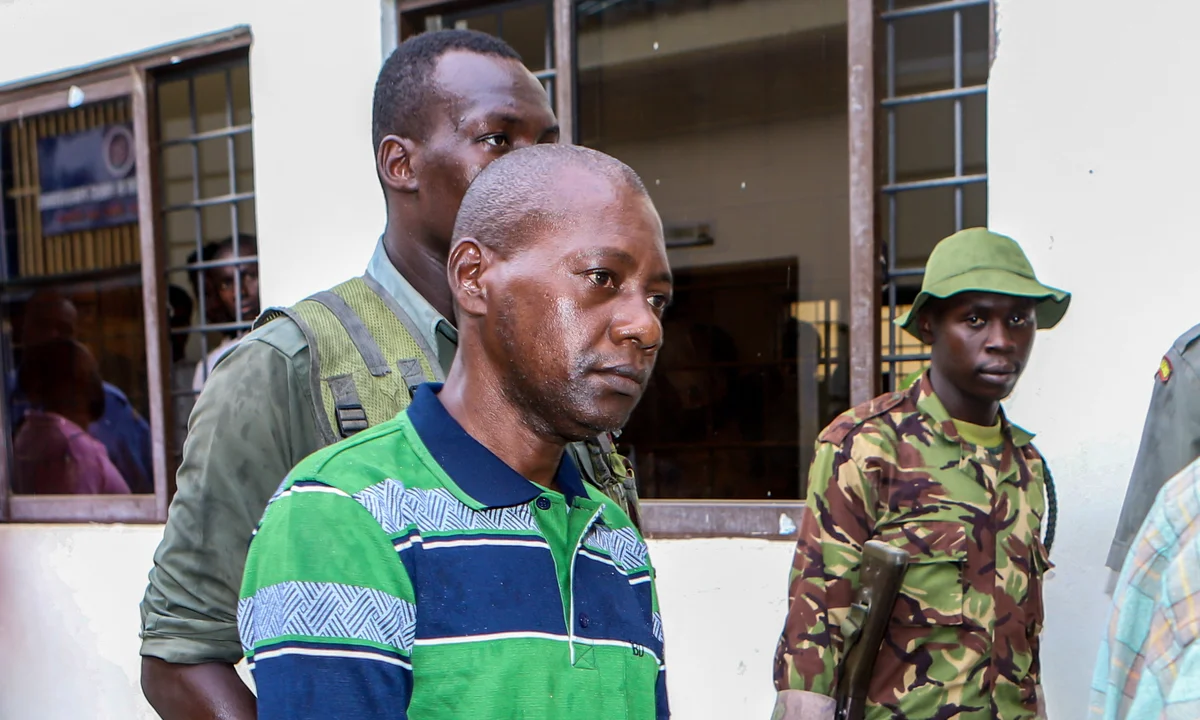
A self-proclaimed Kenyan preacher already at the centre of one of the world’s deadliest cult tragedies has been charged over the deaths of 52 more people, prosecutors announced on Wednesday.
Paul Mackenzie, who is accused of orchestrating a starvation cult that left more than 400 people dead in what became known as the “Shakahola Forest Massacre”, now faces fresh charges tied to additional bodies discovered last year in the remote village of Binzaro, about 30 kilometres from Shakahola along Kenya’s Indian Ocean coast.
The 2023 case drew global attention after hundreds of bodies were exhumed from shallow graves in forested land near the coastal resort town of Malindi. Investigators said followers of Mackenzie’s Good News International Church were encouraged to starve themselves in order to “meet Jesus”.
Mackenzie has pleaded not guilty to multiple counts of manslaughter in an ongoing trial in Mombasa and has remained in custody.
In a statement posted on X, Kenya’s Office of the Director of Public Prosecutions said Mackenzie and several others had now been charged with organised criminal activity, two counts of radicalisation and two counts of facilitating the commission of a terrorist act in connection with the deaths of at least 52 people in Kwa Binzaro, Chakama, in Kilifi County.
The defendants have again pleaded not guilty. The next court hearing is scheduled for March 4.
According to prosecutors, the accused are alleged to have promoted an extreme belief system, preached against government authority, adopted anti-state doctrines and facilitated terrorist acts.
The latest charges suggest that the group’s activities may have continued even after Mackenzie’s arrest, raising further questions about oversight and enforcement.
The tragedy has reignited debate in Kenya, a predominantly Christian nation, over the regulation of religious institutions. Previous attempts to tighten oversight have faced strong resistance from faith groups, who argue that such measures threaten constitutional protections guaranteeing freedom of worship and the separation of church and state.
As legal proceedings continue, the case remains one of the most disturbing examples of cult-related abuse in recent history, with authorities still working to uncover the full extent of the deaths and those responsible.
Melissa Enoch
About the Author