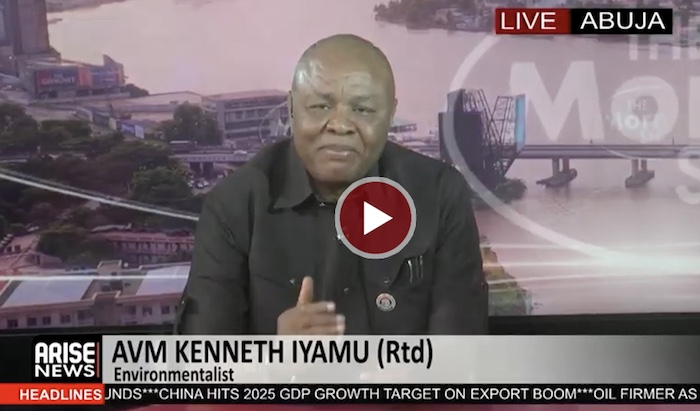
Retired Air Vice Marshal Kenneth Iyamu (Rtd) has warned that Africa continues to be sidelined in global climate change negotiations, despite having abundant natural resources and immense potential for carbon financing, emphasising that the continent is repeatedly excluded from the critical decisions that shape the world’s response to extreme weather, climate finance, and sustainable energy transition.
Speaking In an interview with ARISE NEWS on Tuesday, Iyamu expressed frustration at what he described as the hypocrisy of climate change politics of which he pointed to the Global North’s inconsistent commitments, selective adoption of climate agreements, and the marginalisation of Africa in key global discussions, such as the World Economic Forum and the United Nations climate summits.
“The Global South are the ones paying dearly for this. They are the ones paying dearly for this. If you look at it, the World Economic Forum since 1971, a gathering of a lot of people, classes, because they put them together before it was renamed in 1987, have always brought people together to create a service-wide voice to be able to talk on what is very paramount in the world at any particular time. And at this time we are talking, it is extreme weather and climate change.”
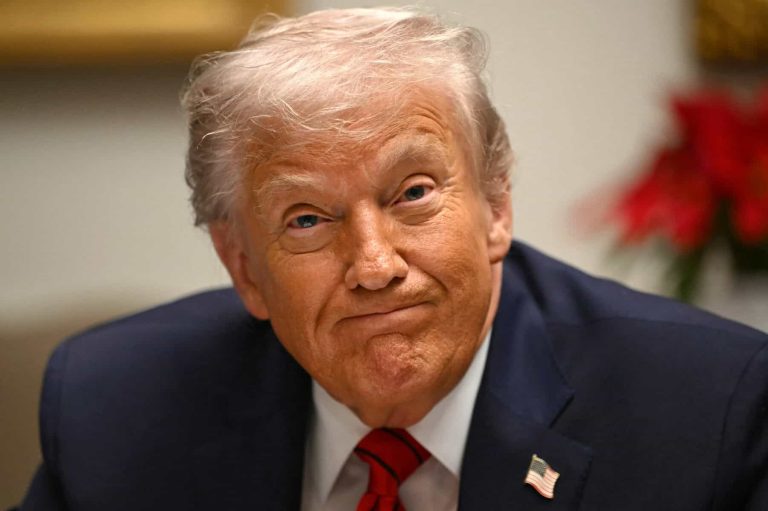
Iyamu criticised the United States withdrawal from key climate agreements, including the Paris Agreement and the United Nations Convention on Climate Change. “Because the US is just the primary person assisting President Trump. This is stark. You see, we’ve been through this before. In 2017, he left. Just five years before you activate the antipode. Before activating it, the body came in and restored it. What are the indices? You expect most of the indices to go down. No. Electric vehicles have increased.
“Everything is increasing. The EU renewable energy has soared. So that vacuum is really not felt. It’s really not felt. And it’s likely not to be felt. Because the world is calling the bluff and saying, look, we have to survive. We have to do the needful. Now, like I said before, the Paris Agreement is dead. It’s the first document that tied the world together. It creates an ambition. COP13 gave it to everybody. Look, it was reviewing the national economic contribution, reviewing everything. The world is moving ahead. The world is moving ahead.”
He pointed out the economic consequences of extreme weather, highlighting the destruction caused in 2025. “The extreme weather of 2025, don’t forget 2025 was the hottest year in history. $220 billion was destroyed. And $40 billion of that is coming from the United States alone. So, there’s an economic aspect, which they really need to look into. The Global South are the ones paying dearly for this. They are the ones paying dearly for this.”
Iyamu explained Africa’s ongoing exclusion from decision-making. “The sad thing about that buffet is that, as with everything, Africa is not always on the table. We are always at the back, picking the crumbs. Just like Berlin Conference, where they shared Africa’s wealth behind them, behind Africa’s continent, with nobody being there. Just like this climate conversation too. They’ve shared everything without Africa being there. We have no role. We have no say.”
He argued that much of the climate “charity” extended to Africa is performative, serving foreign agendas more than local development. “Most of the people that are going there, they are just going there to hear the speech and see how much climate force can be released. And we say they will do some small projects and they will put money in their pockets in the name of NGO or the fund. I was shocked by that. Climate force.”
Iyamu also highlighted missed opportunities in Nigeria’s climate initiatives, particularly regarding carbon credits and renewable energy. “Particularly in Nigeria, particularly for Africa. We missed it. That was a very big blow. It would have given us the opportunity, again, after Sharm El Sheikh, for Africa to showcase itself. Particularly for Nigeria. You have a lot of things going for you. You have 4% of your torch forests. You have 854 kilometre shoreline. The trees, the trees. That takes me back to the FCT. You see, the way our ecosystem is being destroyed in the FCT, it’s not going to support the president’s cry for $3 billion carbon credits. The green area, they are not up for it. They are deliberate. You don’t plant a tree today and call it a green area. No. No. Those are the kind of things that the FCT administration should be told. The economic value that is coming from allocating the green area does not support the destruction it brings.”
On Nigeria’s climate policy, Iyamu was sharply critical. “Nigeria is suffering from extreme weather. In terms of rising temperatures. Nigeria is very low in terms of renewables and energy. Nigeria is very low in terms of climate change policy. Despite the fact that we have a climate action policy. I think 2022 or the other. So, you know, what is Nigeria related to? Because we are talking about carbon credits. We are responsible for a very high rate of GH emissions. So it looks like there isn’t significant progress in terms of Nigeria’s involvement. We are even talking about increasing oil and gas production. Which will contribute further to the energy crisis. And it’s part of the energy transition programme that we claim to have in place.”
He stressed the importance of strategic investment and governance. “Our climate policy, who is running it? Is it the ministry? Is it the National Commission for Climate Change? Who is running it? The National Commission for Climate Change needs to come out and be more visible. Be more visible. Except when it gets to conference of parties. You don’t really hear them. You don’t really hear them. Now, the whole world. Everybody, every consultant environmentalist at all. We know ourselves. We talk to each other. See, Nigeria needs to do more. Nigeria needs to do more. Because our oil pollution is still very high. And that does not attract carbon credit at all. We need electricity penetration. That’s what I said before. You see, Bufi, the carbon credit is a tradable permit that enables you to do carbon dioxide, reduce it, remove it, make sure that it doesn’t exist in the world. And what are the benefits from it? You are going to get renewable energy. It enables the advanced countries to come and invest. And that is why. Because it needs rigour. Because it needs imagination. Because it needs creativity. It needs organisation. We are not looking in that direction. The oil scene is going down. You have to be very creative. It is very important.”
Iyamu sees a growing opportunity for African nations to reclaim a central role in global climate discussions but warns that time is critical. “Now, the Nigeria that you know, Africa and everywhere, are taking the bull by the horns. They are taking the destiny in their hands. I tell you, now you have IFRS S1 and S2. What do they mean? They are benchmark for environmental social governance. Which Nigeria is taking the lead for Africa. They were benched in 2023 by the International Standards Sustainability Board. What are we not doing? They are looking to say, look, we have to create sustainability. The climate finance is not for Christmas. You really have to work very, very hard for it.”
Erizia Rubyjeana
About the Author