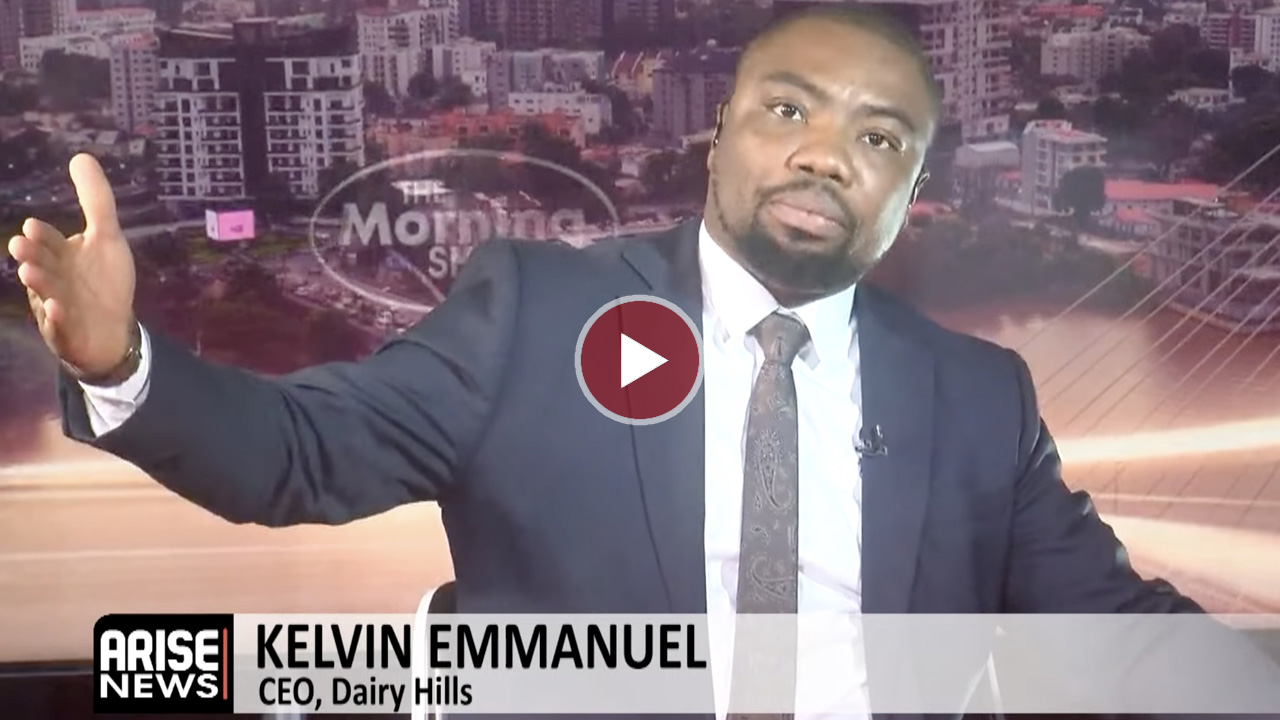
Economist, Kelvin Emmanuel has asserted that Nigeria’s push to unlock its vast gas reserves is being undermined by government control of pricing and output, leaving investors with little incentive to expand supply or build critical infrastructure.
In an interview with ARISE NEWS on Sunday, Emmanuel said that while Nigeria has one of the world’s largest proven gas reserves, the domestic gas market remains distorted by regulation that caps prices and weakens the commercial case for investment, arguing that the government’s control of domestic gas pricing has effectively created a subsidy that discourages producers from committing capital to pipelines, processing facilities, and offshore gas evacuation projects.
“When you have a national reference code that the government has instituted to cap the price of gas, because it’s afraid that if the price of gas floats to generating companies, the prices of electricity tariff will go up, which will have political consequences.”
Emmanuel explained that about 45 percent of the gas supplied to Nigeria’s domestic market is sold under regulated prices rather than a willing-buyer, willing-seller framework. “The methane gas that goes to the domestic markets in Nigeria, 45% of the gas that goes to the markets in Nigeria, the gas that goes to the domestic markets are capped by the government. The government regulates the price. It’s not a willing buyer, willing seller market, there is no incentive for the companies to invest in infrastructure.”
He noted that Nigeria holds about 210 trillion standard cubic feet of gas, roughly half of which is non-associated gas that requires standalone gas wells. “Fifty-two percent of this 210 trillion standard cubic feet is actually non-associated gas.”
On the associated gas currently produced, Emmanuel said. “60 percent of it is trapped, about 30 percent is re-injected for well optimisation, About 10 percent is flared.”

He said transporting gas from deep offshore fields to inland markets requires expensive pipeline infrastructure and central processing facilities to treat wet gas before it can be used for power generation, compressed natural gas, or liquefied natural gas exports. “For you to get associated gas deep offshore, you need to build pipeline infrastructure through the water, which is very expensive inland, You have to take it to a central processing facility for it to be treated and processed, because it’s always wet gas. You have to treat it into lean gas before you send it into a pipe, or compress it for CNG, or give it to NLNG.”
“They don’t see a clear line of sight, they won’t invest, there is no incentive for these companies to actually build pipeline infrastructure to take it to the markets. If you look at that plan, it talked about the absence of central processing facilities.” On FLNG projects, “Chevron is planning an FLNG. UTM is planning an FLNG, and it’s been on for a while.”
Beyond gas pricing, Emmanuel linked Nigeria’s gas challenges to deeper structural problems in the power sector. “The genkos owe the aggregators of gas their invoices for band B to D today, the cost of tariff per kilowatt is between three and four cents per kilowatt, which is very low.” There is no proper revenue assurance in the system. On sector-wide illiquidity.The discos are illiquid. TCN is illiquid, that lacks infrastructure.”
He explained that government price controls on gas are partly driven by fears that higher gas prices would raise electricity tariffs and trigger political backlash. “The government has instituted (the cap) because it’s afraid that if the price of gas floats to generating companies, the prices of electricity tariff will go up, which will have political consequence, If you keep the status quo, the companies will not invest in infrastructure. There is no incentive for companies to invest.”
Emmanuel also questioned how the Nigerian National Petroleum Company Limited plans to finance the infrastructure outlined in its gas master plan. “NNPC is in a precarious situation. It doesn’t have the finance, it doesn’t have the leverage. I don’t think the board of NNPC wants to go on more forward sale agreements through where it ties loans with multilateral development banks and international commodity traders to existing assets that it owns or controls to collect upfront cash, which is what we call financialisation, that has brought in about $40 billion of loans between 2019 and 2024.What is the strategy for raising capital to back their plan, either in a JV or in sole risk? Because I don’t see the path to raising capital.”
He added that without pricing reform, open-access pipeline models, and a clear strategy for raising capital, Nigeria’s gas ambitions risk remaining aspirational. “If you don’t address the issue of pricing, that’s gas offshore that is trapped, There is no incentive for these companies to actually build pipeline infrastructure to take it to the markets.”
They need to move from a closed-loop model to an open-access model, where they allow the operators to share in the ownership of those pipelines. What is the strategy for raising capital to back their plan, either in a JV or in sole risk? Because I don’t see the path to raising capital.The problem NNPC has is translating plans to reality. That’s the problem they’ve always had.”
Erizia Rubyjeana
About the Author