The Judicial Service Commission (JSC) and the High Court have declined to bar Isaac Rutto from participating in the ongoing judicial interviews following allegations of political bias.
In a letter dated February 4, 2026, the JSC informed the Consumer Federation of Kenya (Cofek) that it could not act on their complaint because the matter was already before the courts and Parliament, rendering it sub judice. Mr Rutto serves as the JSC Vice Chairperson.
The decision followed a High Court ruling in Nairobi the previous day, which refused to issue instant orders excluding Mr Rutto from interviews for 20 High Court vacancies and an upcoming Supreme Court recruitment exercise. The court opted first to hear objections challenging its jurisdiction.
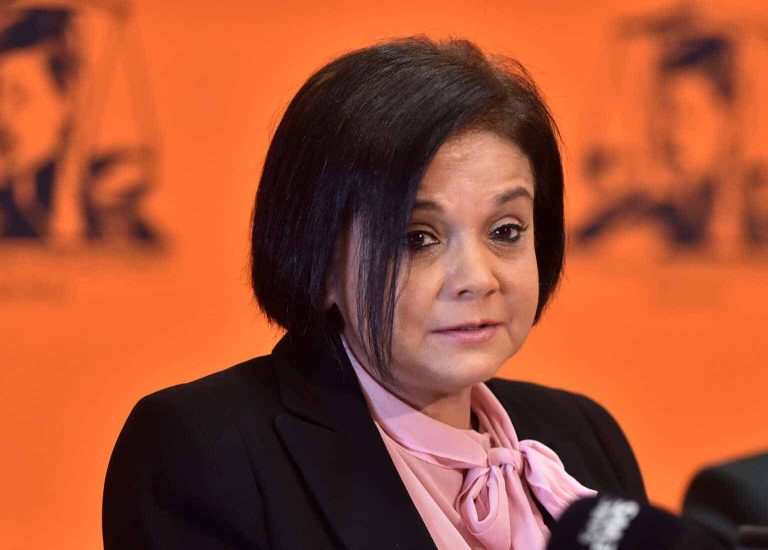
JSC Secretary Wilfridah Mokaya stated that the commission reviewed Cofek’s complaint during a February 2 meeting. The chairperson of the 11-member commission is Chief Justice Martha Koome.
Ms Mokaya noted that during the deliberation, the commissioners acknowledged a petition seeking Mr Rutto’s removal under Article 251 of the Constitution had been filed in the National Assembly, alongside a related pending court case.
“That places the matter outside the purview of the Judicial Service Commission,” Ms Mokaya said, explaining that the concurrent proceedings—in court and Parliament—prevented the commission from acting on the complaint.
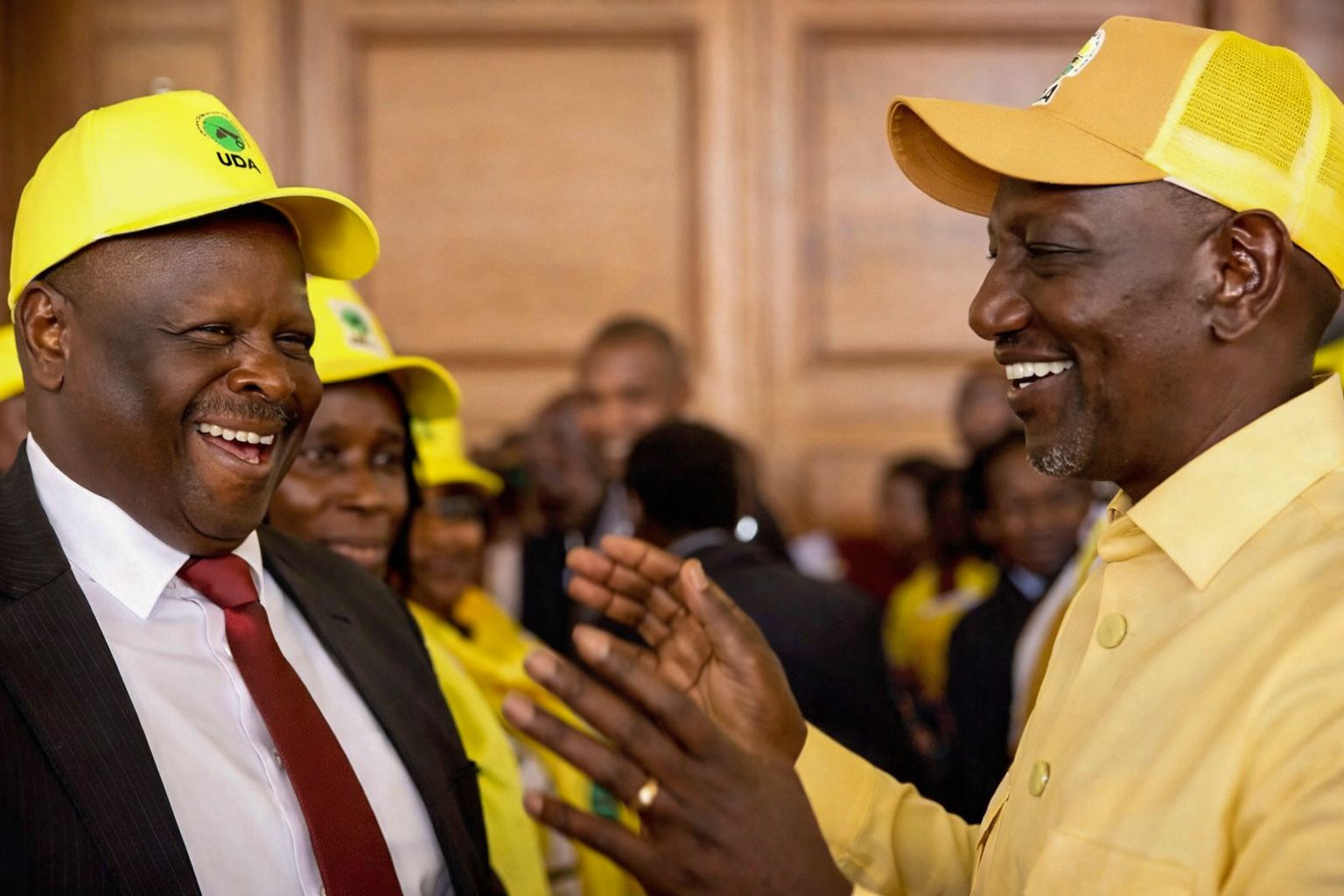
Cofek, through Secretary-General Stephen Mutoro, accused Mr Rutto of partisanship after photographs surfaced online showing him attending a United Democratic Alliance (UDA) National Governing Council meeting at State House on January 26.
The event, chaired by President William Ruto, depicted Mr Ruto seated among party officials while wearing party colours.
Nairobi lawyer Eric Muriuki petitioned the court for conservatory orders to exclude Mr Rutto from the interview panels, arguing that his apparent political alignment risked undermining public confidence in the Judiciary ahead of the 2027 general election.
“A Supreme Court judge appointed through this process could preside over a presidential election petition in 2027. Allowing Rutto, who has displayed overt partisanship, to sit on the panel taints the entire process,” Mr Muriuki said.
He also filed a separate parliamentary petition seeking Mr Rutto’s removal under Article 251, which outlines procedures for dismissing members of independent commissions over misconduct.
Mr Muriuki clarified that he sought court intervention because Parliament lacked the authority to issue interim orders barring Mr Rutto from the interviews.
In court, the JSC, Mr Rutto, and the National Assembly have raised preliminary objections, contending that the High Court lacked jurisdiction and that the issues were either premature or reserved for parliamentary constitutional processes. They urged the court to dismiss the petition.
The presiding judge observed that these objections “go to the heart of the case” and could resolve the petition without examining its merits.
The court declined to grant immediate orders, citing proportionality and potential disruptions to the JSC’s work.
Noting that the JSC comprises 11 commissioners, the court highlighted that excluding one could result in an even-numbered panel, raising concerns that candidates might later challenge the process by arguing outcomes could have differed with full participation.
The court scheduled February 17, 2026, for hearing the objections, with a ruling expected in early March.
Mr Rutto joined the JSC in June 2023 as a public representative and was later elected Vice Chairperson, becoming the commission’s second-in-command.
His duties include participating in judicial recruitment, selection, and recommending candidates for presidential appointment.
He is also mandated to uphold public interest by ensuring judicial accountability, efficiency, and transparency, alongside overseeing the conduct of judges and magistrates.
Previously, Mr Rutto served as Chepalungu MP, Bomet Governor, and Chair of the Council of Governors.
The parliamentary petition asserts that his public affiliation with UDA risks exposing the Judiciary to ridicule and eroding trust in judicial appointments.
For now, both the court and the JSC have adopted a restrained approach. The JSC has deferred action, citing the sub judice rule and ongoing parliamentary processes, while the court awaits a determination on its jurisdiction.
About the Author