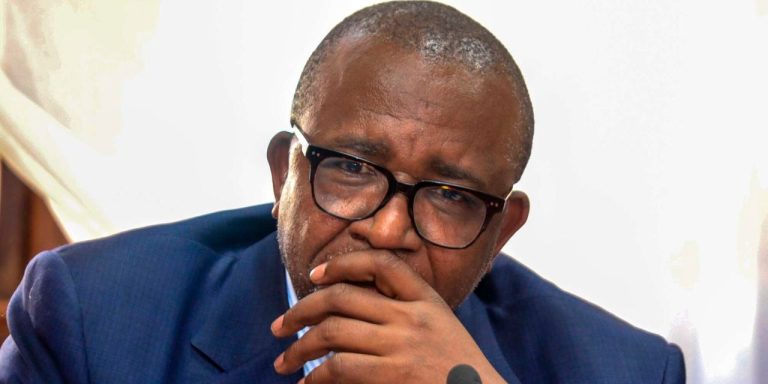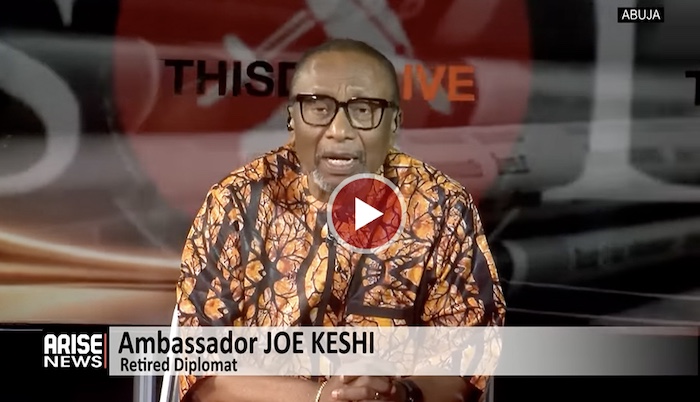

Retired Nigerian diplomat, Ambassador Joe Keshi, has warned that the Economic Community of West African States (ECOWAS) is facing one of the most dangerous periods in its 50-year history, saying the regional bloc risks collapse unless its leaders urgently embrace good governance, democratic discipline and collective responsibility.
In an interview with ARISE News on Sunday, Keshi said ECOWAS was grappling with deep internal contradictions that make declarations such as a regional state of emergency largely ineffective.
“As it stands today, I really do not see how any state of emergency can be helpful to the continent because of the divergence of views among the leaders themselves,” he said, noting that some member states remain under military rule while others are witnessing attempts by leaders to extend their tenure in office.
Keshi argued that many of the crises confronting West Africa were self-inflicted, stemming from leaders’ failure to respect constitutional limits and democratic norms.
“The constitution says you are going to spend five years, but when it gets to five years, you begin to want to extend your stay in power. That has led to a lot of problems,” he said. He added that the silence of other regional leaders in the face of such abuses had worsened the situation, accusing them of legitimising unconstitutional actions by attending inaugurations that endorse tenure elongation.
According to the former diplomat, ECOWAS leaders are now trapped in a dilemma of their own making. “In some cases where there are coups, they are not confronted with the real situation that they have created by being silent on dealing with these issues,” he said, warning that unless leaders “find some wisdom among themselves,” the bloc must “be prepared for the worst.”
Keshi also delivered a scathing critique of Nigeria’s ambassadorial screening process, describing the Senate’s “bow and go” tradition as a national embarrassment. He called for a constitutional amendment to scrap legislative screening entirely, insisting that Nigeria lacks the capacity for meaningful oversight.
“Let us remove anything that has to do with screening. The National Assembly of Nigeria will never conduct a proper screening, period,” he said.
He added, “Let’s stop making ourselves a laughing stock. Anybody who is appointed an ambassador should just go straight to work,” arguing that the practice has reduced serious governance to political theatre. Comparing Nigeria with the United States, Keshi said, “There, somebody can be screened for two, three, four days. Here, over 60 people are screened in one hour.”
On Australia’s ban on social media access for children, Keshi expressed strong support, saying global concern over children’s mental health justified such measures.
“Parents all over the world are getting concerned about their kids and the usage of telephones,” he said, lamenting the erosion of family interaction. “You see families sitting together, nobody is having a conversation. Everybody is on their phone.”
He accused technology companies of prioritising profit over child welfare. “These guys are interested in profit, nothing more. They care little or nothing about the mental health of the kids,” he said, adding that he expects more countries to follow Australia’s example.
Commenting on the Russia-Ukraine war, Keshi criticised Western handling of peace negotiations, accusing the United States of desperation. “They don’t mind throwing Ukraine under the bus if they have to,” he said, insisting that Ukraine’s constitutional constraints must be respected. He argued that any territorial concessions should only come through a referendum conducted under a ceasefire.
Keshi also dismissed Russia’s sentencing of International Criminal Court officials as farcical. “Except the Russians are going to kidnap these people, I don’t see how they can execute the judgment,” he said. “I just think that this is a huge joke.”
He concluded by urging global actors to act with honesty and principle, warning that selective justice and political expediency threaten both international order and regional stability.
Boluwatife Enome
About the Author