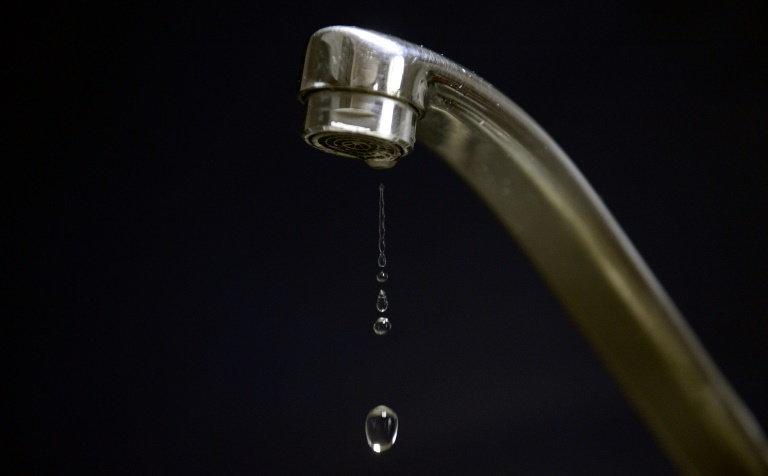
As the hot weather continues unabated in Gauteng, civil society group WaterCAN has warned Johannesburg is facing a widespread and escalating water crisis, with residents across the city “effectively living under day zero conditions.”
Day Zero
“Day Zero” refers to the critical moment when a city’s water supply reaches such low levels that authorities must drastically restrict access to water.
WaterCAN said communities in Kensington, Emmarentia, Meldene, and many other areas fed by the Hursthill, Alexander Park, and Berea reservoirs continue to experience prolonged water outages lasting days and, in some cases, nearly 20 days.
“The situation is further compounded by what can be described as a balancing act of water supply among the President Park, Grand Central, and Eland reservoirs in Midrand, leaving residents with unstable, unpredictable access to water.”
ALSO READ: Smelly Joburg water contamination: Quality test results revealed
Joburg crisis
WaterCAN said Johannesburg’s crisis, driven by infrastructure failure, poor planning and weak accountability, is no less severe.
“In Johannesburg, people are already living Day Zero,” said WaterCAN. “Johannesburg Water has failed to provide a consistent supply or clear communication to residents, while Rand Water, as the bulk water supplier, continues to limit its engagement to its direct customers, despite the devastating impact on communities.”
Community tension
WaterCAN warned that the breakdown in supply is now fuelling social tension at a community level.
“In several areas, residents queue for hours at water tankers, only to find supplies run out before everyone can collect water. Reports indicate that people are beginning to fight among themselves as some residents take far more water than others, leaving families, the elderly and children with nothing.
“When people are forced to compete for water, dignity collapses, and conflict becomes inevitable,” WaterCAN said. “This is a direct consequence of inadequate planning, erratic tanker deliveries and the absence of clear rules or oversight at distribution points.”
Urgent call
WaterCAN has called on the national government to:
- Urgently declare Johannesburg a national disaster area in order to unlock emergency resources.
- Johannesburg Water to provide daily, area-specific updates with realistic restoration timelines.
- Rand Water to engage directly and publicly on bulk supply constraints and contingency measures.
- National government to intervene decisively to protect residents’ health, dignity and livelihoods
“Johannesburg is the economic heart of South Africa. Allowing it to function without reliable water access, without declaring a disaster, normalises suffering and signals a failure of governance,” WaterCAN warned.
ALSO READ: Can rainwater harvesting ease pressure on SA’s water systems?
Water constraints
Johannesburg Water on Monday said its Central systems remain constrained due to poor incoming supply and increased demand.
Alexander Park Reservoir
The reservoir did not improve sufficiently, and the outlet is closed as part of the reservoir’s operating protocol. No water is expected, while improvements are expected overnight.
Berea Reservoir
The reservoir did not improve adequately, and the outlet remains closed as part of the reservoir operating protocol to build up capacity to 50% before the outlet is opened. The impact is no water to the supply zone.
South Hills Tower
The tower improved, and pumping is ongoing. While the tower is supplying fairly to normal, demand remains high. Intermittent supply is expected.
Crown Gardens Reservoir
The reservoir level remains low and did not improve overnight due to poor incoming supply impacting recovery. The outlet remains closed to build capacity and will be opened once the level improves. No water is expected in the supply zone.
Crown Gardens Tower
Pumping into the tower resumed late in the afternoon and is constrained by reservoir levels. Both towers remain low. Poor pressure is expected in the tower supply zone.
Demand
The utility said its overall demand in the Johannesburg Water system exceeds available capacity, which may slow system recovery.
“Alternative water will be provided in a regional coordinated manner to affected areas.
Concerns
Meanwhile, Rand Water said it is concerned about the high consumption of the precious resource in the province.
According to the water utility, usage in the City of Johannesburg and the Tshwane metros is placing a strain on the infrastructure and forcing it to operate under pressure.
Rand Water said this above-normal consumption, which has exceeded the allocated volumes, continues to place a significant strain on the overall water supply network.
Consultation
Rand Water spokesperson Makenosi Maroo said they are meeting with municipalities to chart a way forward.
“Current demand is forcing the system to operate under pressure, stretching infrastructure capacity to accommodate abnormally high usage levels. Furthermore, this high consumption has negatively affected the water supply in parts of our bulk water supply area.
“Rand Water, after engaging with high water consuming municipalities, will be reducing water supply to these areas to restore water supply in affected areas to stabilize the entire bulk water supply system,” Maroo said.
Warning
Maroo urged customers and consumers to use water sparingly.
“We strongly encourage all high-water-consuming municipalities to implement water-saving measures to help reduce demand and protect system stability.”
NOW READ: Joburg residents owe Joburg Water and City Power R84 million
About the Author