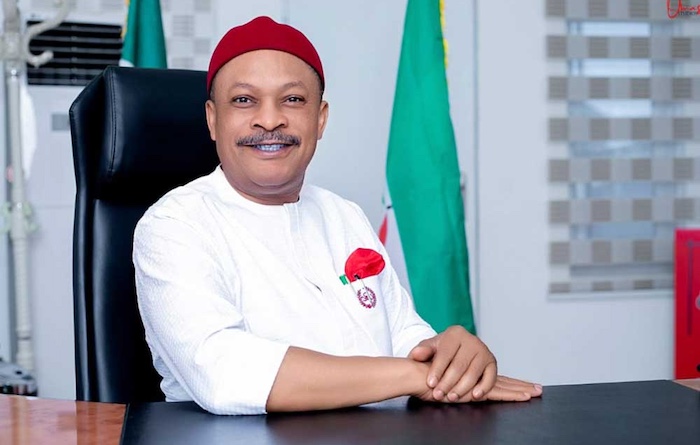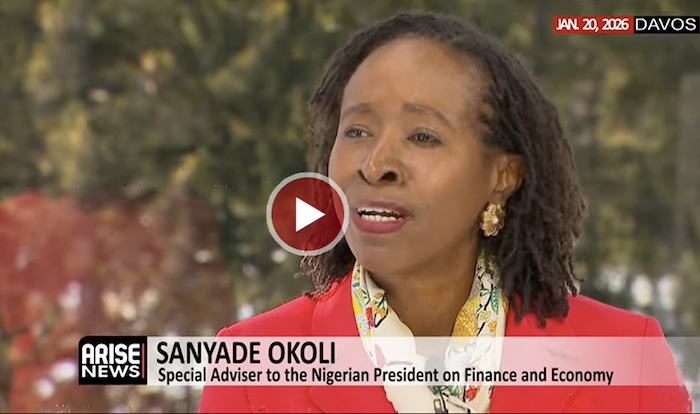

Special Adviser to President Bola Tinubu on Finance and Economic Matters, Sanyade Okoli, has said job creation remains the federal government’s top economic priority as Nigeria pushes reforms to attract investors and reduce poverty.
Speaking at the World Economic Forum in Davos, Switzerland, in Tuesday Okoli said Nigeria’s presence at the global gathering is focused on strengthening credibility, improving macroeconomic stability and ensuring reforms translate into real benefits for ordinary citizens.
The interview, conducted on the sidelines of the forum, centred on Nigeria’s reform agenda, investor confidence, economic transition pains, and the government’s plan to convert reforms into jobs and lower inflation, as the country engages global leaders and investors in Davos.
Explaining Nigeria’s reform message, Okoli said credibility is essential in global negotiations and investment discussions “You know, as with any quality dialogue, you require a certain level of credibility to not only be let into the room but be able to participate and listen to. And in truth, Nigeria has needed these reforms to ensure that we are seen as a credible player in the global market, especially when you’re discussing with investors.”
While acknowledging international praise for Nigeria’s reform direction, Okoli admitted the process has been difficult for citizens at home “I think tightrope is the right word. And yes, there were necessary reforms, but we recognise that Nigerians are facing what I’ll call the transition pains, because the truth is, if you’ve been headed in one direction and you’re trying to make quite a significant change in direction, it is not easy. Change is not easy.”
She said the only sustainable path to prosperity is through job creation powered by investment.
“If we’re trying to improve, reduce poverty in Nigeria, the only sustainable way of doing that is to create jobs. If you’re trying to create jobs, the only sustainable way of doing that is to attract investments. And you need the macroeconomic framework that will attract not just local investors, but also international investors.”
According to her, Nigeria’s economic environment has improved, drawing positive responses from development partners and investors, though inflation remains a major challenge.
“So, the macroeconomic environment of Nigeria is a lot more stable. It’s a lot more improved, which is why we’re hearing the positive things from the development partners and investors. But that change had implications for something like inflation, which is what Nigerians are feeling.”
Okoli said government efforts now focus on ensuring reforms quickly impact households by investing in key sectors. “The effort now is to ensure that the benefits of the reforms go down to the Nigerian individual as quickly as possible… food security and agriculture. It’s multidimensional in that not only does it ensure that we have food on our plate, it’s been a huge driver of inflation. So, if we can stimulate food production, it will help to bring down inflation, but also it creates jobs.”
She added that electricity and infrastructure development are also central to economic growth. “The electricity sector. There’s a lot we’re trying to do there because, again, businesses need electricity. Individuals need electricity, but businesses need it to ensure that their productivity can increase. And they can create jobs. We’re building homes, roads, et cetera.”
On Nigeria’s presence at Davos, Okoli highlighted the significance of the Nigeria House, describing it as a platform to tell Nigeria’s story directly to global investors “And what better place for Nigeria to be able to tell its own story here at Davos, but to have its own Nigeria House… so that you have investors from across the world being able to come in and listen and hear what Nigeria is doing, where Nigeria is trying to go. And also, it’s a space for meetings as well.”
She noted that the Minister of Finance and Coordinating Minister of the Economy, Wale Edun, is also using the platform for engagements with investors. “So, it’s all part of the push for that we’re driving economic growth through investment.”
When asked to summarise the government’s focus, Okoli was brief and direct. “It’s a priority. That’s a priority. That’s all I can say.”
Nigeria’s delegation at Davos continues to engage global partners as the Tinubu administration seeks to balance reform credibility with easing the economic burden on citizens through investment-led growth and job creation.
Ademide Adebayo
About the Author