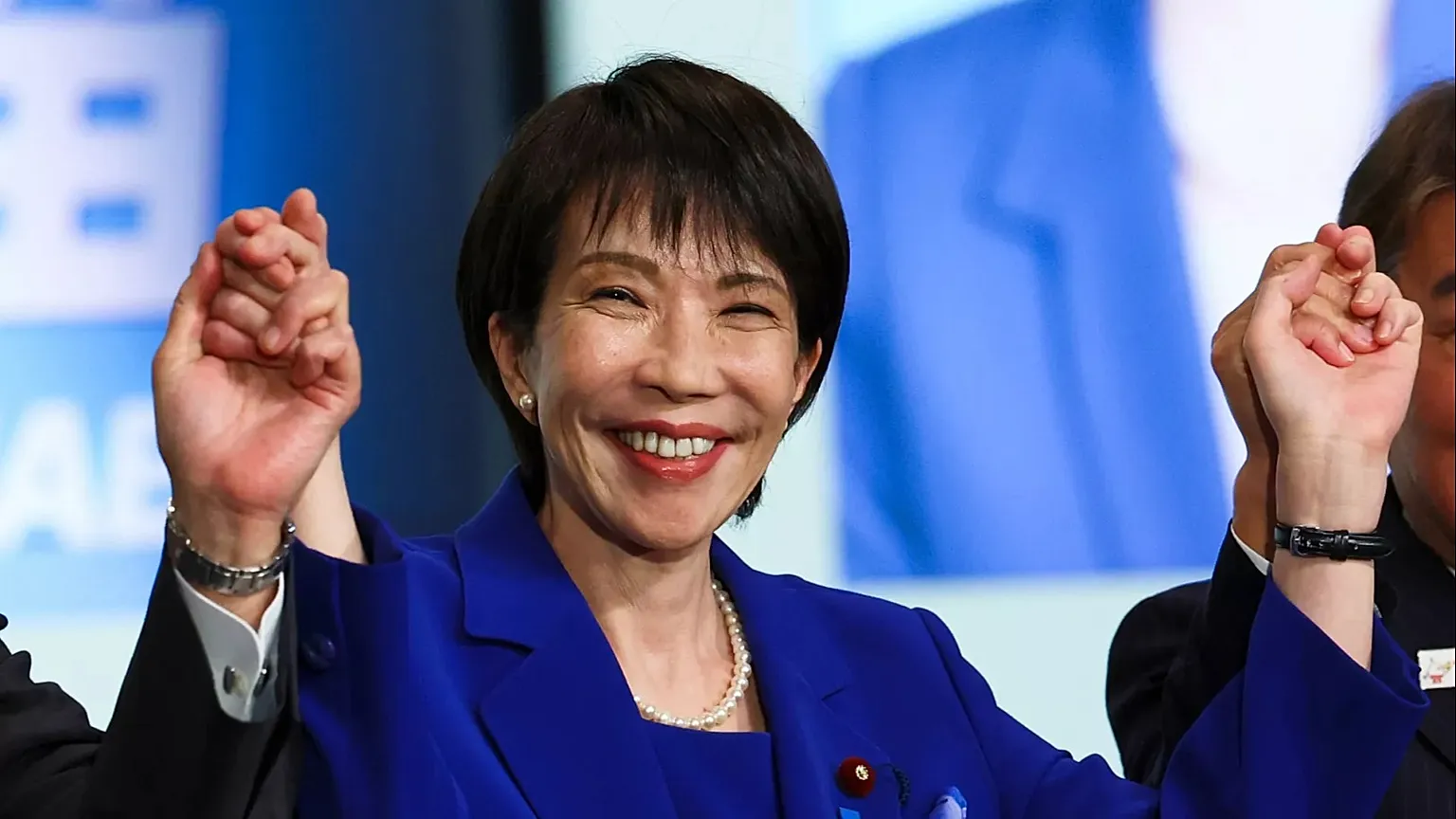
Japanese Prime Minister Sanae Takaichi has dissolved parliament ahead of a snap general election scheduled for February 8, banking on strong approval ratings for her cabinet to secure a renewed mandate for her ruling coalition.
Japan’s first female prime minister announced the move earlier in the week, seeking public endorsement for her policy agenda, which includes measures to cushion households from rising living costs and increased defence spending.
On Friday, the Speaker of the House formally dissolved the powerful lower chamber by reading out an official proclamation, as lawmakers erupted into the traditional rallying cry of “banzai”.
Takaichi’s ruling coalition—comprising her Liberal Democratic Party (LDP) and the Japan Innovation Party (JIP)—currently holds only a slim majority in the lower house. The prime minister hopes that widespread support for her cabinet will translate into electoral gains, despite the LDP’s own struggles with low approval ratings and a series of scandals.
“It’s not clear whether high public support for the Takaichi cabinet will actually translate into support for the LDP,” said Hidehiro Yamamoto, a political science professor at the University of Tsukuba. “What voters are most concerned about are concrete measures to address inflation.”
Fresh government data released Friday showed that Japan’s inflation rate slowed in December, largely due to government subsidies on electricity and gas. Core consumer prices—excluding volatile fresh food—rose 2.4 per cent year-on-year, down from three per cent in November, though still above the Bank of Japan’s two per cent target.
Public frustration over rising prices played a significant role in the political downfall of former prime minister Shigeru Ishiba, whom Takaichi succeeded in October. While Japan battled deflation for decades, it has more recently been hit by rising living costs and a persistently weak yen, which has driven up import prices.
Rice has become a potent symbol of the cost-of-living crisis. Prices more than doubled in mid-2025 compared to a year earlier before easing in recent months. Official figures showed rice prices were still up more than 34 per cent in December compared with the previous year.
In a bid to stabilise the world’s fourth-largest economy, Takaichi’s cabinet approved a record ¥122.3 trillion ($770 billion) budget for the fiscal year beginning April 2026. However, opposition figures argue that dissolving parliament risks delaying the budget’s passage.
Jun Azumi of the main opposition Constitutional Democratic Party (CDP) criticised the move, saying it would “sacrifice livelihoods” at a time of economic uncertainty.
Tax Relief and Fiscal Risks
If re-elected, Takaichi has pledged to cut the sales tax on food for two years to ease inflationary pressures on households—a proposal also supported by several opposition parties.
Critics, however, warn that her aggressive fiscal spending plans could further inflate Japan’s already massive public debt, which is projected to exceed 230 per cent of GDP in the 2025–26 fiscal year. Takaichi has defended the approach, insisting it is “responsible” and necessary.
Markets have reacted nervously. The prospect of tax cuts, combined with the expansive stimulus package, has rattled investors, sending yields on Japanese government bonds sharply higher—an indication of growing concern over debt-financed spending.
On Friday, the Bank of Japan left its key interest rate unchanged at 0.75 per cent following a two-day policy meeting. The central bank has raised rates several times since early 2024 in an effort to curb inflation and forecast that price growth will fall below two per cent in the first half of 2026, citing government anti-inflation measures.
Centrist Challenge
The LDP has governed Japan almost continuously for decades, though often under changing leadership. Ahead of the election, the CDP has joined forces with Komeito to form a Centrist Reform Alliance, hoping to attract swing voters disillusioned with the ruling party.
Analysts say the contest could be tighter than usual, depending on the alliance’s ability to mobilise voters, though an outright opposition victory remains unlikely.
“The key factor may be turnout among young and middle-aged voters, as seen in the upper house election in July,” Mizuho Research & Technologies said in a note.
According to a poll published in late December by the conservative Sankei Shimbun newspaper and Fuji Television, Takaichi’s government enjoys nearly 90 per cent support among voters under the age of 30—an advantage she hopes will prove decisive at the ballot box.
About the Author