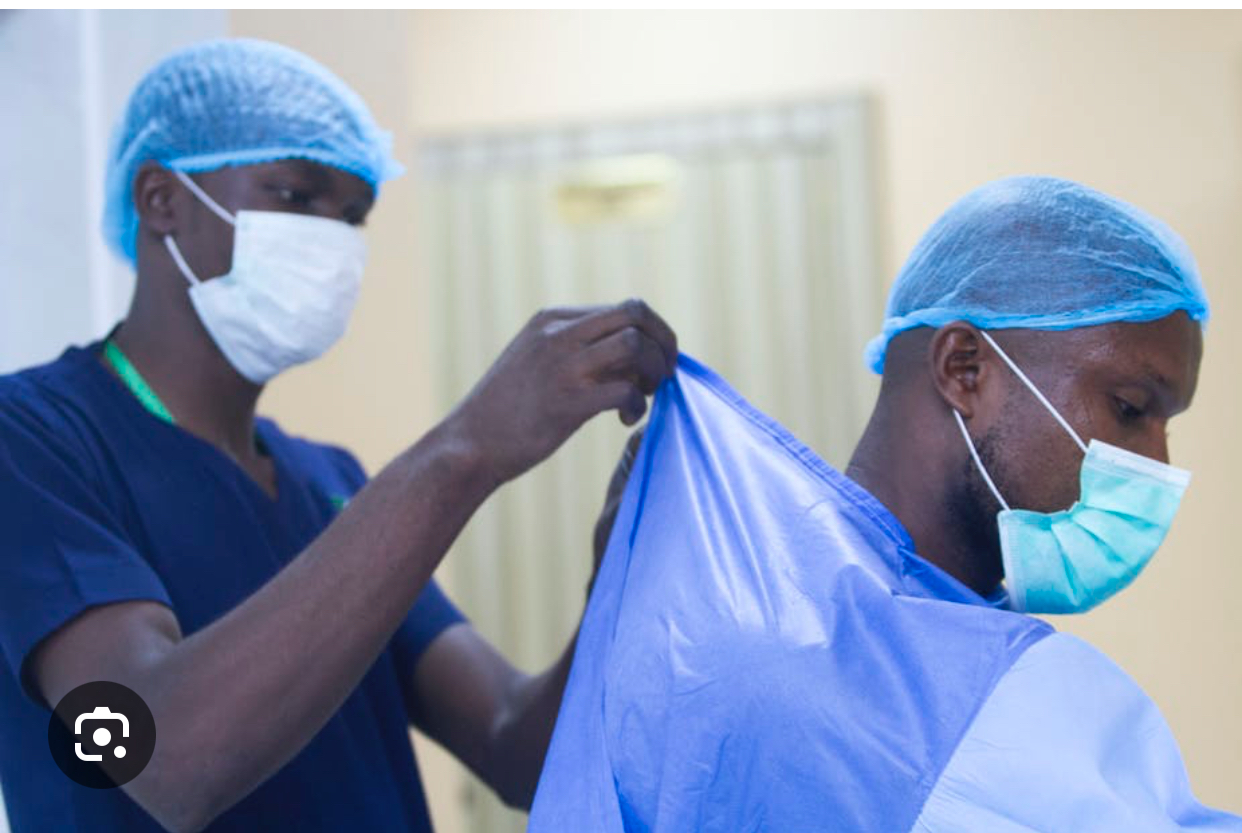
The mass migration of doctors, nurses, and other medical professionals from Nigeria is placing severe strain on the country’s fragile healthcare system, the Minister of State for Health and Social Welfare, Iziaq Salako, has said.
He raised the alarm on Monday while delivering a keynote address at the 2026 United Kingdom Global Health Summit at the Royal College of Physicians in London, warning that the ongoing exodus of Nigerian health workers, popularly referred to as “japa”, is intensifying manpower shortages and putting enormous pressure on the already overstretched system.
According to Salako, Nigeria currently has about four doctors per 10,000 people, far below the World Health Organisation’s recommended minimum of 10 per 10,000.
“The global health workforce crisis is not a future threat but a present emergency,” he said.
“Africa carries more than a quarter of the global disease burden but commands less than three per cent of the global health workforce”.
Citing data from the United Kingdom, Salako noted that 13,609 Nigerian health workers migrated to the UK between 2021 and 2022, making Nigeria one of the largest sources of foreign-trained medical personnel. A 2023 survey by NOI Polls and Nigeria Health Watch found that 57 per cent of Nigerian doctors had taken concrete steps toward leaving the country in search of better opportunities abroad.
“Every doctor who leaves Nigeria represents a substantial flight of invested public resources, often exceeding $200,000 in training cost.
This effectively transfers resources from one of the world’s most resource-constrained health systems to wealthier nations”, Salako said.
He described the trend as a matter of global equity requiring international cooperation. Salako urged developed countries to fully implement the WHO Global Code of Practice on the International Recruitment of Health Personnel, which promotes ethical recruitment and support for countries that train health workers who later migrate abroad. He also advocated for bilateral agreements that allow health workers to gain experience overseas while ensuring skills and knowledge are transferred back to Nigeria.
Highlighting domestic reforms, the minister said the Federal Government, under President Bola Tinubu, has launched the Nigeria Health Sector Renewal Investment Initiative, aimed at improving coordination, accountability, and funding through the principles of
“One Plan, One Budget, One Conversation”. The initiative focuses on knowledge transfer, skills development, and strengthening health institutions.
Salako also pointed to wider global challenges affecting healthcare systems, including economic instability, climate change, and geopolitical tensions. Citing the International Monetary Fund, he noted that projected global growth of 2.7–3.1 per cent in 2026 is lower than pre-pandemic levels, which could further limit government spending on healthcare.
Climate change, he added, is already affecting health outcomes. According to the 2025 Lancet Countdown on Health and Climate Change, heat-related mortality has risen by 23 per cent since 1999, while extreme weather events have pushed millions into food insecurity.
Nigeria’s diaspora health professionals, estimated at over 150,000 worldwide, occupy senior positions in hospitals and research institutions. Salako described them as a “strategic asset” that could help bridge domestic capacity gaps if leveraged through knowledge-sharing and bilateral programs.
About the Author


