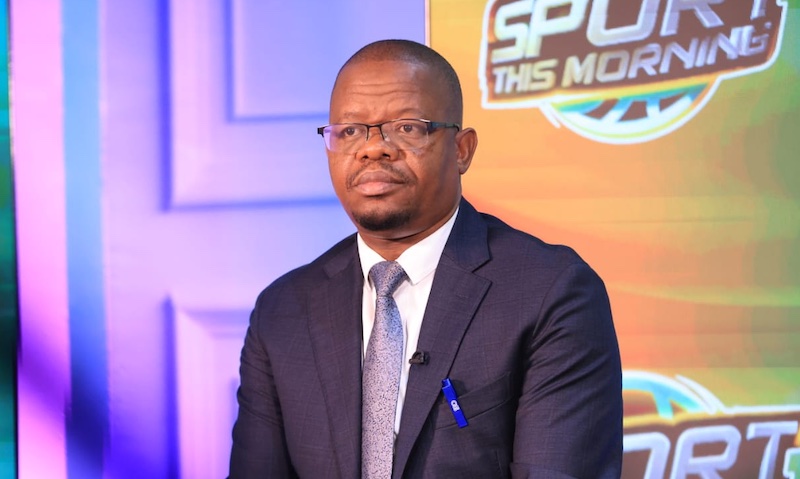
For several years now, Uganda has made no significant mark on the international football arena; this has obviously forced fans in the country to raise eyebrows by placing the blame on local football authorities.
There is a section of football administrators who think football standards have not declined but rather that Ugandan football has been stagnant over the years. Others think football, like many other things in Uganda, has not escaped the mismanagement which has been prevalent for the past years of the infrastructure breakdown.
On January 28, Fufa president Moses Magogo presented a four-year football development proposal to parliament’s Education and Sports committee. However, the nearly Shs 300bn budget was contested by Peter Ogwang, the state minister for Sports along with the National Council of Sports (NCS) officials.
They asked the committee not to allow Magogo present the document, which they had no copy of. Days later, Magogo agreed with his bosses and presented the document to the Education and Sports committee.
Just to pick a few things in the proposal, Magogo asks for Shs 71bn to be appropriated to Fufa for the financial year 2026/27. He also wants Shs 1.5bn to facilitate the naturalisation of players of Ugandan descent, then Shs15bn for football mobilization. For club competitions, Magogo computed more than Shs 134bn for four years.
He also asked the government to avail billions for more activities like the organisation of youth competitions, national football academy infrastructure, capitalization of Fufa TV and use of Video Assistant Referee (VAR) technology, among other things.
I cannot begrudge Magogo for coming up with this multibillion-dollar football project, but he ought to have first raised it with stakeholders for debate before rushing to parliament.
For instance, he proposed the removal of institutional clubs from featuring in the top-flight starting from the 2026/2027 financial year. The federation, instead, wants those entities which are running the institutional clubs (for example, like KCCA, URA or Maroons) to channel their club budgets towards helping community clubs of their choice.
Fufa suggests that the community clubs will, in return, provide the intended objectives by institution clubs. Magogo also wants state enterprises which do not own football clubs to each provide resources of not less than Shs 500m to finance at least one community club.
Magogo’s proposed reforms stem from the view that institutional clubs have no fan base, which makes it difficult to develop football from the grassroots. Is this achievable? Can institutional clubs in the current top-flight, like KCCA, URA, Police, Maroons, UPDF or UPPC be banned from featuring in the 2026/2027 Uganda Premier League?
Which law is the federation going to invoke? Will Fufa come up with a new law which is going to scrap the eight clubs which are currently featuring in the UPL and replace them with Big League teams? Why the hurry?
Did Fufa make a wider consultation, especially with key stakeholders, before coming up with this radical proposal? Didn’t Fufa learn from the rejected league reforms, which backfired in October last year after meeting obstacles from various key football stakeholders?
IMPORTANCE OF INSTITUTION CLUBS
Ugandan football is dominated by institutional clubs for obvious reasons. The main reason is that institutional clubs’ ownership is easily well structured, making them easy to manage.
Institutional clubs are easily financially sponsorship due to their established structure. The majority of these clubs offer employment to their players and most times pay players’ salaries and allowances on time.
We have seen community clubs which have played in the Uganda top-flight league for decades, but their ownership is unknown. Community clubs such as Onduparaka, Wakiso Giants, Masavu, Paidha, Mbale Heroes, Kyetume, Kira Young and a host of others were relegated to second-tier leagues because of poor management.
So, Fufa can pick valuable lessons in football management from institutional clubs and impart it with community clubs. It is a win-win situation that doesn’t need a tug of war.
About the Author