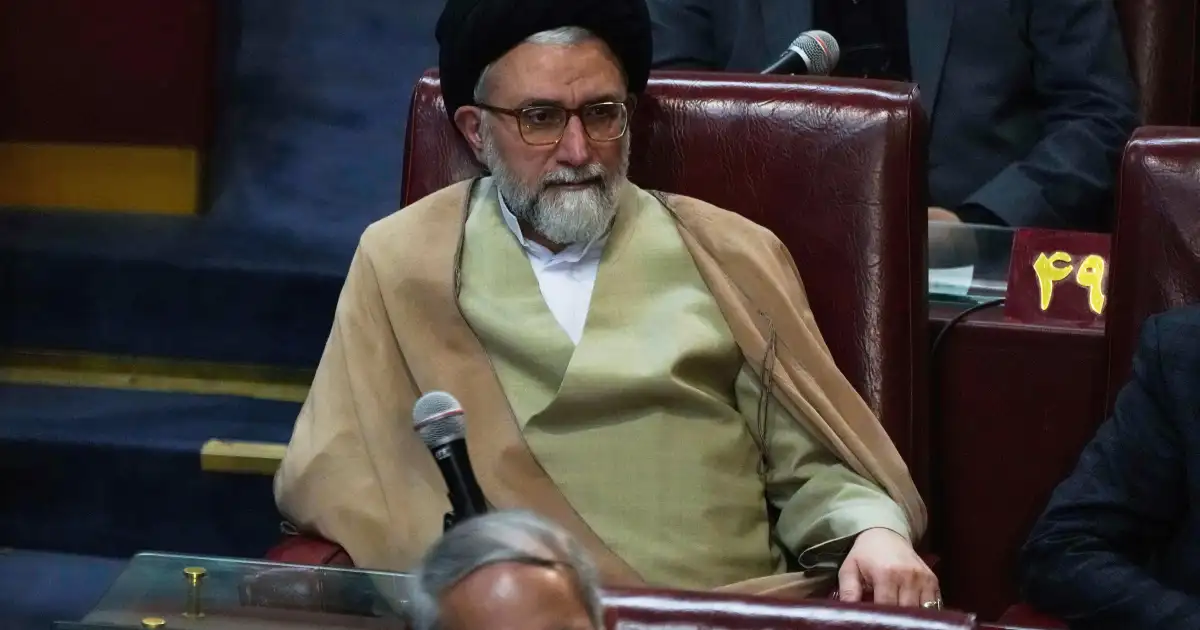
Israel’s Defence Minister, Israel Katz, says Israeli forces have killed Iran’s intelligence minister, Esmaeil Khatib, in what would mark the third assassination of a senior Iranian official within two days if confirmed by Tehran.
Iranian authorities have not yet commented on or verified the reported strike.
The announcement came on Wednesday, a day after two other high-ranking Iranian figures were killed in Israeli air raids: Ali Larijani, a senior national security official, and Gholamreza Soleimani, commander of the Basij paramilitary force. Iran is expected to hold funerals for both men later on Wednesday.
Despite the losses, Iran’s Foreign Minister, Abbas Araghchi, insisted the killing of Larijani would not weaken the country’s leadership structure.
In an interview with Al Jazeera aired after Tehran confirmed Larijani’s death on Tuesday, Araghchi said Israel and the United States had misunderstood the nature of Iran’s political system.
“They have yet to realise that Iran’s government does not depend on a single individual,” he said.
Reporting from the occupied West Bank, Al Jazeera correspondent Nida Ibrahim said Israeli military analysts described Khatib as a trusted figure closely aligned with Mojtaba Khamenei, widely seen as a powerful figure within Iran’s leadership.
According to Israeli sources, intelligence gathered over the past 24 hours enabled the military to carry out strikes that reportedly eliminated three senior Iranian officials in quick succession.
Katz also said that he and Prime Minister Benjamin Netanyahu had granted the Israeli military standing authorisation to target senior Iranian officials without requiring case-by-case political approval.
Analysts say the move signals an intensification of Israel’s strategy of targeting leadership figures within adversarial organisations and governments.
On Tuesday, Iranian authorities confirmed the deaths of Larijani, who served as secretary of the Supreme National Security Council, and Soleimani, head of the Basij — the powerful paramilitary wing associated with the Islamic Revolutionary Guard Corps.
Larijani had long been one of Iran’s most influential political figures, previously leading nuclear negotiations with Western powers and serving as speaker of parliament.
Targeted assassinations have been a hallmark of Israel’s security strategy for decades. Israeli operations have previously killed numerous leaders of Hamas and other militant groups both within and outside Gaza.
High-profile figures such as Hezbollah leader Hassan Nasrallah and Houthi political leader Ahmed Rahawi in Yemen have also been killed in past strikes attributed to Israel, and Israeli officials have repeatedly indicated that such operations will continue when viewed as necessary for national security.
The latest developments come amid escalating regional tensions and a widening conflict involving Israel, Iran, and their allies across the Middle East.
About the Author