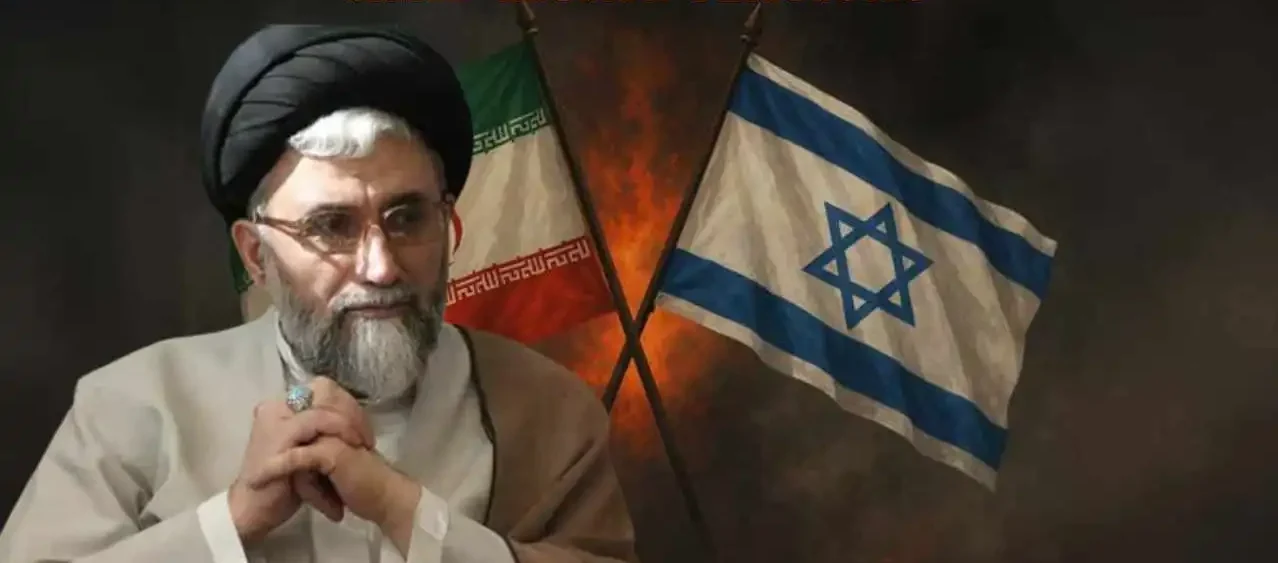
Israel says it has killed Iran’s intelligence minister, Esmail Khatib, in what would mark another major escalation in its widening confrontation with Tehran and the latest in a series of targeted strikes against senior Iranian officials.
Israeli Defence Minister Israel Katz announced on Wednesday that Khatib had been killed in an overnight operation, though Iranian authorities have not confirmed the claim or issued any immediate response.
“Last night, Iran’s Intelligence Minister Khatib was also eliminated,” Katz said in an official statement.
He added that Prime Minister Benjamin Netanyahu and the Israeli government had granted the military standing authorisation to target any senior Iranian official once intelligence and operational conditions are met, without requiring further political approval.
“We will continue to thwart and hunt them all down,” Katz said.
If confirmed, Khatib’s death would come less than 24 hours after Iran acknowledged the killing of senior security official Ali Larijani in a separate Israeli strike — a development that has sharply intensified tensions across the region.
Israeli officials say the latest operations form part of a broader strategy aimed at weakening Iran’s command structure through precision strikes against influential political, military, and intelligence figures.
There has been no official confirmation from Tehran, but Iranian leaders have repeatedly vowed retaliation for attacks on senior officials and strategic facilities.
Security analysts say the pattern reflects Israel’s long-established doctrine of targeting leadership figures seen as central to hostile military planning.
In recent years, Israel has carried out similar strikes against senior figures linked to regional armed groups aligned with Iran, including Hezbollah and Palestinian militant organisations.
David Khalfa, co-founder of the Atlantic Middle East Forum, described the current campaign as an effort to destabilise Iran’s political and security architecture by targeting key figures at the centre of state power.
According to Iranian media, funeral arrangements were under way for Ali Larijani and other senior military figures killed in recent attacks, although official schedules remained uncertain amid continuing air strikes.
Meanwhile, violence continued on both sides.
In central Israel, two people were killed overnight after an Iranian missile barrage struck areas near Tel Aviv, according to emergency responders. Authorities said falling munitions hit multiple locations, including a residential building in Ramat Gan, where a roof collapsed on an elderly couple.
A local resident identified only as Omer described hearing multiple explosions.
“It was not just one blast — it sounded like a missile splitting apart,” he said.
At the same time, Iranian media reported fresh strikes in several parts of Iran, including Tehran and Lorestan province, where local reports said casualties were recorded after attacks on residential areas.
The conflict has increasingly spread beyond Iran and Israel, affecting neighbouring countries across the region.
In Lebanon, Israeli strikes hit central Beirut after renewed rocket launches by Hezbollah, with Lebanese authorities reporting casualties in densely populated districts of the capital.
The expanding military confrontation has heightened fears of a broader regional war, as diplomatic efforts to contain the violence remain under severe strain.
About the Author