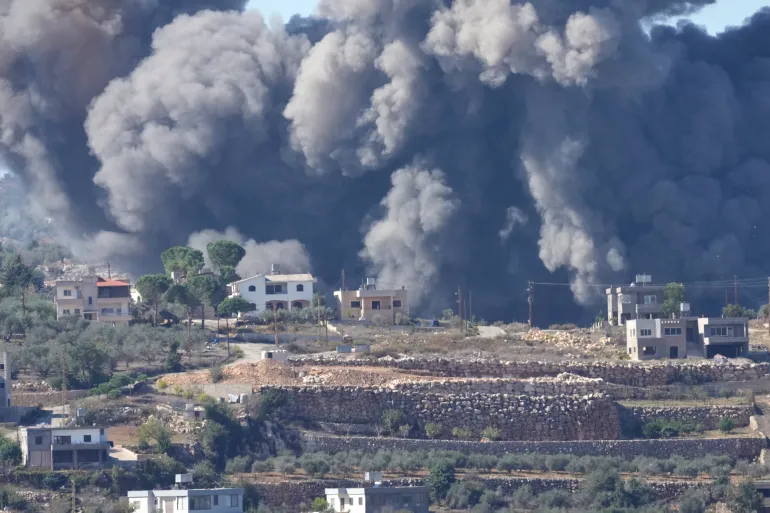
Israel has expanded its ground military operations deeper into southern Lebanon, deploying troops into new areas as part of an intensified campaign against Hezbollah, the Iran-backed armed group.
Speaking during a military briefing, Israeli army spokesperson Nadav Shoshani said troops had entered locations where they had not operated previously, describing the latest moves as “limited and targeted” operations aimed at dismantling Hezbollah positions near the border.
He did not disclose how far forces had advanced or whether the military intended to establish permanent new positions.
Israel has maintained control of five strategic points inside southern Lebanon since a ceasefire agreement reached in November 2024. However, the military recently reinforced its presence after Hezbollah launched a wave of rockets toward northern Israel earlier this month, escalating tensions along the border.
Hezbollah said its rocket attack was retaliation linked to the wider regional conflict involving Iran, prompting Israel to answer with an intensified air and ground campaign across Lebanese territory.
Lebanese security sources said Israeli troops over the weekend encircled the strategic town of Khiyam, located roughly six kilometres from the Israeli frontier. According to the sources, Israeli forces have tightened control around the town and are pushing westward toward the Litani River, a move that could isolate large parts of southern Lebanon from the rest of the country.
The humanitarian impact has been severe. More than 800 people have reportedly been killed in Lebanon, while over 800,000 residents have fled their homes, particularly from southern communities and areas surrounding Beirut.
Israeli officials say the current ground offensive is intended to prevent further cross-border attacks, noting that Hezbollah has launched repeated rocket and drone strikes targeting northern Israeli communities. Two Israeli soldiers have been reported killed since the latest phase of fighting began.
Meanwhile, diplomatic efforts are continuing behind the scenes, with Israeli and Lebanese officials expected to explore talks aimed at reaching a more durable ceasefire and addressing the issue of Hezbollah’s weapons.
Under the November 2024 ceasefire arrangement, Hezbollah was expected to withdraw from southern Lebanon while the Lebanese military assumed control of the area in exchange for an end to Israeli bombardment.
Israel argues that those terms were never fully implemented and says it has continued striking what it describes as Hezbollah military infrastructure.
About the Author