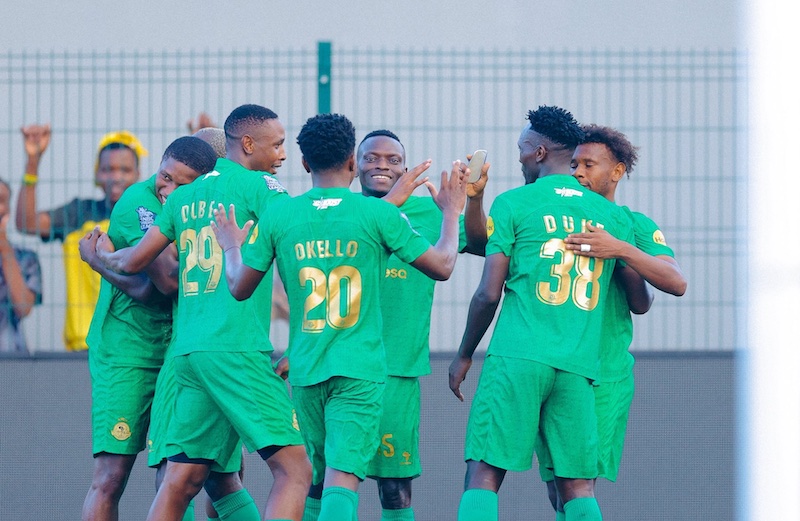
When Allan Okello missed the decisive Uganda Cranes penalty against Tanzania in the final minute of their Group C match at the 2025 Africa Cup of Nations, countless hearts sank.
Widely regarded as the poster boy of the national team, his miss felt like a profound letdown for fans who see him as Uganda’s primary match- winner. Yet, in that moment, Okello simply reminded everyone that he is human—capable of error, like any other footballer.
Still, the consequences were heavy. Had he converted from the spot to secure a 2–1 win, Uganda would have finished the group stage with at least three points and progressed to the round-of-16.
Instead, Tanzania advanced with just two points, only to be eliminated by hosts Morocco in a narrow 1–0 defeat. That Uganda missed out under such circumstances was deeply disappointing.
Beyond the team’s elimination, many felt that Okello would bear the brunt of the fallout from the missed penalty. Before the dust could even settle, however, Okello sealed a move to Tanzanian giants Young Africans SC (Yanga FC).
The timing raised eyebrows and sparked debate: was this the right move for the Ugandan star? Inevitably, Okello should expect some banter from rival fans—particularly reminders that his penalty miss arguably spared Tanzania the embarrassment of finishing bottom of Group C.
But such taunts rarely last. Their longevity will largely depend on how quickly Okello settles and performs. If his Yanga tenure begins with decisive goals and assists, the narrative will swiftly change.
The discussion will shift from mockery to admiration—and to just how big a coup Yanga pulled off. For a reported fee of $300,000 (approximately Shs1 billion), Yanga have invested heavily, and expectations are understandably high. Football commentator Tom Damulira believes the environment will demand far more from Okello.
“I follow Tanzanian football keenly,” Damulira said. “The difference between their league and ours lies in professionalism. Clubs like Yanga believe they should be competing in the latter stages of every CAF club competition. When they buy you, your contribution must be significant.”
What does that mean in practice? According to Damulira, Okello’s previous experience at Algeria’s AC Paradou should prepare him for the intensity. At Yanga, especially as a foreign signing, there is little room for comfort.
Back home, Okello has enjoyed immense goodwill since his breakout season as a 17-year-old at KCCA FC in 2017. Even during spells of inconsistency, he was often afforded the benefit of doubt. That cushion will not exist at Yanga.
“There is very little leeway,” Damulira noted. “He must play every game like a cup final. Attacking players are under even greater scrutiny. Working hard, tracking back, and leaving everything on the pitch is the bare minimum.”
Some of Okello’s recent tendencies—drifting in and out of games—may not be tolerated in Dar es Salaam. However, the move also presents an enormous opportunity. At Yanga, Okello has a chance not only to showcase his talent, but to dominate matches and grow into a true team leader.
At 25, he is approaching his peak years. Operating as a classic number 10, Okello occupies a role reserved for football’s lynchpins—players around whom everything revolves, expected to dictate tempo and influence outcomes.
Just as Denis Onyango did at Mamelodi Sundowns—winning the CAF Champions League in 2016 and later being crowned Africa’s best-based player—Okello has an opportunity to elevate himself into continental relevance.
Some argue that a move to South Africa or North Africa would have represented a higher level. However, his agent Sultan Atubo has pointed out that the public does not know which clubs pursued Okello.
What matters most now, Atubo says, is that Yanga offer a platform to perform consistently on the continental stage—against giants such as Al Ahly and Sundowns. Ultimately, this move is about time, opportunity, and belief. Okello has all three. The challenge now is whether he can seize them—and prove that he belongs among Africa’s elite.
About the Author