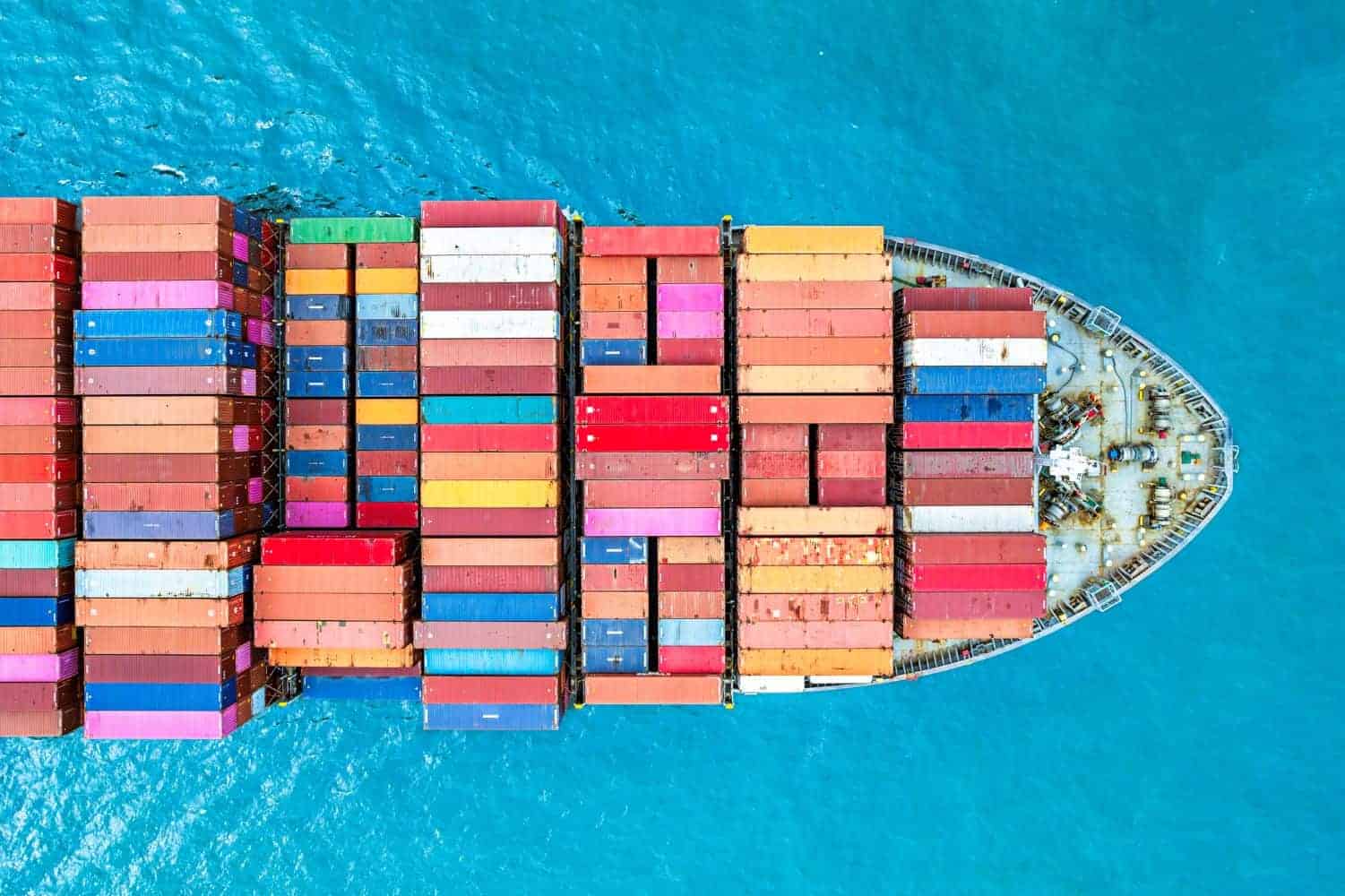
South Africa has not yet fully benefitted form an increase in maritime traffic around the Cape of Good Hope.
Shipping routes were disrupted several weeks ago after the United States and Israel launched a military offensive against Iran, locking the combatants and the region into a costly conflict.
US President Donald Trump said on Tuesday that his administration was in “serious discussions” with Iranian counterparts, yet bombs continue to fall across the Gulf.
An increase in fuel prices has been the most immediate global consequence of the conflict, with South Africa hit with a mammoth fuel increase on April Fool’s Day.
Only an 11th-hour temporary intervention by government softened the expected blow to motorists’ wallets.
Little increase in port calls
Maritime intelligence analysts Windward describe the situation in the Gulf as “multi-theatre”, expanding into the Indian Ocean as well as the Red Sea and Black Sea.
As well as the blow to Gulf nations’ energy markets, the data firm stated that electronic interference had degraded “navigation and compliance visibility” in the waters south of the Gulf.
In a recent written response to a parliamentary question, the Department of Transport (DoT) acknowledged there had been a high volume of ships passing South Africa’s shores, yet few were needing to dock.
“There is an increase in maritime traffic in recent months, but as of 25 March, it has not translated into a noticeable increase in port calls for the South Africa port system,” the department stated.
DoT explained that ships not initially bound for South Africa already had the resources needed to complete their journeys without needing to stop.
“It is worth mentioning that the cargo that was not originally destined for South African ports is highly unlikely to come to our ports, especially the liquid bulk,” the department stated.
However, South Africa was obliged to monitor the safety of the ships and the crews passing through its waters.
“The department and the South African Maritime Safety Authority must be on high alert and ensure that the Maritime Rescue Coordination Centre is well capacitated to ensure that the standby or salvage tug is always available for any eventuality at sea,” the DoT concluded.
Infrastructure investment needed
A lack of quality ports was ruled out as a reason for ships not wanting to dock, but an industry insider said the situation was a reminder for government to invest in infrastructure.
Francois Nel, managing director at Import Export Experts, explained that while much had been done recently to improve South Africa’s ports, increased container processing capacity was needed.
“In my opinion, you must have a good infrastructure in order to let goods and services move as quickly as possible,” he told The Citizen.
“If we can export quicker, we can receive funds into the country quicker and that will stimulate trade in order to make us more efficient.”
Nel noted that many Chinese container ships had been rerouted to Cape Town and Durban in March, stressing the need for external depots that can handle overflows and give importers and exporters streamlined storage options.
“A country like China is very efficient and financially solid because their ports operate so efficiently.
“If you increase the number of channels that you can move between ports, then that will definitely decrease the stress.
“We can see that a lot is being done, but in tough times, you need to increase your infrastructure because that will definitely eliminate a lot of the pressures,” Nel concluded.
NOW READ: Petrol price shock hits at midnight: Here’s what you’ll pay