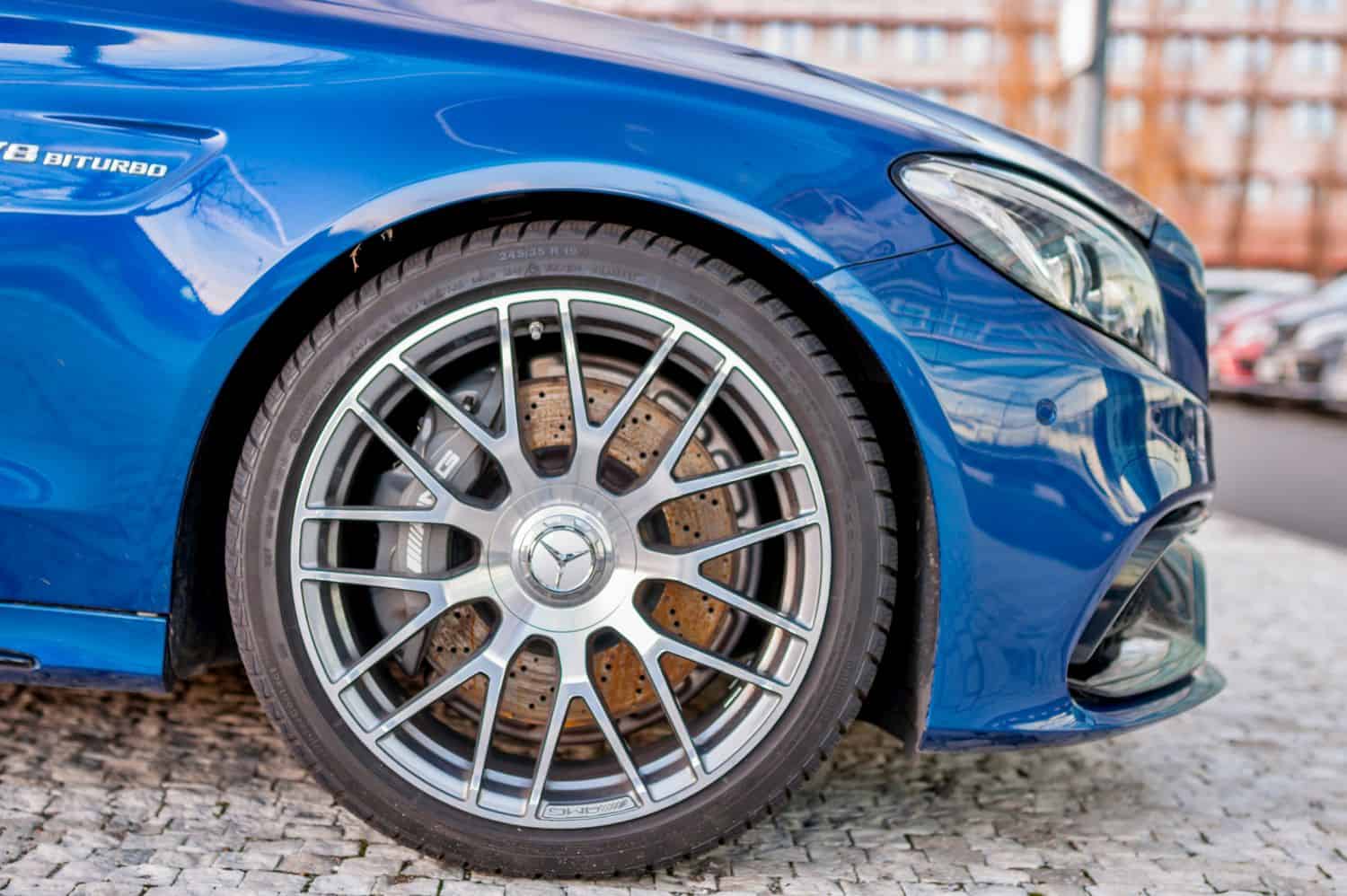
PRAGUE, THE CZECH REP., NOVEMBER 27, 2016: Closeup of new luxury car Mercedes-Benz c-class C63, parking in front of car store. Detail front view of cars
Mercedes-Benz South Africa (MBSA) is reportedly in discussions with GWM to co-manufacture vehicles at its East London assembly plant, a potential lifeline that could help keep the factory open.
Mercedes-Benz builds the C-Class at the East London plant and previously exported the vehicles to the United States duty-free under the African Growth and Opportunity Act (Agoa).
This changed in August last year when US President Donald Trump imposed a 30% tariff on South African exports to the US, dealing a blow to the country’s automotive sector.
The US Supreme Court suspended the duty in February 2026, although Trump is now expected to introduce a new 15% global tariff on imports later this month.
ALSO READ: East London set to become a ghost town due to US tariffs, says Naamsa CEO
Tariffs to hurt Mercedes-Benz
Thato Mntambo, MBSA’s GM of corporate affairs, told The Citizen: “The Mercedes-Benz East London plant is focused on the production of the C-Class.”
This is because most of the cars produced at the plant are exported, mainly to North America, Europe and Asia.
“Customer and market requirements are constantly changing,” said Mntambo. “Mercedes-Benz strives to ensure that all its production sites remain globally competitive, are on an optimal operating point and adapted to new requirements whenever necessary.”
2025 was a year of uncertainty for Mercedes-Benz, especially at the East London plant, with periods when production was suspended. But the German luxury carmaker cited the production halt as “standard procedure”.
Mercedes-Benz plans
Bloomberg reported GWM representatives have presented a proposal to officials at South Africa’s department of Trade, Industry, and Competition (DTIC) outlining the company’s interest in producing vehicles there.
The DTIC had not confirmed this to The Citizen by the time of publishing. People close to the matter said the deal has not been finalised, and the companies could decide on alternative tie-ups.
Should the deal fall through, Mercedes-Benz allegedly plans to turn the East London plant into a global hub to re-purpose end-of-life batteries from passenger vehicles, which Mntambo couldn’t confirm or deny.
“Please understand that in general we do not comment on speculations about future product portfolio and production planning process,” she said.
ALSO READ: Chinese imports fuel job losses and industry rift in SA’s automotive sector
Retrenchments at the plant
The economic viability of Mercedes-Benz’s East London plant has been questioned before.
In June 2024, the company retrenched about 700 employees because of falling global demand for the C-Class, which resulted in daily production shifts being cut from three to two.
The Citizen had not received a reply from GWM by time of publishing. A comment will be added once received.
However, it is reported that the Chinese carmaker said, without providing any further details, it is continuously looking for ways to expand its presence in the local market.
Chinese cars presence
If the deal is successful, sharing a factory could reduce overcapacity, lower operating costs and preserve jobs as established manufacturers from Europe, the US and Japan lose market share to cheaper imports from China and India.
Most people in South Africa have moved to buying cars not produced in the country, particularly those from China. This resulted in many automakers calling on the government to safeguard the industry against imports.
The increase in South Africans buying imported cars has led to some local automakers retrenching workers due to low demand.
GWM presence to grow
A successful deal would also result in GWM being able to meet its growing demand for its South African offerings, which include the Haval brand.
In such arrangements, the plant owner usually manufactures vehicles for another brand under a contract and charges a fee for each unit produced.
While Mercedes-Benz’s current production line could relatively easily take on another brand, the partner company would still need to establish its own body shop, the section of the factory where vehicle frames are welded, assembled and readied for painting.
NOW READ: Women lead surge in buying Chinese cars in SA – but here’s the risk
About the Author