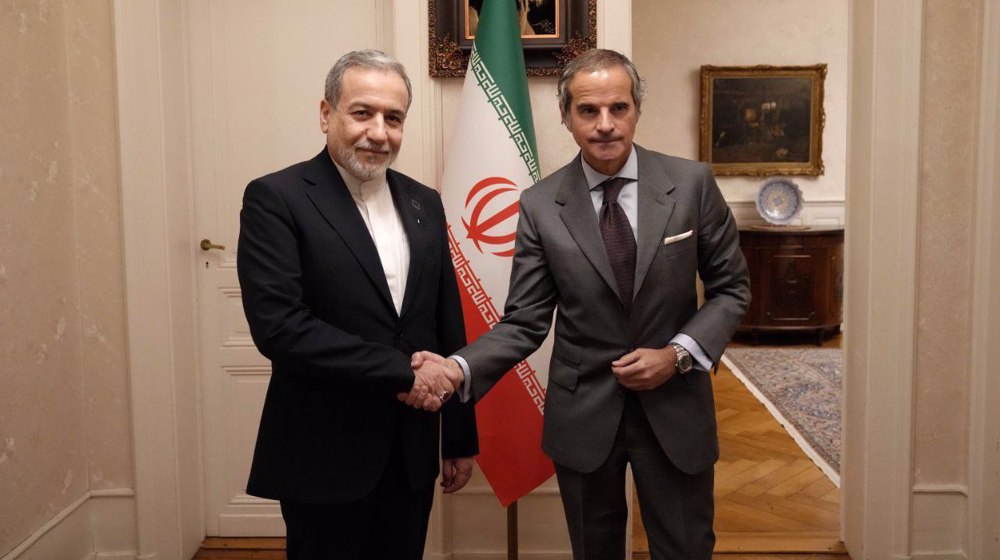
Iranian Foreign Minister Abbas Araghchi has arrived in Geneva for the second round of high-stakes nuclear negotiations with the United States, aimed at easing tensions and preventing a potential military confrontation that Supreme Leader Ayatollah Ali Khamenei has warned could escalate into a regional conflict.
“I am in Geneva with real ideas to achieve a fair and equitable deal,” Araghchi wrote on X on Monday. “What is not on the table: submission before threats.”
The renewed talks, initiated earlier this month, seek to address the decades-long dispute over Tehran’s nuclear program, as the U.S. has deployed warships—including a second aircraft carrier—to the region amid efforts by mediators to avert conflict.
On Monday, Araghchi met with Rafael Grossi, head of the International Atomic Energy Agency (IAEA), noting that his team of nuclear experts anticipates “a deep technical discussion.”
The IAEA has been pushing for access to Iran’s primary nuclear sites, some of which were damaged during the 12-day war in June by U.S. and Israeli strikes.
Tehran has expressed concern over potential radiation hazards, insisting that a formal protocol be followed for inspecting highly enriched uranium reportedly buried under the rubble.
Speaking to IRNA, Iran’s foreign ministry spokesman Esmail Baghaei said the IAEA will play “an important role” in the upcoming mediated talks. At the same time, he renewed Tehran’s criticism of Grossi for failing to condemn military attacks on Iranian nuclear facilities, which are safeguarded under the Non-Proliferation Treaty (NPT).
Araghchi is also scheduled to meet with his Omani counterpart, Badr bin Hamad al-Busaidi, who facilitated the first round of U.S.-Iran talks earlier this month.
Iran has repeatedly emphasized that it will not accept U.S. demands for zero nuclear enrichment and considers its missile program a “red line” that remains non-negotiable.
About the Author