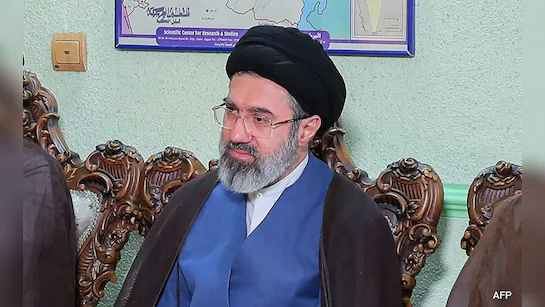
Iranian officials have confirmed that the country’s newly appointed Supreme Leader, Mojtaba Khamenei, sustained injuries during a recent airstrike but is currently “safe,” following days of speculation about his condition and whereabouts.
Khamenei, who assumed the role over the weekend, has not appeared in public or delivered any official address since his appointment, fueling widespread questions about his health.
Yousef Pezeshkian, the son of Iran’s president and a government adviser, addressed the concerns in a message shared on his Telegram channel on Wednesday.
“I heard news that Mr. Mojtaba Khamenei had been injured and sought clarification from some contacts,” Pezeshkian wrote. “They confirmed that, thank God, he is safe and in good condition.”
Further confirmation came from Iran’s ambassador to Cyprus, Alireza Salarian, who disclosed that Khamenei had indeed been injured during a bombardment in Tehran.
“He was present during the strike and sustained injuries in the bombardment,” Salarian told The Guardian. “However, this detail has not been widely reflected in foreign media reports.”
Mojtaba Khamenei was named Supreme Leader on Sunday following the death of his father, Ali Khamenei, who Iranian authorities say was killed in an airstrike at the beginning of the US-Israel conflict with Iran on February 28.
According to Iranian officials, the strike targeted a compound in central Tehran and resulted in the deaths of several members of the Khamenei family, including Mojtaba’s wife and mother.
In the days since the attack, uncertainty surrounding Mojtaba Khamenei’s condition had sparked speculation online, with some reports even suggesting that he may have died in the same strike.
State television later referred to him as a “wounded veteran of the Ramadan war,” offering few additional details. The phrase references the conflict that erupted during the Muslim holy month of Ramadan.
Meanwhile, the new leader’s image has begun appearing across Tehran on large billboards and posters. One prominent display depicts Mojtaba Khamenei symbolically receiving the Iranian national flag from his father, while Ayatollah Ruhollah Khomeini, the founder of the Islamic Republic, looks on.
Thousands of pro-government supporters also carried posters of him during a large rally in central Tehran earlier this week.
However, the leadership transition has also drawn visible opposition. Reports from the capital describe night-time chants of “Death to Mojtaba!” echoing in some neighbourhoods, reflecting resistance among segments of the population.
Mojtaba Khamenei has long been viewed as a powerful and controversial figure within Iran’s political establishment, with critics accusing him of playing a central role in suppressing anti-government protests that have erupted periodically since 2009.
As Iran navigates a turbulent period marked by war, political transition, and domestic unrest, attention remains focused on the new supreme leader and the direction his leadership may take.
About the Author