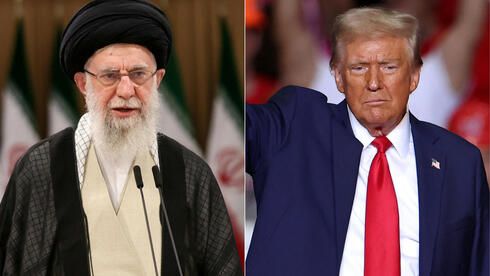
Iran has signalled its willingness to compromise on its stockpile of highly enriched uranium if the United States agrees to lift sanctions that have weighed heavily on its economy, according to Deputy Foreign Minister Majid Takht-Ravanchi.
His remarks come after nuclear talks between Iran and the United States resumed in Oman on February 6, marking a renewed diplomatic push to ease tensions over Tehran’s nuclear programme.
Switzerland announced on Saturday that a fresh round of discussions would take place in Geneva next week, though no specific date was provided. While Tehran has yet to formally confirm the meeting, Takht-Ravanchi—who was part of Iran’s delegation to Oman led by Foreign Minister Abbas Araghchi—told the BBC that the talks are expected to be held on Tuesday.
Western powers, led by the United States and backed by Israel—widely believed by experts to be the Middle East’s only nuclear-armed state—have long accused Iran of pursuing nuclear weapons. Tehran has consistently denied any military ambitions, maintaining that its nuclear programme is strictly for peaceful, civilian purposes.
Takht-Ravanchi said Iran is prepared to make concessions, including diluting its highly enriched uranium, as part of a broader agreement. However, he stressed that meaningful progress hinges on Washington lifting its sanctions.
“If we see the sincerity on their (American) part, I am sure we will be on a road to have an agreement,” he said in English during the interview.
When asked whether Tehran might consider exporting its stockpile of more than 400 kilograms of highly enriched uranium, he did not dismiss the possibility but noted that it was “too early to say” what the outcome of the talks would be.
Several countries, including Russia, have offered to assume responsibility for the uranium stockpile—an option Iran has so far declined.
Uncertainty continues to surround the status of Iran’s more than 400 kilograms of uranium enriched to 60 percent purity. The material was last inspected by the International Atomic Energy Agency on June 10, before Israeli and US strikes targeted Iranian nuclear facilities.
Iran’s enrichment level of 60 percent far exceeds the 3.67 percent cap set under the now-defunct 2015 nuclear agreement and is technically close to the roughly 90 percent threshold required for weapons-grade material, according to the IAEA.
Meanwhile, U.S. President Donald Trump has repeatedly called for zero uranium enrichment in Iran. Takht-Ravanchi rejected that demand, stating, “The issue of zero enrichment is not an issue any more and as far as Iran is concerned, it is not on the table any more.”
Iran’s semi-official Fars News Agency reported on Sunday, citing a foreign ministry official, that the negotiations may also explore the prospect of American investments in Iran’s energy sector.
The renewed talks underscore a delicate diplomatic moment, with both sides weighing concessions amid lingering mistrust and high geopolitical stakes.
About the Author