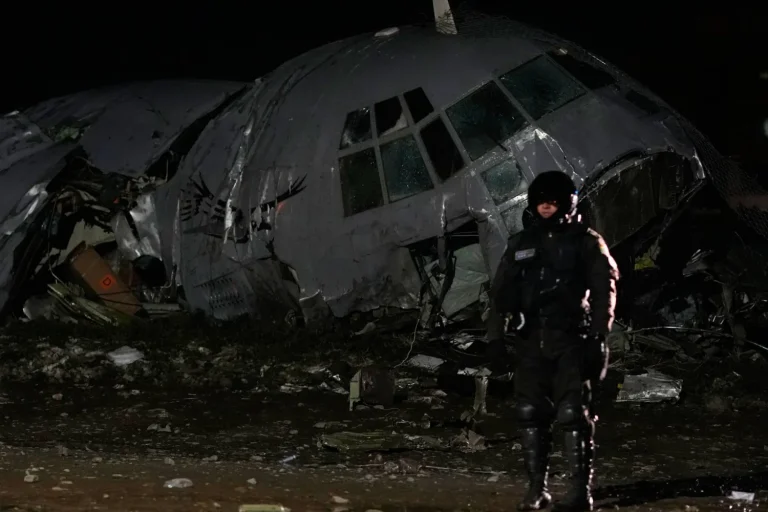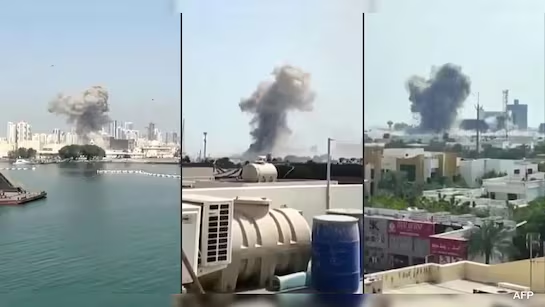
Iran has launched a sweeping series of missile strikes across the Middle East in what appears to be a direct response to recent US military action, targeting countries that host American forces under the US military’s Central Command (CENTCOM).
The strikes mark a sharp escalation in regional tensions, placing several key US installations — and their host nations — at the center of a rapidly unfolding confrontation.
Bahrain
The Gulf kingdom of Bahrain hosts the US Navy’s Fifth Fleet at Naval Support Activity Bahrain, the headquarters of US Naval Forces Central Command. The base, operational since 1948, serves as a critical maritime hub capable of accommodating the US military’s largest vessels, including aircraft carriers. Several US ships, including anti-mine and logistical support vessels, are homeported there.
Bahraini authorities said an Iranian missile strike targeted the Fifth Fleet’s service center, underscoring the strategic importance of the facility.
Iraq
In Iraq, US troops remain stationed in the autonomous Kurdish region as part of the international coalition against the Islamic State group. However, under a recent agreement between Washington and Baghdad, their mission is set to conclude by September. American forces have already withdrawn from federal Iraq.
Explosions were reported near the US consulate in Arbil, the capital of Iraqi Kurdistan. Kurdish security forces later stated that coalition defenses intercepted multiple drones and missiles over the city. Meanwhile, Kataeb Hezbollah, a powerful pro-Iran armed group in Iraq, threatened further attacks on American positions.
Jordan
In Jordan, the United States had recently deployed dozens of aircraft to Muwaffaq Salti Air Base ahead of its strikes on Iran. Jordanian officials reported that two ballistic missiles targeting the kingdom were intercepted, resulting in material damage but no casualties.
The incident highlights the kingdom’s sensitive position as a key US partner bordering several regional flashpoints.
Kuwait
Kuwait hosts multiple US installations, including Camp Arifjan — the forward headquarters of the US Army component of CENTCOM. Ali al-Salem Air Base, home to the 386th Air Expeditionary Wing, functions as a major logistics and airlift hub for US and coalition forces. The US also deploys MQ-9 Reaper drones from Kuwaiti territory.
Kuwait’s defense ministry said its forces intercepted missiles aimed at Ali al-Salem Air Base. However, reports indicated that an Iranian strike caused significant runway damage at the facility, which also houses Italian air force personnel.
Qatar
At the heart of US operations in the Gulf is Al Udeid Air Base in Qatar, which hosts forward elements of CENTCOM, its air forces, and special operations command.
The base also houses the 379th Air Expeditionary Wing, supporting airlift, refueling, intelligence, surveillance, reconnaissance, and medical evacuation missions.
Qatar confirmed that Iranian missiles targeted its territory, echoing a similar incident last June when Iran struck Al Udeid following US attacks on Iranian nuclear facilities.
Syria
The United States has maintained a military presence in Syria for years as part of the fight against the Islamic State group. With US forces now in the process of withdrawing — a move expected to be completed within weeks — tensions remain high.
Syrian state media reported that an Iranian missile strike in the country’s south killed four people, adding another layer of complexity to the conflict landscape.
United Arab Emirates
In the United Arab Emirates, Al Dhafra Air Base hosts the US 380th Air Expeditionary Wing and serves as a center for advanced air warfare training. The base supports a range of aircraft, including MQ-9 Reaper drones.
UAE officials said their forces intercepted two waves of Iranian missile attacks. However, debris from the first wave reportedly killed a civilian in Abu Dhabi.
A Region on Edge
From the Gulf to the Levant, Iran’s coordinated missile campaign has brought multiple US-aligned states into the crosshairs, dramatically widening the scope of confrontation.
With thousands of American troops still deployed across the region, the situation remains volatile, and the risk of further escalation looms large.
The coming days will be critical in determining whether this surge in hostilities settles into deterrence — or spirals into a broader regional conflict.
About the Author