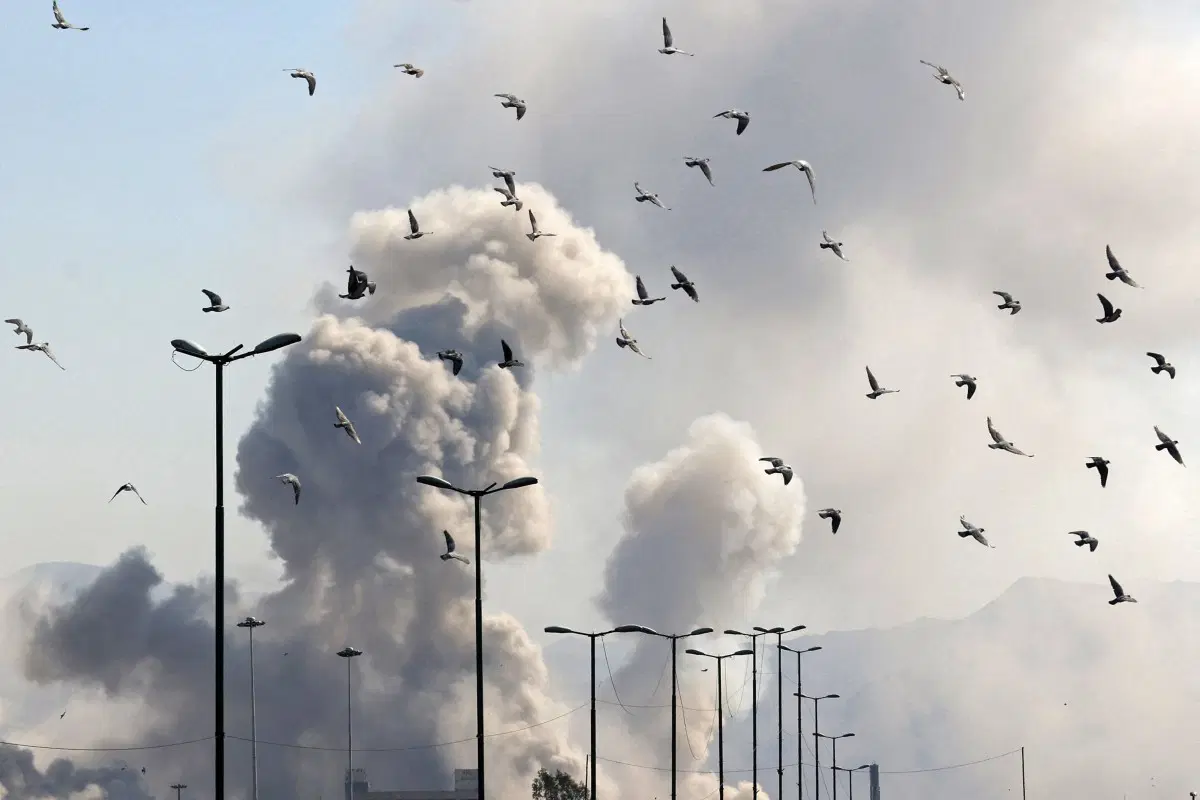
Tensions in the Middle East escalated further as Iran launched a series of missile strikes across the region following fresh explosions in its capital, Tehran, amid threats from US President Donald Trump targeting the country’s key oil export facilities, power stations, and desalination plants.
Israeli Prime Minister Benjamin Netanyahu, aligned with Trump on the offensive, claimed that more than half of Israel’s military objectives had been achieved but refused to set a timeline for the operation, which has now sparked a month-long regional conflict and sent global oil markets into turmoil.
As sirens blared across Jerusalem, the Israeli military reported responding to fresh Iranian missiles, while local media in Tehran confirmed new explosions that caused widespread power outages in parts of the city.
The conflict has also claimed lives beyond Iran. Israeli forces reported that four more soldiers were killed in southern Lebanon during clashes with the Iranian-backed Hezbollah. Earlier, Israel had warned residents in western Tehran of planned strikes on military infrastructure.
Meanwhile, Iran fired missiles at Gulf nations, accusing them of acting as launchpads for US attacks. In Dubai, four people were injured by debris from intercepted projectiles, and an Iranian missile strike sparked a fire on a Kuwaiti oil tanker in the city’s port. In Saudi Arabia, authorities intercepted eight ballistic missiles hours after Iran’s top diplomat urged Riyadh to “eject US forces.”
Trump warned on Monday that unless Iran agreed to a war-ending deal, including reopening the vital Strait of Hormuz shipping lane, US forces would destroy “all of their electric generating plants, oil wells, Kharg Island, and possibly all desalination plants.” Reports suggest Trump may also be willing to end the conflict even if the strait remains partially closed, potentially strengthening Tehran’s control over the strategic waterway.
Refusing to back down, an Iranian parliamentary committee voted to impose tolls on vessels passing through the strait, which handles one-fifth of global oil, and threatened a complete ban on US and Israeli ships. US Secretary of State Marco Rubio condemned the move, warning that it sets a dangerous precedent for international waterways.
Trump insisted that Washington is speaking to a “more reasonable regime” in Tehran, though Iranian officials deny any direct negotiations and accuse the US of using claims of dialogue as a cover while preparing a potential ground invasion.
Netanyahu said Israel had achieved key military objectives, including destroying industrial plants and coming close to neutralizing Iran’s arms industry.
“It’s definitely beyond the halfway point. But I don’t want to put a schedule on it,” he told US broadcaster Newsmax.
The conflict has been widely criticized, including by Egyptian President Abdel Fattah al-Sisi, who called on Trump to find an off-ramp, and Pakistani Foreign Minister Ishaq Dar, who is facilitating talks between Tehran and Washington.
On the ground, residents of Tehran are attempting to maintain normalcy despite the ongoing strikes.
“When I make it to a café table, even for a few minutes, I can almost believe the world hasn’t ended,” said Fatemeh, 27, a dental assistant.
Elsewhere, Israel has intensified its strikes in Lebanon.