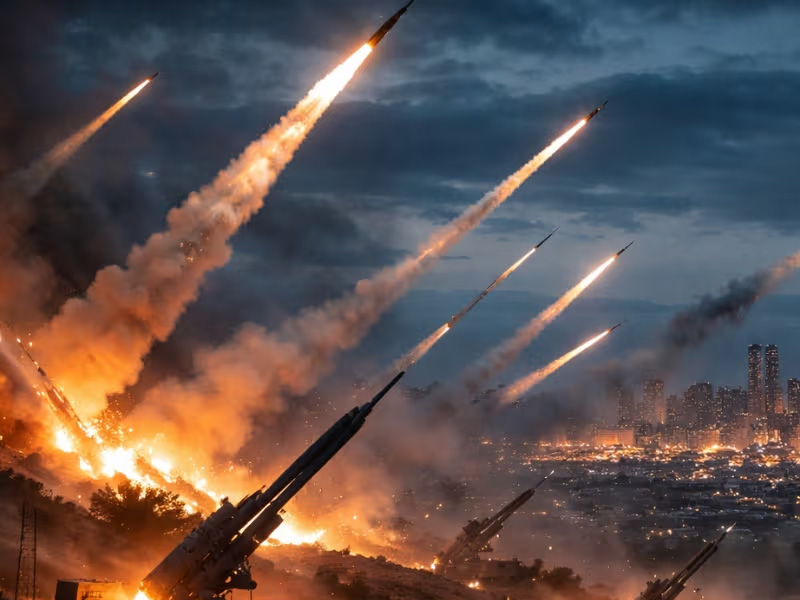
Iran launched multiple waves of missiles at Israel, escalating tensions and dismissing claims by Donald Trump of ongoing negotiations as “fake news.”
The Israeli military said air raid sirens were triggered across parts of the country, including Tel Aviv, where interception blasts were heard. In northern Israel, falling debris from intercepted missiles damaged homes, though no deaths were reported.
The strikes followed Trump’s statement on Truth Social that the US and Iran had held “very good and productive” talks aimed at a “complete and total resolution of hostilities in the Middle East.” He said he would delay for five days a planned strike on Iran’s power grid.
The announcement initially calmed markets, pushing shares higher and oil prices below $100 per barrel after earlier volatility triggered by Trump’s threats and Tehran’s warnings of retaliation.
However, Iran swiftly rejected the claims. Parliament Speaker Mohammad Baqer Qalibaf said no such talks had taken place.
“No negotiations have been held with the U.S., and fakenews is used to manipulate the financial and oil markets and escape the quagmire in which the US and Israel are trapped,” he wrote on X.
Iran’s Islamic Revolutionary Guard Corps also dismissed Trump’s remarks, describing them as “psychological operations” and signalling continued military action, including fresh attacks on US targets.
The developments cast doubt over a temporary market rebound that followed Trump’s decision to extend a deadline for Iran to reopen the Strait of Hormuz, a key route for roughly 20% of global oil and liquefied natural gas supplies.
Markets reacted sharply to the renewed uncertainty. Oil prices rebounded, with Brent crude rising to $104.21 per barrel and US crude climbing to $91.93, reversing some of the previous day’s losses.
“The underlying situation is still incredibly fragile or flammable,” said IG market analyst Tony Sycamore.
The conflicting signals from Washington and Tehran continue to unsettle global markets, as fears grow over potential disruption to energy supplies and a wider regional escalation.
Faridah Abdulkadiri
About the Author