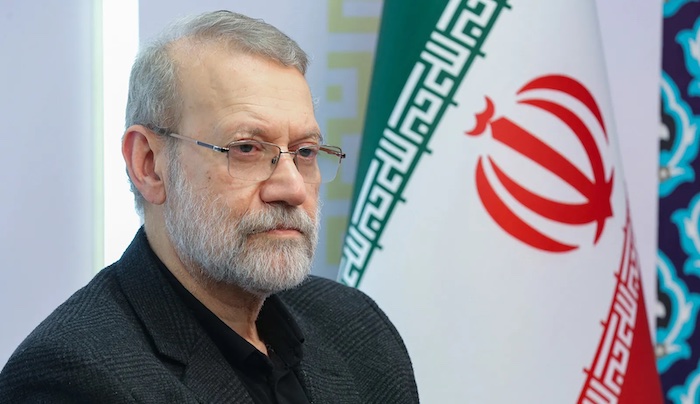
Ali Larijani, head of Iran’s National Security Council, has claimed that “a number” of United States soldiers have been captured since the outbreak of hostilities one week ago. Larijani described the captures as a consequence of the ongoing conflict between Tehran and the US-Israeli alliance, stating that American forces had underestimated Iran’s military preparedness.
“Reports indicate that several American soldiers have been taken prisoner since the start of hostilities,” Larijani said, adding that Tehran had verified the captures and accused Washington of attempting to conceal the situation. He described the alleged concealment as part of a broader US strategy to misrepresent the realities of the war.
According to Larijani, “The American government is reporting casualties selectively, but we have confirmed that a number of their troops have been captured and are now under Iranian control. This cannot be hidden for long.”
The Iranian official’s statement has not been independently verified. However, it follows a week of intense military exchanges in the region, including missile and drone strikes targeting US positions across the Gulf. Iran has repeatedly stated that its military operations are focused on US installations, while US and allied forces maintain that they are conducting precision strikes against Iranian military and strategic targets.
In response to Larijani’s claims, US Central Command (CENTCOM) issued an immediate denial. CENTCOM spokesperson Captain Tim Hawkins said, “These reports are false and deceptive. No American service members have been taken prisoner by Iranian forces. We continue to track all operations closely and remain fully aware of the situation on the ground.”
The escalation comes amid widespread international concern over the rapid intensification of the conflict. The US-Israeli operations, initiated on February 28, have involved multiple strikes on Iranian military infrastructure and leadership positions. Both sides have reported casualties, with Iranian authorities claiming over 1,300 civilian deaths and US reports confirming military fatalities in the single digits.
The alleged captures also coincide with a period of heightened information warfare. Tehran has repeatedly accused Washington of conducting misinformation campaigns, while US officials have warned against Iranian propaganda aimed at influencing global perception. Analysts have noted that statements like Larijani’s can be intended to bolster domestic morale and signal strategic leverage, regardless of the verifiable status of foreign troops.
In addition to military developments, the regional implications are significant. The Strait of Hormuz, a key artery for global oil shipments, remains a focal point of military tension. Reports indicate that Iran’s missile capabilities have been tested in multiple strikes, and fears of disruptions to Gulf shipping routes have affected international oil prices.
The claims have drawn reactions from international observers, who emphasize the need for independent verification of any alleged prisoner captures. As of now, no neutral agency or media organisation has confirmed that US personnel are being held in Iran. The situation remains fluid, and both Tehran and Washington continue to exchange statements and monitor military developments.
Larijani concluded his statement by warning that US forces operating in the region should exercise caution and that Tehran reserves the right to escalate operations if necessary. “This conflict has entered a phase where missteps by the United States could have serious consequences,” he said, highlighting the potential for further intensification.
Erizia Rubyjeana
About the Author