Iran has accused the United States of secretly preparing for a possible ground offensive while publicly projecting openness to diplomacy, following the arrival of the amphibious assault ship USS Tripoli in the Middle East carrying approximately 3,500 military personnel.
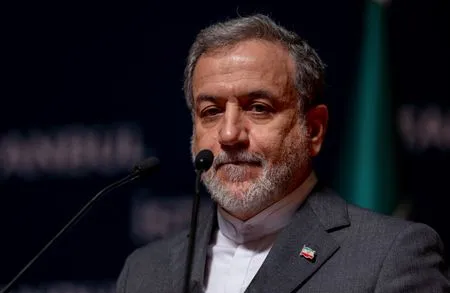
The allegation was made by Mohammad Bagher Ghalibaf, Speaker of Iran’s Parliament, who said Washington’s public calls for negotiation contrast sharply with what Tehran believes are preparations for military escalation after more than a month of sustained aerial bombardments involving American and Israeli forces.
“The enemy publicly sends messages of negotiation and dialogue while secretly planning a ground attack,” Ghalibaf said in remarks published by Islamic Republic News Agency. He added that Iranian forces were prepared for any direct military incursion, warning that any foreign troop deployment would trigger a forceful response.
The latest remarks come as the regional conflict deepens, with Iran retaliating through attacks across Gulf states, intensifying fears over energy security and global economic stability.
Tehran also maintains that it has effectively restricted hostile shipping through the strategically critical Strait of Hormuz, a corridor that previously handled roughly a quarter of global seaborne oil trade.
Meanwhile, reports by The Washington Post indicate that the Pentagon is reviewing plans for possible weeks-long ground operations, including limited raids near the Strait of Hormuz, although Donald Trump has not formally approved any deployment.
Despite repeated references by Trump to diplomatic contacts with Tehran, Iranian officials continue to deny that any direct negotiations are underway.
In a parallel diplomatic effort, Pakistan hosted foreign ministers from Saudi Arabia, Turkey, and Egypt in Islamabad for high-level talks aimed at easing regional tensions and preventing further escalation.
According to Pakistan’s foreign ministry, the meeting focused on coordinated efforts to de-escalate the conflict and restore stability across the region.
The rapidly evolving conflict continues to raise international concern, as military movements and diplomatic initiatives unfold simultaneously across one of the world’s most strategically sensitive regions.
About the Author