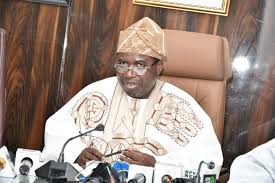
The Chairman of the Independent National Electoral Commission (INEC), Joash Amupitan, has emphasized the urgent need to sanitize Nigeria’s voter register ahead of the 2027 general elections, warning that the register has not undergone a full clean-up since 2011, leaving many deceased individuals still listed.
Speaking at the Nigeria Civil Society Situation Room’s National Stakeholders’ Forum on Elections in Abuja on Thursday, Amupitan updated stakeholders on the recently concluded first phase of the Continuous Voter Registration (CVR), which ended on 10 December. He noted that the claims and objections period will open on Monday, 15 December, and appealed to civil society groups to mobilize citizens to participate actively.
“Some challenges stem from low participation. In Anambra, for instance, we assessed a register of 2.8 million voters, yet turnout was only 20 per cent. Several deceased persons remain listed, including a prominent leader who passed away 15 years ago. The claims and objections period is designed to address such issues”, Amupitan said.
He confirmed that 2,685,725 applicants completed registrations during Phase One, including 1,576,137 online and 1,109,588 physical captures, with Osun, Kaduna, Plateau, Imo, Borno, and Lagos recording the highest turnout. Phase Two will begin on 5 January 2026, with decentralized registration centres to reduce distance barriers.
Speaking on vote-buying, Amupitan said INEC is awaiting updates from the police and EFCC on previous arrests. “INEC can prosecute but cannot arrest”, he noted.
He also highlighted technological challenges, explaining that while BVAS and the INEC Result Viewing Portal (IReV) enhance transparency, poor network connectivity hampers real-time uploads. “BVAS is only as good as the network. Real-time uploads remain a major operational challenge, and INEC cannot control the infrastructure”.
Amupitan concluded that INEC aims to establish a dedicated network in the future but currently lacks the capacity to operate independently.
About the Author