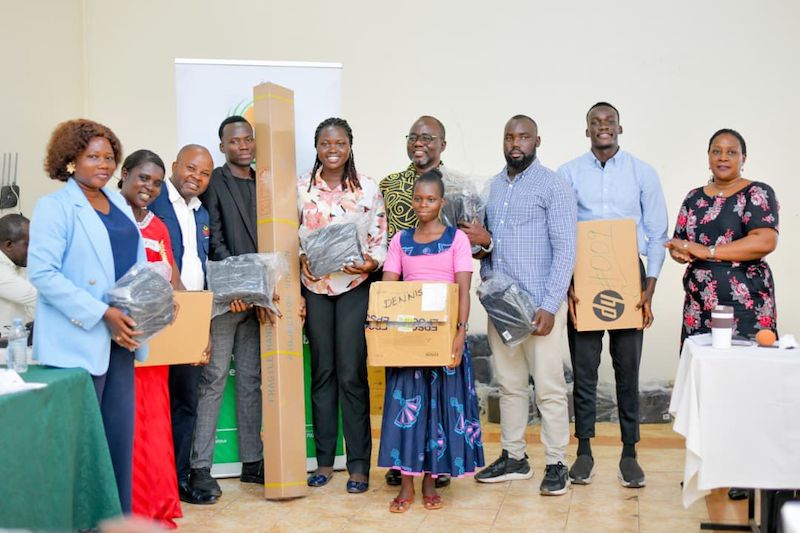
The African Agribusiness Incubators Network (AAIN) has rolled out a nationwide business incubation and capacity-building programme targeting 25,000 young women across Uganda with a deliberate focus on refugees, women with disabilities and those living in rural communities.
The initiative is being implemented under the Sustainable Inclusive Youth Employment Pathways (SIYEP) programme, a five-year national youth employment intervention led by the Agency for Accelerated Regional Development (AFARD) with support from the Mastercard Foundation.
AAIN is one of the consortium partners responsible for strengthening business incubation systems to enable young women to transition into dignified and sustainable employment. The programme targets young women aged 15 to 35, with clear inclusion thresholds; 7 per cent of beneficiaries will be refugee youth, 5 per cent young women living with disabilities and the majority drawn from rural and peri-urban areas.
Overall, the consortium aims to transition at least 17,500 of the 25,000 participants into decent and fulfilling work. AAIN officially kicked off the incubation phase with a national training and curriculum review meeting in Kampala that brought together 25 anchor incubators from Uganda’s five regions of Central, Eastern, Northern, Western and West Nile.
The incubators reviewed the new Business Incubation Management (BIM) Curriculum Framework, developed by incubation experts from Uganda and across the continent.
Speaking at the meeting, Enock Ampumuza, business incubation management specialist at AAIN, said the curriculum is intended to strengthen the country’s incubation landscape while ensuring that support services ultimately benefit young women entrepreneurs on the ground.
“We are reviewing the Business Incubation Management Curriculum Framework, which was developed by experts from Uganda and the continent. The intention is to enrich Uganda’s incubation support systems and build the capacity of business incubators. But the ultimate goal is to cascade this curriculum to young women entrepreneurs across the country,” Ampumuza said.
He explained that AAIN’s mandate under SIYEP is to support 25,000 young women nationwide, intentionally prioritising those who are marginalised and underserved.
“Our target group includes refugees, young women living with disabilities, and those in rural communities. We are deliberate about inclusion because these are the groups that face the greatest barriers to accessing skills, capital and markets,” he said.
Under the programme, young women will receive a combination of technical skills training in selected trades, business mentorship and coaching, and competitive business booster packages for promising enterprises.
Targeted sectors include agriculture and agribusiness, creative arts and home-based cottage industries, among others. Ampumuza noted that access to finance and markets remains one of the biggest constraints facing young entrepreneurs, particularly women.
To address this, AAIN has signed Memoranda of Understanding with selected financial institutions to facilitate youth and women-friendly credit products.
“We want financial institutions to reach out to these young women and engage them directly so their businesses can become viable and bankable,” he said.
Market access is also being tackled through product aggregation models coordinated by anchor incubators, especially for rural entrepreneurs who struggle to reach larger and more reliable markets.
“Many young women cannot access markets on their own,” Ampumuza explained. “Through aggregation and mentorship by incubators, their products can reach markets they would otherwise not penetrate.”
Civil society organisations working in refugee-hosting areas have welcomed the programme describing it as timely and necessary. Sandra Ajolorwot, Monitoring and Evaluation Specialist at Women and Rural Development Network (WORUDET), said the initiative comes at a critical moment for refugee women particularly in Lamwo Refugee Settlement.
“Refugees in Lamwo are facing reduced food rations after being moved from an emergency to a development phase. Many men have returned to South Sudan in search of food leaving young women behind with children and very little to survive on,” Ajolorwot said.
She said the economic burden has fallen heavily on women, many of whom lack income-generating opportunities.
“These women are among the most disadvantaged and cannot afford basic needs,” she said. “This AAIN project will help us identify and support vulnerable young women to start small businesses that can help them cope with the economic situation.”
AAIN said once the review process is completed, the Business Incubation Management Curriculum will be rolled out across partner incubators nationwide, laying the foundation for a stronger, more inclusive incubation ecosystem that supports young women to move from skills training to sustainable livelihoods.
jjingoernest1@gmail.com
About the Author