By Prisca Sam-Duru
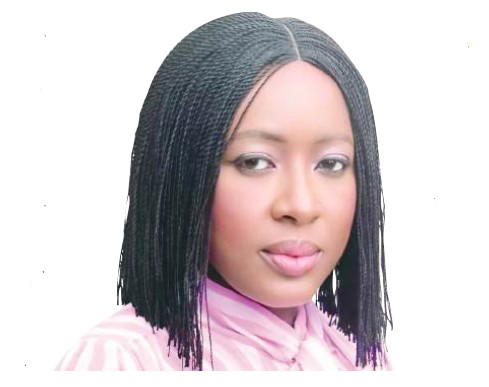
Dr. Constance Ikokwu is a journalist, political analyst, media strategist, and deep thinker, with a PhD in Journalism and Communications.
Her doctoral thesis which was on the intersection of media and politics, specifically examining the concept of mediatization, and the role of media during elections, could well be one of the reasons she finds herself venturing into politics.
Her vast experience in the field includes teaching media courses at the Institute for American Universities (IAU), Barcelona, Spain, and at the Universitat Autonoma de Barcelona Department of Journalism and Communication Sciences. Interestingly, her work has taken her across Nigeria, Africa, Europe and the Americas. She was Washington, D.C. Bureau Chief for THISDAY Newspapers in 2007, and as such interviewed global personalities, and covered the world’s leading economic and political institutions such as the World Bank, IMF, US Congress, White House, United Nations, think-thanks, etc.
In the course of her career, Ikokwu who’s from Idemili North and South Federal Constituency has been Foreign Editor, Deputy Editor, Abuja Bureau Chief, Enugu Bureau Chief, Editorial Page Editor, member of the Editorial Board, Secretary to the Editorial Board, Online Editor, Strategic Communications Adviser, Radio host, and Television anchor.
Ikokwu whose rich profile speaks volume about her readiness to make additional impact on her people , spoke to Saturday Vanguard about her reason for joining politics, and much more. Read on.
Why did you decide to contest for a chance to represent Idemili North and South Federal Constituency in the House of Representatives on the platform of African Democratic Congress (ADC)?
Well, a couple of realities informed my decision. The South East has traditionally been a stronghold of the Peoples Democratic Party (PDP), but in recent years the party has struggled to maintain its dominance in the region. Meanwhile, the All Progressives Grand Alliance (APGA), despite its deep roots and influence in Anambra State, has found it difficult to expand its footprint beyond that base.
In contrast, the African Democratic Congress (ADC) is beginning to appear as a promising platform, attracting a diverse range of voices and perspectives from across the country, and positioning itself as a broader, more inclusive alternative. Having said that, Nigerian politics is very dynamic and always changing. I’ve made this decision with a view to handle whatever comes next.
You spent years holding power to account as a journalist, what was the specific tipping point that made you decide to stop reporting on the gaps in governance and start trying to close them yourself?
I’ve had a flourishing and rewarding career in journalism. But, this is not a sudden decision. I’ve been reflecting on the idea of participating more directly in politics for some time now. Given the scale of the challenges facing our country, and the fact that women are underrepresented, I have come to a point where it feels like a now-or-never moment. This feels like the right time to step forward and contribute in a more direct and meaningful way.
What are some of the urgent everyday realities facing your community that you plan to prioritize in the House of Representatives?
Some of the biggest worries of our constituency range from the severe threat of gully erosion, flooding, poor road networks that affect quality of life in many towns, security, jobs, among others.
Could you share how your background as a high-profile journalist and analyst will influence the way you approach lawmaking and the typical horse-trading of Nigerian politics, while ensuring the interest of your constituents are top priority?
It’s a lot of work but some of the ways I hope to do well in politics include building a strong grassroots base. This is not a one-time event. It’s continuous and I’m in it for the long haul. Secondly, leveraging credibility and visibility are essential. Thirdly, forming strategic alliances with relevant groups, and staying resilient, among others.
Nigeria’s political landscape is notoriously difficult for genuine and patriotic citizens, and much worse for women to navigate. What is your strategy for breaking through these systemic barriers and securing a seat at the House?
Finding like minds will be one of the most important weapons in this journey of service. One person cannot do it alone. We need a collective and I’ll be looking for that. Using investigative skills, public engagement, and data to shape bills around real citizen needs is another approach to law-making that I will employ. All these, while openly communicating positions to my constituents.
You mentioned earlier that politics shouldn’t be left only to career politicians. How do you plan to convince voters that a professional or outsider is better equipped to deliver results than a career politician?
Politics shapes everything, our schools, jobs, security, so it cannot be left to a small circle of career politicians. We need people with real-world experience from teachers to journalists, entrepreneurs, and other professionals who understand problems from the ground up and can bring fresh thinking into governance. Talking to people, advocating about how important it is when more citizens step in. Politics becomes less about survival and more about solutions. In short, my talking point is; if good people stay out of politics, we shouldn’t be surprised by poor outcomes.
Your move will likely inspire other female journalists and most competent Nigerians to step up. What is your direct message to professionals who are currently afraid or hesitant to enter the political trenches?
Message to people afraid to join politics – To every capable Nigerian, especially women, who are hesitant about politics. I understand the fear, the doubts, and the barriers. But the truth is, the cost of staying away is far greater than the risk of stepping in. If those with competence and integrity hold back, we leave the future in the hands of those who may not have either. Your voice, your experience, and your courage are needed now more than ever. Politics may not look inviting, but it will not change unless people like you step into it. You don’t have to be perfect, you just have to be committed. Our country needs your ideas, your values, and your leadership.
This is the moment to move from concern to action. If you are competent and care about Nigeria, this is your call to step forward. Don’t wait for the system to fix itself; be part of the people who fix it.
Finally, my mantra is Politics for Public Good. Take Back Your Government!